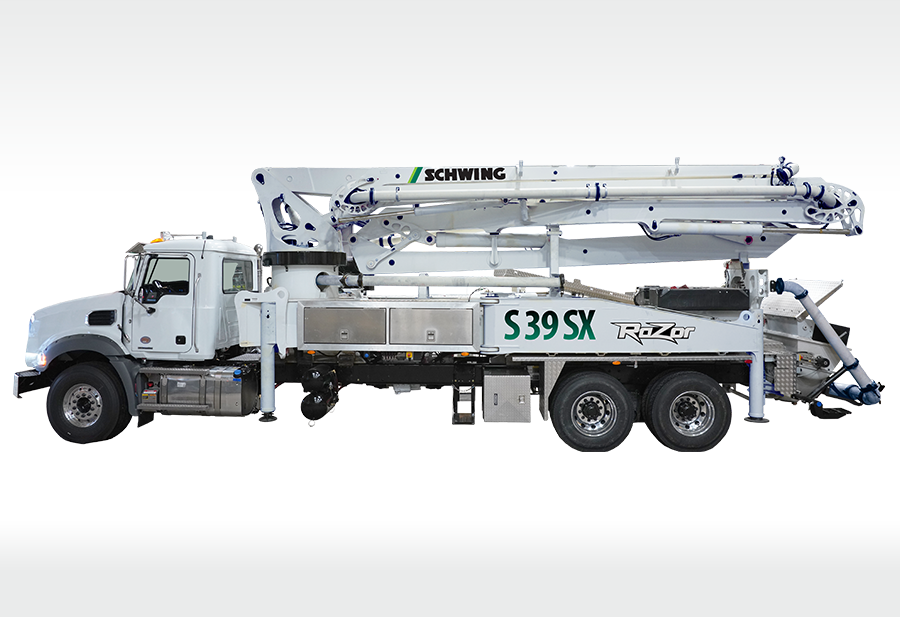
Boom Concrete (BCE) Financing Program overview
Pricing basis: boom reach, hours, resale strength
Application-only: up to $500,000
Sellers: dealer, auction, or private party
Turnaround: same business day
Get a Quote Back to list
Boom Concrete Equipment, abbreviated BCE in the industry, represents a category of concrete pump brand that has built a following in specific regional markets, often through direct sales and strong local dealer relationships rather than a broad national distribution model. BCE machines show up in operator fleets primarily through the work of regional importers and specialty dealers who have developed relationships with the manufacturing source and built local service capability around the equipment. Operators who buy BCE have generally done the regional research and confirmed that the support they need is available before committing to the purchase.
Financing BCE equipment comes with the same fundamental challenge as other less-mainstream concrete pump brands: finding a lender who evaluates the asset on its actual merits rather than defaulting to maximum conservatism because the name is outside their usual reference set. We solve that problem by routing BCE deals to lenders in our network who have underwritten non-mainstream concrete pump brands before and who know that pour-day concrete placement equipment holds value regardless of what it says on the side panel.
We handle BCE transactions starting at $50,000. Application-only approval up to approximately $400,000 is available for qualified borrowers. B and C credit operators are considered. Funding in one to two weeks from a complete file with proper documentation.
BCE Concrete Pumps on the Job BCE concrete pumps, like most smaller-market brands, cover the residential and mid-range commercial pour spectrum that accounts for the majority of concrete pump deployment hours in North America. The machines in the BCE lineup address reach classes from compact residential configurations through the mid-range commercial sizes that handle the bulk of commercial slab, tilt-up, and low-to-mid-rise structural pours.
The equipment's engineering draws on established concrete pump component technology, which means that experienced concrete pump mechanics can work on BCE machines using their existing knowledge base. That serviceability is a practical advantage for operators in secondary markets where brand-specialized dealer service is not readily available. An operator who can maintain their own pump with in-house mechanical capability is less dependent on a specific dealer's proximity or availability.
The physical concrete placement performance of BCE equipment is the core metric that matters to operators evaluating the brand. Output rates, maximum pressure, boom reach, and deployment speed are the numbers that decide whether the machine earns its keep on pour day. Operators who have used BCE in real pour conditions and come back satisfied with those metrics are the foundation of the brand's following in the markets where it has traction. Concrete pumping contractors who discovered BCE through a regional dealer relationship and chose it on value and performance rather than brand recognition represent the core buyer profile.
Operators Who Finance BCE Equipment BCE buyers in our deal flow usually come through specific regional channels. An operator in a market where a BCE dealer has built genuine service capability and a parts stock has far less risk in buying BCE than an operator in a market where the nearest service point is hours away. The regional nature of BCE's market presence means the right answer to whether BCE is a good choice depends heavily on where the operator is working.
Owner-operators who want an affordable entry into the boom pump market and who have confirmed that local service is available are a reasonable BCE buyer. The lower capital cost compared to European brands reduces the financial risk of a first boom pump purchase, and a well-maintained BCE machine in a market where service is accessible can run a productive career.
Fleet operators using BCE as a backup or overflow machine alongside a primary fleet of European equipment are another BCE buyer. The machine handles the residential and light commercial overflow at a lower carrying cost than another Putzmeister or Schwing would require. That fleet diversification strategy reduces the average per-unit cost and keeps the fleet's capacity available for the surge demand that comes in peak construction seasons. Equipment rental companies building out a concrete pump rental fleet have also evaluated BCE for this role, as the lower acquisition cost extends the fleet footprint per capital dollar invested.
Getting a BCE Deal Done BCE deals follow the same documentation path as any concrete pump transaction. Application, three months of business bank statements, and equipment details including make, model, year, and condition. For amounts under $400,000, application-only financing is the path for most BCE deals given the typical transaction range. We route the file to lenders who have concrete pump experience and who will evaluate the collateral on its own terms rather than penalizing the deal for brand unfamiliarity.
Approval for a clean BCE file comes back within a few business days. Documents and funding follow in the standard one-to-two-week window. Private-party BCE deals require a title check and condition documentation, which adds a step but not significant time when the seller is cooperative and organized. Starting the financing process as soon as the purchase decision is made prevents unnecessary delays between finding the machine and getting to work on it.
B and C credit operators considering BCE should approach the deal with a realistic down payment plan. The limited resale data on BCE means the lender is relying more on the borrower profile than on collateral strength, which puts the credit file and cash flow documentation in a more central role. A down payment of 15 to 25 percent on a BCE deal for a B/C credit borrower improves approval odds considerably. B/C credit financing options are available for BCE, but the deal structure needs to account for the collateral limitation honestly.
Comparing BCE to Other Value-Focused Brands Operators drawn to BCE by price should do a complete comparison before committing. Alliance Concrete Pumps offers North American assembly, an established U.S. service network, and a more developed domestic resale market at pricing that is still meaningfully below the European brands. The additional capital required for an Alliance unit may pay back in financing terms, resale value, and parts availability over a four to six year hold.
Concord and DY are also in the value segment and both have more established North American resale histories than BCE. For an operator trying to minimize capital cost while maximizing deal-close probability, Alliance, Concord, or DY may be easier to finance at better terms than BCE while still hitting the price target.
That said, if BCE is the right machine for a specific region or application and the local service story checks out, we are not here to talk you out of it. We are here to find the financing that makes the deal work. Tell us the machine, tell us the situation, and we will give you an honest read on what the deal looks like before you spend time gathering documents that will not produce an approval.
BCE Financing Questions
Finance Your BCE Equipment Through the Right Channel BCE is a real machine for real pour work and it belongs in the same financing conversation as any other brand we work with. Call or apply online with the machine details and your situation. We will tell you quickly whether the deal works and what it looks like. No time wasted on lenders who will not fund it. No mystery about what terms are possible. Just a straight answer and a path forward if one exists.
Common questions I want to finance a BCE pump but I am not sure the appraised value will match the asking price. What should I do? This is a smart concern for any non-mainstream brand. Ask the seller to support their asking price with comparable sales from the current North American market, not from international markets or older transaction history. If the price is realistic for the domestic market, the appraisal will support it. If it is not, the lender's appraiser will tell you, and it is better to know before you are committed to the purchase.
Can I finance a BCE machine that was purchased at an auction? Auction purchases can be financed when the title is clear and condition documentation is available. Most equipment auctions provide basic condition information and the final hammer price establishes the purchase value. A post-purchase inspection report helps the lender assess condition. Auction deals are doable but the title process sometimes takes longer, so factor that into your timeline.
How do I know if BCE service is available in my market? Call the nearest BCE dealer or the importer who sold the machine and ask directly about parts stocking and service capabilities in your region. Ask for references from other BCE operators in your area. If the dealer cannot give you a clear answer about where the parts for your specific model come from and how fast they arrive, that is information you need before buying.
Is BCE equipment eligible for Section 179 deductions? Yes. U.S. tax code Section 179 applies to qualifying equipment purchases regardless of brand origin, as long as the equipment is used for business purposes in the United States. The current annual deduction limits and phase-out thresholds apply the same way to BCE as to any other equipment purchase. Confirm the specifics with your CPA before closing.
What happens if BCE goes out of business or stops supporting the product line in North America? This is a legitimate risk with smaller brands. If the brand's North American support disappears, you own the machine and are responsible for finding parts and service from whatever sources exist. The machine still holds value as collateral and you still need to make the payment. That operational risk is part of the calculus of buying a less-established brand and should be weighed alongside the price advantage.
Common Questions on Boom Concrete (BCE) Financing Straight answers before you send the equipment file.
I want to finance a BCE pump but I am not sure the appraised value will match the asking price. What should I do? This is a smart concern for any non-mainstream brand. Ask the seller to support their asking price with comparable sales from the current North American market, not from international markets or older transaction history. If the price is realistic for the domestic market, the appraisal will support it. If it is not, the lender's appraiser will tell you, and it is better to know before you are committed to the purchase.
Can I finance a BCE machine that was purchased at an auction? Auction purchases can be financed when the title is clear and condition documentation is available. Most equipment auctions provide basic condition information and the final hammer price establishes the purchase value. A post-purchase inspection report helps the lender assess condition. Auction deals are doable but the title process sometimes takes longer, so factor that into your timeline.
How do I know if BCE service is available in my market? Call the nearest BCE dealer or the importer who sold the machine and ask directly about parts stocking and service capabilities in your region. Ask for references from other BCE operators in your area. If the dealer cannot give you a clear answer about where the parts for your specific model come from and how fast they arrive, that is information you need before buying.
Is BCE equipment eligible for Section 179 deductions? Yes. U.S. tax code Section 179 applies to qualifying equipment purchases regardless of brand origin, as long as the equipment is used for business purposes in the United States. The current annual deduction limits and phase-out thresholds apply the same way to BCE as to any other equipment purchase. Confirm the specifics with your CPA before closing.
What happens if BCE goes out of business or stops supporting the product line in North America? This is a legitimate risk with smaller brands. If the brand's North American support disappears, you own the machine and are responsible for finding parts and service from whatever sources exist. The machine still holds value as collateral and you still need to make the payment. That operational risk is part of the calculus of buying a less-established brand and should be weighed alongside the price advantage.
Get Terms on Boom Concrete (BCE) Financing Tell us what you are buying, who is selling it, and when you need it earning. We will review the file and point you to the next step.