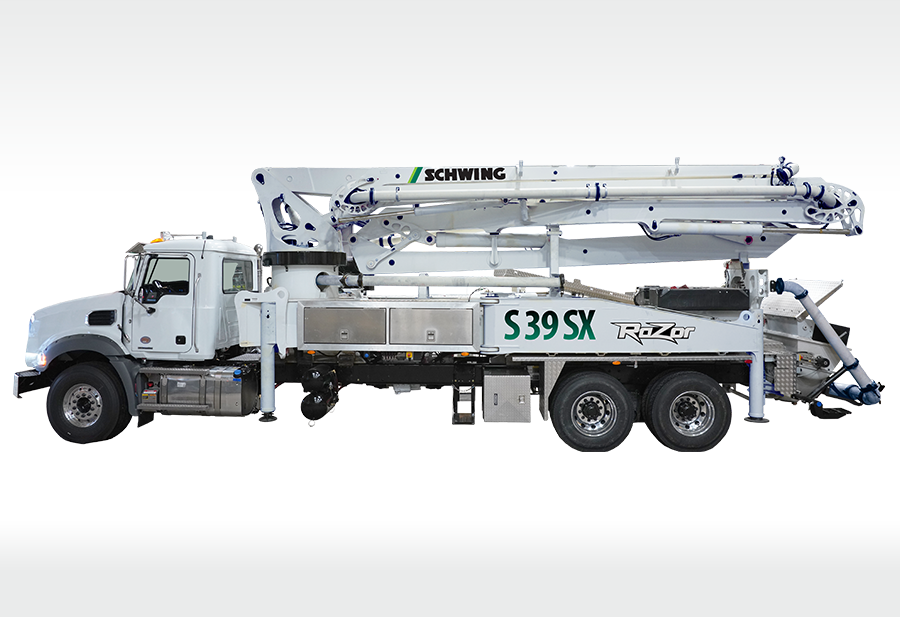
Stationary Concrete Pump Financing Program overview
Pricing basis: boom reach, hours, resale strength
Application-only: up to $500,000
Sellers: dealer, auction, or private party
Turnaround: same business day
Get a Quote Back to list
Stationary concrete pumps do not move to the job. They sit at a fixed location, connect to a pipeline that runs to the pour, and push concrete through the system at high pressure to wherever the placement end is. High-rise towers use them on dedicated equipment floors with pipelines running up the structure. Large infrastructure projects use them at dedicated pump stations that feed long horizontal runs. The machine stays put and the work comes to it through the pipe.
We finance stationary concrete pumps for contractors and construction managers who need fixed-position high-output pumping capability. These machines pair with placing booms on high-rise work and with extended pipeline systems on infrastructure jobs. The transaction profile is different from a truck-mounted boom pump, and the lenders we work with understand the specific application. Related equipment like high-rise-specific pump configurations and high-pressure pump units are part of the same financing family.
Stationary Pump Specifications and Applications A stationary concrete pump is a pump unit mounted on a skid or trailer for transport but without self-propelled drive capability. On a high-rise construction project, the machine is typically lifted to an intermediate floor by crane, connected to a riser pipeline running up the structure, and left in position for the duration of pours on multiple floors above it. When the building rises high enough, the pump is repositioned upward as needed.
Output on commercial-grade stationary pumps runs from 60 cubic meters per hour on smaller units to over 200 cubic meters per hour on high-output machines designed for large pours. Operating pressures are typically higher than on truck-mounted booms, since the pipeline run on a stationary pump system can include hundreds of feet of vertical elevation plus horizontal distance. High-pressure specifications are what allow these machines to push concrete to the top of a 30-story structure.
Pump mechanisms are almost universally S-tube valve designs at the commercial scale. The wear components include piston and cylinder wear in addition to the valve interface. Operators running stationary pumps at high utilization track these maintenance cycles carefully because a pump failure mid-pour on a high-rise structure creates costly delays.
Who Uses Stationary Concrete Pumps High-rise and multifamily builders doing tower construction above roughly 15 to 20 stories generally use stationary pumps paired with floor-mounted placing booms rather than truck-mounted boom pumps, which cannot reach those heights from grade. The stationary pump provides the pumping horsepower; the placing boom distributes concrete across the floor.
Civil and infrastructure contractors working on long horizontal concrete placements, tunnel lining, or dam construction use stationary pumps at dedicated pump stations with extended pipeline runs. The machine's fixed position and high-pressure capability make it suited for long-distance concrete delivery that truck-mounted booms cannot achieve.
Mining and tunneling contractors use stationary pumps extensively for tunnel segment grout backfill, shotcrete support, and concrete placement in confined underground environments where vehicle access is restricted. The pump stays at the portal or shaft while pipeline delivers material to the face.
Data center construction has added meaningfully to stationary pump demand in recent years. Large mat slabs in data center foundations, column caps, and mechanical equipment bases require placing substantial concrete volumes on tight schedules. A stationary pump positioned at the site perimeter with pipeline running to the active placement zone handles these pours efficiently and keeps truck traffic organized in the limited site access areas that data center construction zones typically operate within. Data center construction contractors in active corridors like Northern Virginia and Phoenix consistently deploy stationary pump systems on their larger projects.
Financing Process for Stationary Pumps Stationary concrete pumps span a wide price range depending on output, pressure rating, and configuration. Smaller skid-mounted units may be under $100,000; high-output machines with high-pressure specs run considerably more. Deal size determines the documentation requirement and approval timeline.
For lower-price-point stationary pumps on clean credit files, our application-only program may apply. Larger transactions follow the full documentation path. Approval within two to four business days. Funding within one to two weeks.
Structure options include equipment loans and leases. For contractors who use stationary pumps on specific projects and want to match the financing term to the project duration, lease structures with defined end terms are sometimes preferred. We model the options and let you decide what matches the deployment plan for the machine.
Related Equipment for High-Rise and Infrastructure Pours Stationary pumps on high-rise projects typically pair with self-climbing placing booms or mast-climbing placing boom systems. Financing both the pump and the placing boom as a combined package is possible in some deal structures. We can model a combined approach versus two separate transactions.
Buyers needing extended reach for the placing system should also evaluate hydraulic placing boom configurations and stationary placing boom systems. The pump provides the pressure; the placing boom provides the distribution. Both equipment types belong in the same financing conversation for a high-rise project.
Stationary Concrete Pump Financing Questions What contractors and project managers ask about financing stationary pump equipment.
Finance Your Stationary Concrete Pump High-output, high-pressure, and fixed-position pumping needs a financing partner who knows what it is. Submit your application and we get to work.
Common questions Can a stationary pump be financed if it is being acquired specifically for a single major project? Project-specific acquisition is a financing scenario we handle. The machine's residual value after the project and the contractor's broader credit profile both factor in. Some buyers plan to resell or redeploy the machine after the initial project, which is relevant to the lender's collateral analysis.
Does the pipeline system that runs from the stationary pump to the placing floor qualify for financing too? Concrete placing hose and pipeline can sometimes be bundled into the equipment transaction or financed separately. Pipeline is consumable equipment that has a useful life but depreciates faster than the pump unit itself. Ask about bundling options when structuring the deal.
I need a stationary pump for a 24-month tower project. After that I do not know the machine's future. Is that a financing problem? Lenders finance equipment with five-to-seven year loan terms regularly for assets that may be redeployed or sold after initial projects. The machine's residual value after the project and your ability to continue the payment if the machine is idle are factors lenders consider. The less certainty on post-project deployment, the more important a strong credit file and payment capacity become.
What pressure rating do I need for a 40-story tower pour? Pumping concrete 400 feet vertically requires significant operating pressure. Most high-rise pump specialists start at 200 bar or higher for this height range. Specific pressure requirements depend on the mix design, pipeline configuration, and pump-to-floor vertical distance. Consult with the pump manufacturer based on your project's specific numbers.
Can I refinance a stationary pump after it earns the first project, using that equity for the next acquisition? Yes. A machine that has been paid down or is owned free and clear supports a Concrete Pump Sale-Leaseback or cash-out refinance. The capital generated can fund the next acquisition. We structure these follow-on transactions regularly for contractors who recycle equipment equity into business growth.
Common Questions on Stationary Concrete Pump Financing Straight answers before you send the equipment file.
Can a stationary pump be financed if it is being acquired specifically for a single major project? Project-specific acquisition is a financing scenario we handle. The machine's residual value after the project and the contractor's broader credit profile both factor in. Some buyers plan to resell or redeploy the machine after the initial project, which is relevant to the lender's collateral analysis.
Does the pipeline system that runs from the stationary pump to the placing floor qualify for financing too? Concrete placing hose and pipeline can sometimes be bundled into the equipment transaction or financed separately. Pipeline is consumable equipment that has a useful life but depreciates faster than the pump unit itself. Ask about bundling options when structuring the deal.
I need a stationary pump for a 24-month tower project. After that I do not know the machine's future. Is that a financing problem? Lenders finance equipment with five-to-seven year loan terms regularly for assets that may be redeployed or sold after initial projects. The machine's residual value after the project and your ability to continue the payment if the machine is idle are factors lenders consider. The less certainty on post-project deployment, the more important a strong credit file and payment capacity become.
What pressure rating do I need for a 40-story tower pour? Pumping concrete 400 feet vertically requires significant operating pressure. Most high-rise pump specialists start at 200 bar or higher for this height range. Specific pressure requirements depend on the mix design, pipeline configuration, and pump-to-floor vertical distance. Consult with the pump manufacturer based on your project's specific numbers.
Can I refinance a stationary pump after it earns the first project, using that equity for the next acquisition? Yes. A machine that has been paid down or is owned free and clear supports a Concrete Pump Sale-Leaseback or cash-out refinance. The capital generated can fund the next acquisition. We structure these follow-on transactions regularly for contractors who recycle equipment equity into business growth.
Get Terms on Stationary Concrete Pump Financing Tell us what you are buying, who is selling it, and when you need it earning. We will review the file and point you to the next step.