Program overview
Pricing basis: boom reach, hours, resale strength
Application-only: up to $500,000
Sellers: dealer, auction, or private party
Turnaround: same business day
Get a Quote Back to list
Commercial construction runs on concrete, and concrete runs on pumps. Office buildings, retail centers, warehouses, hotels, mixed-use developments, every pour on a commercial site needs a pump that shows up ready and sized right for the reach. Contractors who own their placement equipment instead of waiting on a sub move faster, bid more confidently, and keep more of the margin on concrete work. We fund the equipment that makes that possible.
From a 36-meter boom handling a one-story retail slab to a 52-meter unit topping off a parking structure, the commercial construction market demands a range of pump capacity. Our financing starts at $50,000 and comfortably handles the mid-six-figure transactions that commercial-grade equipment often requires. Application-only approval is available up to about $400,000, and funding runs about one to two weeks from first contact.
Commercial Construction and the Pump Equipment Market Commercial projects are particularly demanding for pump equipment because of volume, schedule pressure, and site constraints. A commercial slab pour is not a quick flatwork job. It involves coordinated deliveries, multiple chutes, specific slump requirements, and a placement crew that cannot afford a pump failure mid-pour. The equipment behind a commercial pour has to be reliable, properly sized, and available on the exact day the schedule requires.
Commercial contractors working in dense urban markets like Chicago , Boston , and Seattle face the additional constraint of limited staging room, which makes a high-reach boom with good fold geometry essential. A pump that cannot set up and reach from the available street or lot position is a pump that cannot work, regardless of its output capacity. That problem is not solved by renting from a sub whose equipment is sized for the previous job. It is solved by owning the right machine for your specific project profile.
The commercial construction sector also generates significant demand for specialized placement equipment beyond the standard truck-mounted boom. Data center construction, hospital projects, and institutional buildings frequently require extended pours into confined form locations that only specialized equipment can handle efficiently. Owning that specialized capacity is a competitive differentiation, not just a cost management exercise.
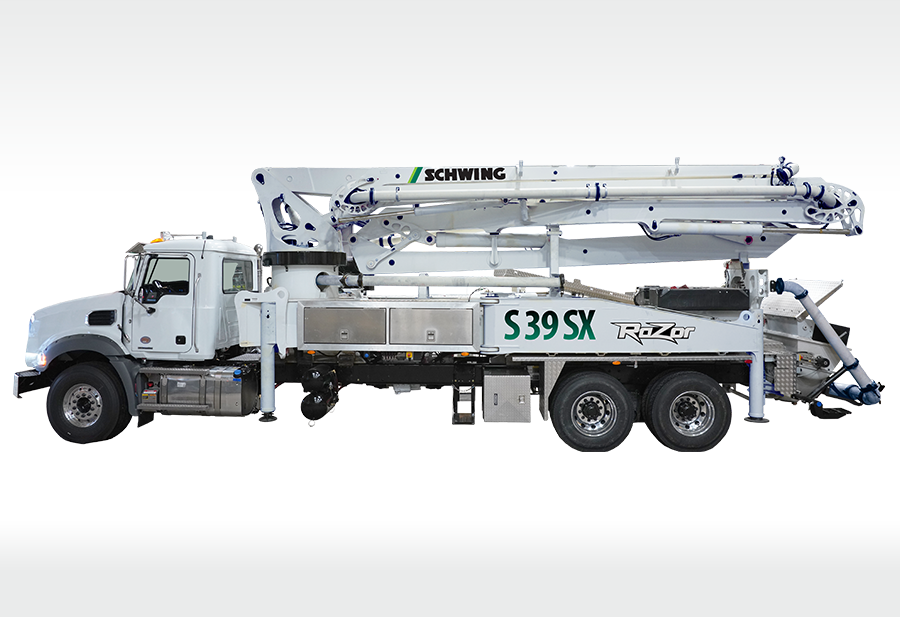
Equipment That Fits Commercial Project Demands Commercial construction commonly calls for boom pumps in the 38- to 56-meter range. A 38-meter boom handles most one- to three-story commercial builds with room to spare. Mid-rise commercial projects, which run anywhere from four to ten stories, typically need a 47-meter unit or larger to reach upper floor placements from a single truck position.
Larger commercial pours benefit from the output capacity of a high-pressure concrete pump , which can push mix farther and faster than standard output machines. For taller commercial projects, a separate placing boom installed on the structure can handle upper-floor placements that a truck-mounted boom cannot reach efficiently. The separate placing boom stays with the building as it rises and requires a ground-level pump to feed it, which means some commercial high-rise projects actually require two distinct financing transactions: one for the boom and one for the ground pump.
Contractors active on tilt-up and precast commercial projects may need different pump geometry than those focused on cast-in-place work. Tilt-up slabs require high-volume horizontal placement, while cast-in-place columns and shear walls require vertical pumping capacity. We finance both equipment types. A concrete conveyor is a third option on some commercial flatwork projects where horizontal reach rather than vertical lift is the primary placement challenge and a conveyor can cover ground that a boom cannot reach from available truck positions.
Used equipment in the commercial-grade range holds value well. A Putzmeister or Schwing unit with reasonable hours and documented service history remains a productive asset for years after the original buyer has moved on, and financing a clean used unit at a fraction of new cost is a legitimate way for a growing commercial contractor to enter the market without overextending on capital.
Financing Structures for Commercial Contractors Commercial construction contractors typically have the business depth to access a full range of financing options. A conventional equipment loan builds ownership equity, and for a piece of equipment with a 10- to 20-year useful life, ownership makes long-term economic sense. Loan terms in the 48- to 72-month range are common for commercial-grade pump equipment, and the monthly payment on a 60-month loan on a $200,000 boom fits comfortably inside the spread between what the machine earns and what it would cost to call a sub.
For contractors who want to preserve liquidity and treat the pump as an operating expense rather than a capital asset, a concrete pump equipment lease accomplishes that. Monthly payments come out of operations, and the equipment is returned or purchased at lease end depending on the structure. The tax treatment difference between a loan and a lease is worth a quick conversation with your accountant before choosing a path. A Section 179 deduction on a purchased unit can significantly reduce the effective cost in year one, which changes the loan-versus-lease math considerably for contractors with taxable income.
Application-only approval handles the majority of commercial pump transactions without requiring years of tax returns or audited financials. We work from the application, three months of business bank statements, and the equipment information. That is the full documentation picture for most transactions up to $400,000. Larger transactions use the same inputs plus project financials if available.
Related Financing Considerations Commercial contractors who have existing pump equipment on the books can explore concrete pump refinancing to lower the monthly payment on older debt or pull cash from paid-off units. A cash-out equipment refinance is particularly useful for contractors who need working capital to fund a new project startup or equipment deposit without liquidating the asset. The pump keeps running, the cash lands in the account, and the new payment is on a current term rather than the original amortization schedule.
Contractors with seasonal revenue patterns, which is most commercial construction work in northern markets, should ask about deferred payment options that reduce or suspend payments during the winter months when projects are on pause. The equipment sits in the yard, but the payment structure accounts for the reality that concrete work slows down in January and picks back up in March.
Private-party purchases are common in the commercial pump market. A contractor who finds a quality used unit from a retiring operator or a company winding down a division can finance that transaction through our program. We coordinate the payoff of any existing lien, confirm the title, and fund directly to the seller on closing.
Commercial Construction Financing FAQs
Equip Your Commercial Operation Commercial pours happen on a schedule, and the pump has to be there. Get a pre-approval decision today on a boom pump or concrete placement equipment purchase. Loans, leases, refinances, and sale-leasebacks available. Apply now or call to discuss your equipment needs.
Common questions Can I finance a boom pump that will be used across multiple projects and not assigned to a single job site? Yes. Fleet equipment used across multiple job sites is financed the same way as a single-project asset. The key is that the equipment is owned and operated by the entity applying for financing, not subcontracted or rented to others.
We are a project-based company and our revenue is lumpy. How does that affect approval? Project-based revenue patterns are common in commercial construction and lenders experienced in this space understand them. We look at average monthly revenue over a full cycle, not just the most recent month. A strong backlog and contract pipeline also factor into the picture.
Is there a program for contractors who are buying equipment for a specific large project? Yes. We work with contractors who have a specific project driving the equipment purchase. If you have a contract in hand, that is a positive factor in the approval. We can structure the financing to align with the project timeline.
Can we finance a pump remount (new pump on a new truck chassis) rather than a complete unit? Yes. Pump remounts are a legitimate asset type and we finance them. The total transaction value needs to meet the minimum, and the completed unit needs to have identifiable collateral value.
What happens if we want to sell or trade the financed pump before the loan is paid off? You can sell or trade the equipment before payoff. The proceeds from the sale must satisfy the outstanding loan balance, and any remaining equity comes to you. If the sale price is less than the balance, you cover the difference.
We use a holding company for equipment and a separate operating company for construction. Which entity applies? Both structures work. The operating entity can be the borrower with personal guarantees from the principals, or the holding entity can hold the asset with the operating company as a co-applicant. We discuss the structure before submitting to any lender so the right entity is in the right position on the documents.
Common Questions on Commercial Construction Straight answers before you send the equipment file.
Can I finance a boom pump that will be used across multiple projects and not assigned to a single job site? Yes. Fleet equipment used across multiple job sites is financed the same way as a single-project asset. The key is that the equipment is owned and operated by the entity applying for financing, not subcontracted or rented to others.
We are a project-based company and our revenue is lumpy. How does that affect approval? Project-based revenue patterns are common in commercial construction and lenders experienced in this space understand them. We look at average monthly revenue over a full cycle, not just the most recent month. A strong backlog and contract pipeline also factor into the picture.
Is there a program for contractors who are buying equipment for a specific large project? Yes. We work with contractors who have a specific project driving the equipment purchase. If you have a contract in hand, that is a positive factor in the approval. We can structure the financing to align with the project timeline.
Can we finance a pump remount (new pump on a new truck chassis) rather than a complete unit? Yes. Pump remounts are a legitimate asset type and we finance them. The total transaction value needs to meet the minimum, and the completed unit needs to have identifiable collateral value.
What happens if we want to sell or trade the financed pump before the loan is paid off? You can sell or trade the equipment before payoff. The proceeds from the sale must satisfy the outstanding loan balance, and any remaining equity comes to you. If the sale price is less than the balance, you cover the difference.
We use a holding company for equipment and a separate operating company for construction. Which entity applies? Both structures work. The operating entity can be the borrower with personal guarantees from the principals, or the holding entity can hold the asset with the operating company as a co-applicant. We discuss the structure before submitting to any lender so the right entity is in the right position on the documents.
Get Terms on Commercial Construction Tell us what you are buying, who is selling it, and when you need it earning. We will review the file and point you to the next step.