Civil & Infrastructure Contractors Program overview
Pricing basis: boom reach, hours, resale strength
Application-only: up to $500,000
Sellers: dealer, auction, or private party
Turnaround: same business day
Get a Quote Back to list
Civil and infrastructure work puts concrete in places that commercial construction never touches: deep shaft walls, tunnel headings, pipeline encasements, levee structures, water treatment clarifiers, marine walls, and airport aprons. Each application demands a pump configuration tuned to the access constraints, mix design, and placement rate the job requires. We finance concrete pump equipment for contractors who live in this world, and we know enough about the work to have a useful conversation before the equipment spec is finalized.
Infrastructure pump purchases tend to run in the mid-six-figure range when the job demands high-pressure or specialty output. Our financing covers that range. Application-only approval up to about $400,000, funding in one to two weeks, and B and C credit profiles are considered. For transactions above that threshold, a few months of bank statements and project documentation move the deal forward quickly.
Infrastructure Concrete Is a Different Category The concrete demands of civil and infrastructure work differ from building construction in ways that matter for equipment selection. A water treatment plant pour requires mixing designs with specific admixtures for chemical resistance, and the pump needs to handle those mixes without excessive wear. A shaft lining pour requires continuous placement with no interruption permitted once the pour starts. A tunnel lining application may require a stationary concrete pump positioned at the surface feeding a pipeline hundreds of feet into the bore.
Civil contractors also face access conditions that building contractors rarely encounter: remote sites, limited truck staging areas, steep terrain, and marine environments where a standard truck-mounted boom cannot operate. Infrastructure pump work often requires creative equipment solutions, and the financing has to be flexible enough to accommodate specialized assets.
Active infrastructure markets like Salt Lake City , Denver , and Houston are seeing sustained public infrastructure investment, and civil contractors in those markets are buying and upgrading pump equipment regularly.
Pump Equipment for Civil Applications The equipment range for civil and infrastructure work is broad. A high-pressure concrete pump is a common choice for contractors who regularly pump mix over long horizontal distances or significant vertical lifts. Standard output pressure is not always adequate for these applications, and the difference between a standard unit and a high-pressure unit is meaningful on a job that requires it.
For contractors working on tunnel and underground civil projects, a shotcrete pump for initial ground support and lining work is often a core piece of equipment rather than a specialty item. Shotcrete applications run throughout the construction process on tunnels and deep excavations.
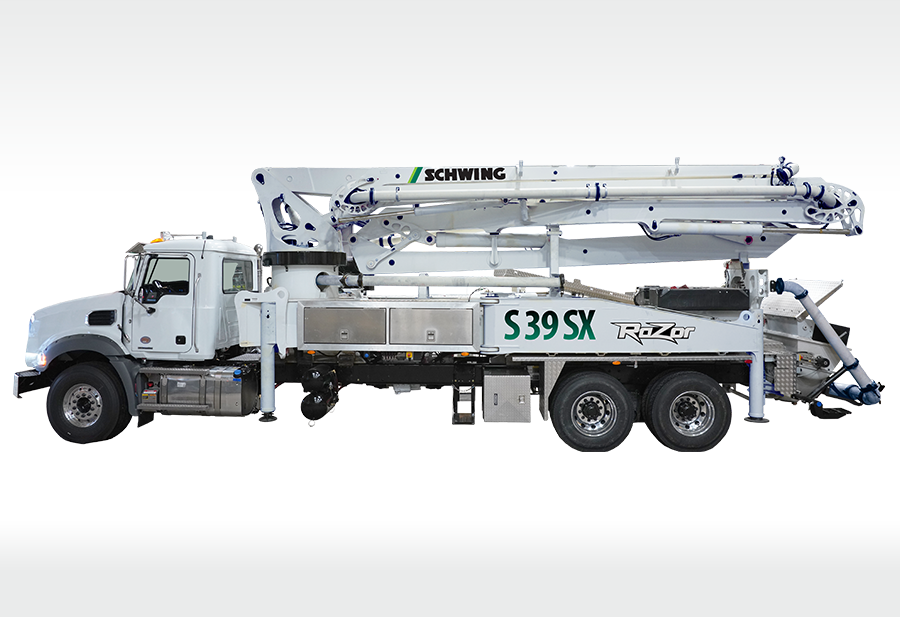
Large civil projects with continuous, high-volume placement demands sometimes use a separate placing boom or a stationary placing boom to place concrete over a wide area from a fixed position, reducing truck traffic on a constrained site. These systems are sophisticated and carry corresponding price tags.
For marine and waterfront infrastructure, including seawall construction, pier pours, and shoreline stabilization, the pump configuration has to account for limited staging area and the logistics of reaching the pour face from a fixed position. A trailer-mounted stationary pump with extended pipeline reach is often the right answer in those situations. The asset is real equipment with real market value, and it finances through the same programs as any other pump configuration in our range.
How We Finance Civil and Infrastructure Equipment Civil contractors typically have contract-backed revenue, often from public agency work, that provides a strong foundation for a financing review. A fixed-term equipment loan is the most common path for outright ownership, with terms running from 48 to 72 months on most commercial-grade pump equipment.
For contractors who prefer not to carry the asset on their balance sheet as capital debt, a lease structure keeps the pump as an operating line item. This matters particularly for contractors who manage bonding capacity carefully, since operating leases and term loans have different effects on the balance sheet and working capital ratios that surety companies evaluate.
Contractors with existing paid-off equipment sitting in the fleet can benefit from a concrete pump sale-leaseback to convert that idle equity into working capital for project startup costs, bond premiums, or equipment mobilization expenses. Civil work has long cash cycles, and liquidity at project start is a real operational need.
Related Industries and Equipment Civil and infrastructure contractors often do adjacent work that creates pump needs beyond their core scope. A mining and tunneling contractor operating in the same project environment as a civil contractor may share equipment needs around shotcrete and high-pressure pumping. Contractors who cross over into highway and bridge work need the deck and column placement capability discussed on the highway and bridge contractor page as well.
Water and wastewater infrastructure work, including treatment plants and pump stations, creates placement scenarios where mix chemistry and pump wear rate are the primary constraints. Contractors doing that work regularly should discuss the pump spec with their ready-mix supplier before finalizing the equipment choice, and we can finance the result of that conversation whether it is a standard unit or a high-pressure configuration.
Civil Contractor Financing FAQs
Finance Your Civil Project Equipment Civil work runs on concrete, and the pump behind it has to be financed and in place before the project starts. Get a pre-approval today on a stationary pump, high-pressure pump, placing boom, or shotcrete system. Apply online or call us directly to start the conversation.
Common questions We have a government contract that starts in two months and need a pump on site at mobilization. Is that timeline workable? Two months is very workable. Our funding timeline is one to two weeks, so there is significant lead time for the approval and equipment delivery. Starting the financing process now means the pump can be confirmed and funded well before mobilization.
Our project requires a pump with specific output and pressure ratings. Can we finance a custom-spec or non-standard unit? Yes. Custom-specification pumps are financeable as long as the completed asset has identifiable market value and the manufacturer is recognized. The financing is on the physical asset, not the project spec. We discuss the asset details before submitting to any lender.
Can we do a sale-leaseback on a pump that is currently assigned to an active project? Yes. The pump does not need to be sitting idle to do a sale-leaseback. The transaction is on the asset, not the project it is working. The pump continues operating throughout the process.
We do surety-bonded work and need to protect our working capital ratio. Which financing structure is better for that? This is a question for your bonding agent or CPA, but generally an operating lease shows differently on the balance sheet than a term loan. We can provide the financial terms in whatever format your bonding company needs to evaluate the impact.
Is marine construction equipment, like equipment used for seawall and pier pours, within your program? Yes. If the pump is a standard concrete pump type (boom, line, or stationary) used in a marine construction context, it is within our program. The application and collateral review are the same as any other pump transaction.
We own three pumps outright and want to buy a fourth. Can we use the equity in the existing units as part of the financing strategy? A sale-leaseback on one or more of the existing units can convert that equity to working capital or a down payment on the new unit. Each existing unit would be evaluated for current market value and the transaction structured from there. This approach can reduce or eliminate the need for a cash down payment on the new equipment.
Common Questions on Civil & Infrastructure Contractors Straight answers before you send the equipment file.
We have a government contract that starts in two months and need a pump on site at mobilization. Is that timeline workable? Two months is very workable. Our funding timeline is one to two weeks, so there is significant lead time for the approval and equipment delivery. Starting the financing process now means the pump can be confirmed and funded well before mobilization.
Our project requires a pump with specific output and pressure ratings. Can we finance a custom-spec or non-standard unit? Yes. Custom-specification pumps are financeable as long as the completed asset has identifiable market value and the manufacturer is recognized. The financing is on the physical asset, not the project spec. We discuss the asset details before submitting to any lender.
Can we do a sale-leaseback on a pump that is currently assigned to an active project? Yes. The pump does not need to be sitting idle to do a sale-leaseback. The transaction is on the asset, not the project it is working. The pump continues operating throughout the process.
We do surety-bonded work and need to protect our working capital ratio. Which financing structure is better for that? This is a question for your bonding agent or CPA, but generally an operating lease shows differently on the balance sheet than a term loan. We can provide the financial terms in whatever format your bonding company needs to evaluate the impact.
Is marine construction equipment, like equipment used for seawall and pier pours, within your program? Yes. If the pump is a standard concrete pump type (boom, line, or stationary) used in a marine construction context, it is within our program. The application and collateral review are the same as any other pump transaction.
We own three pumps outright and want to buy a fourth. Can we use the equity in the existing units as part of the financing strategy? A sale-leaseback on one or more of the existing units can convert that equity to working capital or a down payment on the new unit. Each existing unit would be evaluated for current market value and the transaction structured from there. This approach can reduce or eliminate the need for a cash down payment on the new equipment.
Get Terms on Civil & Infrastructure Contractors Tell us what you are buying, who is selling it, and when you need it earning. We will review the file and point you to the next step.