Concrete & Masonry Contractors Program overview
Pricing basis: boom reach, hours, resale strength
Application-only: up to $500,000
Sellers: dealer, auction, or private party
Turnaround: same business day
Get a Quote Back to list
Concrete and masonry contractors move more material on more job sites than almost any other trade in construction. Slab pours, footings, foundation walls, flatwork, precast placement, masonry grout filling, the list of pump applications runs through every phase of a project. Controlling your own pump instead of calling a subcontractor every time changes both your margin and your scheduling flexibility. We finance the equipment that makes that control possible.
Our program starts at $50,000 and hits its stride at $100,000 to $150,000 and above, which covers the range of truck-mounted booms and line pumps most concrete contractors are shopping. Applications up to about $400,000 can move on the application alone without a full financial package. Approval in days, funding in about one to two weeks.
The Concrete and Masonry Trades We Serve This is a broad category, and the financing needs across it vary quite a bit. Here is the range of contractors we work with:
Concrete flatwork and slab contractors adding a pump to handle larger or more complex pours Foundation contractors who pour continuously and need reliable pump availability without subcontracting costs Masonry contractors adding a grout or mortar pump for block, brick, and structural masonry applications Multi-trade concrete contractors who self-perform forming, placing, and finishing and want full control over the schedule Contractors moving from a trailer-mounted line pump to their first truck-mounted boom to expand their project range Contractors working on foundation and slab work specifically often have repeat, volume-driven demand that makes pump ownership an obvious financial decision once the math is run. Every pour that goes through your own pump rather than a sub's machine adds margin that belongs to you instead of someone else's invoice.
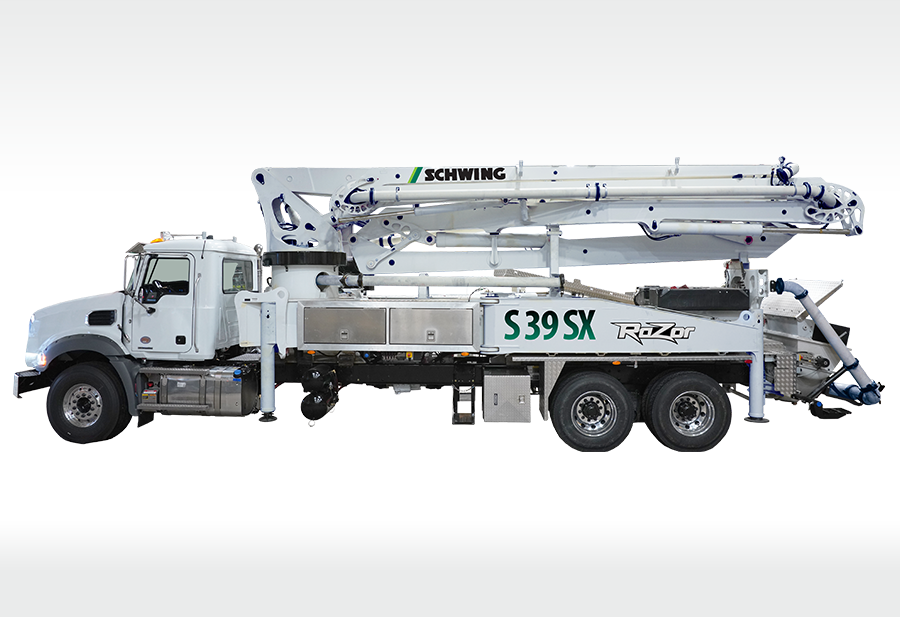
Right-Sizing the Equipment to the Work A concrete and masonry contractor does not always need the biggest boom on the market. The equipment has to match the jobs the company actually bids. A contractor focused on residential and light commercial work may find a 32- or 36-meter boom pump covers everything in the dispatch queue with room to spare. A contractor moving into commercial or industrial concrete work will likely need a 42- or 47-meter unit to handle larger site footprints and elevated placements.
Masonry-specific applications often use grout pumps and mortar pumps , which are lighter and less expensive than full boom trucks but critical to production speed on masonry-intensive projects. These can be financed as stand-alone transactions or as add-ons to larger pump financing packages. A masonry crew running a grout pump for CMU wall fill can complete in hours what would take a full crew day with manual bucket and hose methods, and that productivity difference goes straight to the bottom line.
Used equipment is a viable option for contractors who want to expand capacity without taking on a high new-unit payment. A well-maintained used boom from a reputable manufacturer often runs for years without major mechanical issues and frees up cash flow for the business. We finance used concrete and masonry equipment, including private-party purchases from contractors selling down their fleets or closing their operations, through the same application-only process as new equipment.
For contractors whose work spans multiple pour types, a concrete mixer pump combines the mixing and placement function in a single unit, which is particularly useful for smaller or remote sites where batch plant delivery is impractical and volume does not justify a separate ready-mix supply chain. The financing structure is the same as for a standard line pump or boom truck.
Payment Structure and Term Considerations Equipment loans on pump trucks typically run from 36 to 72 months depending on the transaction, the asset, and the borrower profile. Shorter terms mean higher monthly payments but less total interest paid and faster equity build. Longer terms reduce monthly burden and improve cash flow, which matters for contractors managing payroll and material costs simultaneously.
Leasing is an alternative that some concrete contractors prefer for tax treatment reasons. An FMV lease versus a dollar-buyout lease is a choice that has real financial implications, and the right answer depends on your depreciation strategy and how long you expect to run the unit. We walk through both options before any decision is made.
Contractors who want flexibility on payment timing during slow months should ask about seasonal and deferred payment options . Weather-related slowdowns hit concrete work hard in northern markets, and a payment structure that accounts for that is a legitimate ask. A six-month skip or step-payment program at the front of a loan can align the obligation with the work calendar rather than fighting it.
B and C credit situations are handled. A concrete contractor who went through a difficult period a few years back but has rebuilt the business and can show consistent recent bank activity is a candidate we work with regularly. The credit score is one data point, not the whole story, and lenders who specialize in this space evaluate the full picture.
Getting to Funded The process starts with your equipment details and basic business information. Most concrete and masonry contractors can get a pre-approval response the same day or the next business day. Formal documents follow within a few days after that, and once signed, funding closes quickly.
Total time from first contact to money in the seller's account is typically one to two weeks. Concrete contractors in busy markets like Miami , Denver, and Las Vegas understand that equipment moves fast and slow lenders lose deals. Our process does not lose deals on timing. We match the transaction to the right lender quickly, move documents as soon as the approval lands, and fund before someone else steps in with cash to take the machine.
Common Questions From Concrete Contractors
Own the Pump, Control the Pour Every time you call a pump sub you are paying for their equipment and their margin. Owning your own pump changes that math permanently. Get a pre-approval decision today on a purchase, refinance, or sale-leaseback. Apply online or call us directly to discuss your equipment needs.
Common questions I do both concrete flatwork and masonry. Can I finance a boom pump and a mortar pump in the same transaction? Yes, multi-unit transactions are possible. Depending on the total and each asset's value, they may be written as a single transaction or separate but parallel transactions. We discuss the best structure for your situation upfront.
Can a new concrete contractor with less than two years in business qualify? We have programs specifically for newer businesses, including startup financing options. Time in business under two years is a higher bar, but it is not an automatic no. Owner background, revenue, and the strength of the application matter significantly.
I have a lien on an existing pump but I want to upgrade to a larger unit. How does that work? A trade-in or payoff-and-replace structure can handle this. We pay off the existing lien, credit any equity toward the new unit, and finance the balance. The net result is a single payment on the new equipment.
What if my credit score took a hit during a slow period a couple of years ago? B and C credit profiles are considered. A credit event in the past that does not reflect your current business strength is something we can work around in many cases. We focus on recent performance and the viability of the business.
Do you finance line pumps or only boom trucks? Both. Line pumps, trailer-mounted pumps, mortar pumps, grout pumps, and boom trucks are all within our program. The minimum transaction is $50,000 and the asset needs to have clear collateral value.
My company does masonry restoration and repair, not new construction. Does that affect the financing? No. The pump equipment is the collateral, and the use case in restoration and repair is as legitimate as new construction. We evaluate the business revenue and the asset, not the specific end market you serve.
Common Questions on Concrete & Masonry Contractors Straight answers before you send the equipment file.
I do both concrete flatwork and masonry. Can I finance a boom pump and a mortar pump in the same transaction? Yes, multi-unit transactions are possible. Depending on the total and each asset's value, they may be written as a single transaction or separate but parallel transactions. We discuss the best structure for your situation upfront.
Can a new concrete contractor with less than two years in business qualify? We have programs specifically for newer businesses, including startup financing options. Time in business under two years is a higher bar, but it is not an automatic no. Owner background, revenue, and the strength of the application matter significantly.
I have a lien on an existing pump but I want to upgrade to a larger unit. How does that work? A trade-in or payoff-and-replace structure can handle this. We pay off the existing lien, credit any equity toward the new unit, and finance the balance. The net result is a single payment on the new equipment.
What if my credit score took a hit during a slow period a couple of years ago? B and C credit profiles are considered. A credit event in the past that does not reflect your current business strength is something we can work around in many cases. We focus on recent performance and the viability of the business.
Do you finance line pumps or only boom trucks? Both. Line pumps, trailer-mounted pumps, mortar pumps, grout pumps, and boom trucks are all within our program. The minimum transaction is $50,000 and the asset needs to have clear collateral value.
My company does masonry restoration and repair, not new construction. Does that affect the financing? No. The pump equipment is the collateral, and the use case in restoration and repair is as legitimate as new construction. We evaluate the business revenue and the asset, not the specific end market you serve.
Get Terms on Concrete & Masonry Contractors Tell us what you are buying, who is selling it, and when you need it earning. We will review the file and point you to the next step.