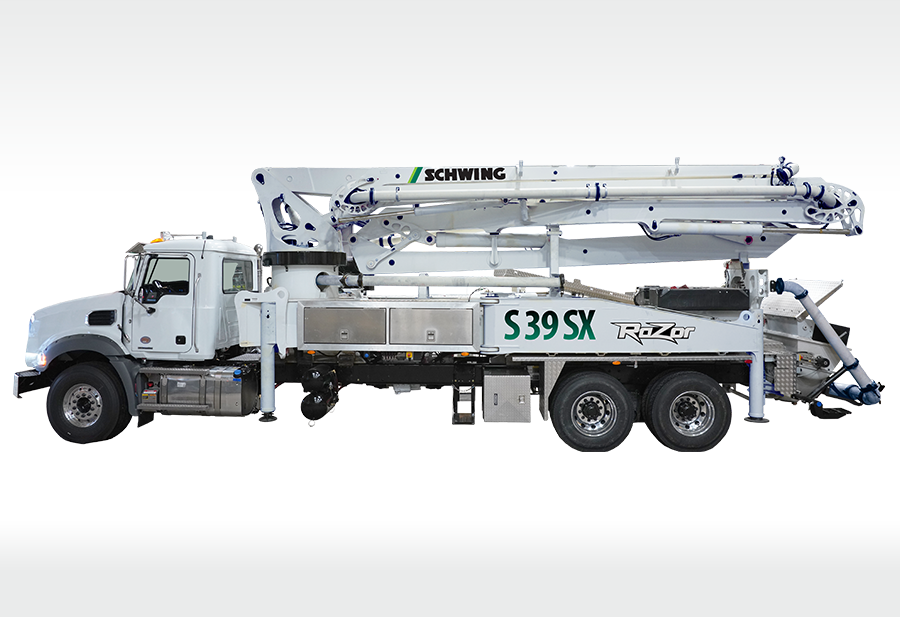
Concrete Pump Sale-Leaseback Program overview
Pricing basis: boom reach, hours, resale strength
Application-only: up to $500,000
Sellers: dealer, auction, or private party
Turnaround: same business day
Get a Quote Back to list
The pump is paid off, it sits in your yard, and the equity in it is doing nothing while you are out here trying to fund the next job. A sale-leaseback turns that idle equity into operating cash without pulling the machine off the schedule. You sell the boom pump to a lender at fair market value, receive the proceeds, then lease it back under a monthly payment. The truck goes to the same pour it was going to. The cash goes where your business needs it.
This is not a distress product. Profitable contractors and concrete pumping service companies use it to self-fund fleet expansions, cover tax events, bridge a slow quarter, or take on a large contract that requires upfront mobilization costs. The machine keeps working while the capital works somewhere else.
The Mechanics of a Pump Sale-Leaseback The transaction has three steps. First, the lender or financing company appraises the equipment and makes an offer based on current fair market value. Second, you sign a purchase agreement transferring title to the lender. Third, you sign a lease agreement that gives you the right to operate the machine in exchange for monthly lease payments over the agreed term. At the end of the lease, you have options: buy the machine back (at FMV or for a fixed buyout price depending on the lease structure), renew the lease, or return the equipment.
The amount you receive is tied to the machine's value, not what you originally paid for it. A well-maintained truck-mounted boom pump from a major manufacturer like Putzmeister or Schwing can carry significant equity several years after purchase. That equity is what a sale-leaseback taps.
You receive a lump sum equal to the agreed purchase price Monthly lease payment replaces the previous zero-payment state Machine stays operational in your fleet throughout the lease End-of-lease options: buyback, renew, or return The Right Situations for a Sale-Leaseback Operators sitting on fully paid or nearly paid equipment are the primary candidates. If you own a 42-meter boom pump or a 47-meter boom pump free and clear, that is a meaningful asset on your balance sheet. A sale-leaseback converts it to liquid capital at a monthly cost that the machine's own revenue should cover easily.
The specific situations that come up most in our conversations:
Funding the down payment or full purchase of a second or third pump to expand the fleet Covering a large bonding requirement for a commercial contract Managing a tax liability without pulling cash from operations Replacing aging support equipment (trucks, service vehicles) without taking on unsecured debt Creating a runway buffer during a slow construction season Concrete pumping contractors in growth mode sometimes use a sale-leaseback on their first paid-off machine to fund the acquisition of a second, then use the revenue from both machines to cover both the new pump loan and the leaseback payment. The math often works when utilization is strong.
How Equipment Value Affects Your Proceeds Lenders will not advance 100 percent of appraised value in a leaseback, typically 80 to 90 percent depending on machine condition, age, and market. A clean late-model unit in active service fetches more than a high-hour machine with deferred maintenance.
Real brands matter here. Equipment from Schwing-Stetter , Putzmeister, and other major manufacturers has an established secondary market, which makes it easier for a lender to get comfortable with the collateral value. Less common brands or heavily modified machines are harder to value and lenders price that uncertainty into the advance rate.
Getting a realistic appraisal before you ask about a sale-leaseback saves time. If the machine's value has declined more than you expected due to hours or market conditions, the proceeds might not meet your cash need. We give you an honest market read at the start of the conversation so you are not 10 days into paperwork before finding out the numbers do not work.
Related Options If a Leaseback Is Not the Right Fit If you owe money on the machine but have built some equity, a cash-out refinance might accomplish a similar goal. You refinance the existing note at a higher balance, pull out the equity as cash, and continue owning the machine outright at the end of the new term. The monthly payment goes up versus a straight rate-and-term refinance, but less than a full leaseback cost in many cases.
If you need cash but the machine is not fully paid and there is little equity, a separate working capital line is usually a better path than a leaseback on underwater equipment. And if you want the machine to stay permanently on your balance sheet as an asset, a refinance preserves ownership in a way a sale-leaseback does not.
See What Your Pump's Equity Is Worth Tell us the make, model, year, and approximate hours on your machine and we will give you an honest equity estimate. The sale-leaseback conversation starts with knowing the number, so start there. No obligation until you decide to proceed.
Common questions Does a sale-leaseback affect my ability to depreciate the machine? Once you sell the machine to the lender, you no longer own it and cannot depreciate it. The lease payment may be deductible as an operating expense depending on the lease classification. This is a meaningful tax difference from a loan. Talk to your CPA before closing a sale-leaseback if the depreciation benefit was part of your tax planning.
What if I want to buy the pump back before the lease ends? Early buyout options exist on many leaseback structures but they are not automatic. Some have a fixed early buyout price after a waiting period; others use a formula based on remaining payments plus a residual. Review the early buyout terms before signing. If getting the machine back at a specific price is important to you, negotiate those terms at closing.
Can I do a sale-leaseback on a pump that still has a loan on it? Yes, but the outstanding loan has to be paid off at closing. The lender advancing the sale proceeds will pay the payoff balance first; you receive the remainder. If the payoff is close to the machine's value, the net cash you receive may be small. A cash-out refinance is often a better structure when significant debt remains.
How quickly can a sale-leaseback close? Two to three weeks for a clean deal with a well-documented machine and straightforward business financials. If the appraisal requires a physical inspection and the machine is remote or unavailable for a few days, that can extend the timeline. Having title and service records ready speeds things up considerably.
Does the lender need to physically take the machine? No. The equipment stays in your yard and continues operating in your fleet. The lender holds title but you maintain possession and operational control throughout the lease. You keep insurance in place with the lender listed as additional insured, just like a financed unit.
Common Questions on Concrete Pump Sale-Leaseback Straight answers before you send the equipment file.
Does a sale-leaseback affect my ability to depreciate the machine? Once you sell the machine to the lender, you no longer own it and cannot depreciate it. The lease payment may be deductible as an operating expense depending on the lease classification. This is a meaningful tax difference from a loan. Talk to your CPA before closing a sale-leaseback if the depreciation benefit was part of your tax planning.
What if I want to buy the pump back before the lease ends? Early buyout options exist on many leaseback structures but they are not automatic. Some have a fixed early buyout price after a waiting period; others use a formula based on remaining payments plus a residual. Review the early buyout terms before signing. If getting the machine back at a specific price is important to you, negotiate those terms at closing.
Can I do a sale-leaseback on a pump that still has a loan on it? Yes, but the outstanding loan has to be paid off at closing. The lender advancing the sale proceeds will pay the payoff balance first; you receive the remainder. If the payoff is close to the machine's value, the net cash you receive may be small. A cash-out refinance is often a better structure when significant debt remains.
How quickly can a sale-leaseback close? Two to three weeks for a clean deal with a well-documented machine and straightforward business financials. If the appraisal requires a physical inspection and the machine is remote or unavailable for a few days, that can extend the timeline. Having title and service records ready speeds things up considerably.
Does the lender need to physically take the machine? No. The equipment stays in your yard and continues operating in your fleet. The lender holds title but you maintain possession and operational control throughout the lease. You keep insurance in place with the lender listed as additional insured, just like a financed unit.
Get Terms on Concrete Pump Sale-Leaseback Tell us what you are buying, who is selling it, and when you need it earning. We will review the file and point you to the next step.