Truck-Mounted Boom Pump Financing Program overview
Pricing basis: boom reach, hours, resale strength
Application-only: up to $500,000
Sellers: dealer, auction, or private party
Turnaround: same business day
Get a Quote Back to list
A truck-mounted boom pump is how most concrete pumping contractors earn their living. The machine self-propels to the job, sets up in under an hour, reaches across obstacles or up multiple floors, and pumps at rates that keep a ready-mix convoy moving. Owning one instead of renting it converts a line-item cost into a revenue asset. Financing it correctly is what makes that conversion work financially.
We fund truck-mounted boom pumps across the full size range, from short 32-meter city pumps to the long-reach 52-meter units that handle mid-rise commercial work. New equipment, used equipment, dealer purchases, and private sales all qualify. The minimum transaction starts at $50,000, with most truck boom deals falling priced roughly $150k–$600k.
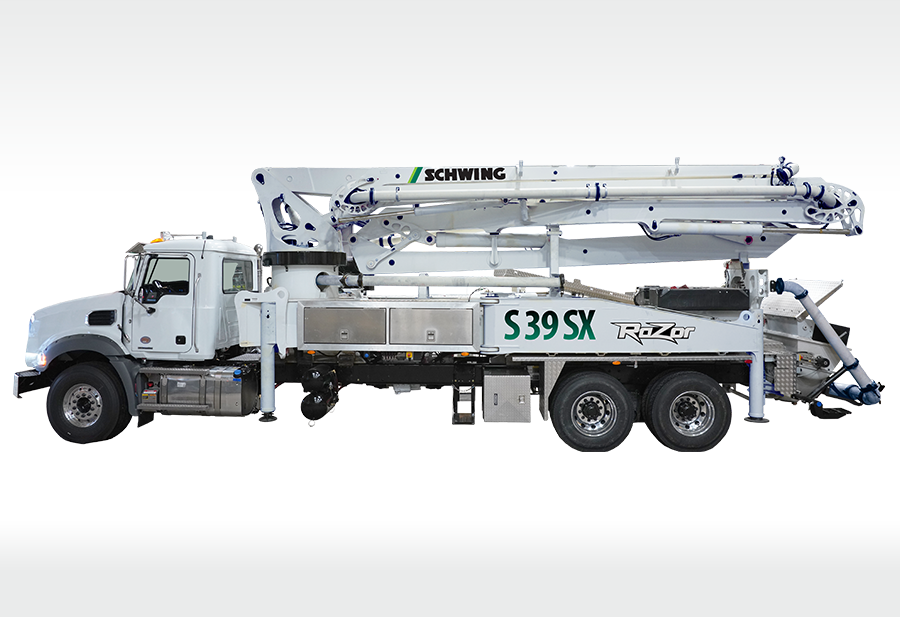
The Machine and What It Does on the Job Truck-mounted boom pumps mount the pump unit and folding boom on a Class 8 truck chassis. The boom sections unfold and articulate through a remote control, placing the discharge hose where the operator directs it. Five-section boom designs dominate newer machines, offering tighter fold packages and better reach geometry than older four-section layouts. Most commercial units operate with 125 to 230 bar concrete pressure and flow rates from 120 to 180 cubic meters per hour depending on configuration and mix.
The truck component matters too. Chassis condition, engine hours, and axle configuration affect how lenders view the collateral. A fresh remount on a recently rebuilt carrier can actually present better than an older unit on its original truck. Ask us about remount financing if you are considering that path.
Outrigger spread, weight distribution, and axle load ratings constrain where a given unit can work. Operators who regularly run confined urban sites sometimes choose a city pump configuration specifically engineered for tight footprints. Those also qualify for the same financing programs.
Boom fold configuration also influences where and how the machine deploys. A Z-fold machine and a roll-and-fold unit of the same length perform differently on sites with low overhead structure at the setup point. Buyers who work regularly in one site type over another benefit from matching fold design to that environment at acquisition time rather than discovering the mismatch after the deal closes.
What We Need to Get Your Deal Done We keep the paperwork as light as the machine will allow. Start with a one-page credit application covering the business and the principals. For transactions up to roughly $400,000, that plus basic business documentation is often the whole file on a clean credit deal. Larger amounts or weaker credit profiles pull in three months of business bank statements and sometimes the prior year tax return.
For application-only financing , the decision turns on business credit, personal credit of the guarantors, and time in business. Contractors with two-plus years operating history and consistent bank deposits qualify most readily. Newer operators with strong personal credit and a first contract in hand have a path too, just with more documentation.
What does not help: tax returns that show little profit because of aggressive write-downs but bank statements that do not support the business income. Lenders reconcile both. If your situation has a story, tell us early so we can route the file to the lender most likely to understand it.
Terms, Rates, and Structures Truck-mounted boom pump deals typically amortize over 48 to 72 months. Newer machines with strong borrower profiles can stretch to 84 months when the math benefits the buyer. Rates depend on the credit file, equipment age, and lender appetite at the time of the deal. We never quote a rate before seeing a file; every number a competitor puts in front of you before underwriting is speculation.
Structure choices include equipment loans, equipment leases , and sale-leaseback. Equipment loans are the most straightforward: fixed monthly payment, full ownership at payoff. Leases offer payment flexibility and sometimes preserve capital for other uses, particularly for operators who cycle equipment on a five-to-seven year replacement schedule. Section 179 and bonus depreciation apply to purchased equipment, which is worth a conversation with your tax advisor before choosing a structure.
Operators looking at seasonal cash flow can ask about seasonal payment programs that schedule larger payments in high-volume months and smaller ones in winter.
Why Ownership Beats Renting for Active Operators Rental rates for truck-mounted boom pumps in active markets run several thousand dollars per day plus operator costs. A contractor averaging two pours per week for 40 weeks spends a meaningful percentage of what a purchase would cost annually on rental alone, with nothing to show for it at year end. Ownership converts that ongoing expense into equity, a depreciable asset, and a competitive advantage on jobs that require quick mobilization.
Concrete pumping service companies building a fleet know this math cold. So do general contractors who run enough volume to justify ownership. The question is not whether to own, it is how to finance the acquisition in a way that keeps cash flow intact.
Mobilization speed is another ownership advantage that rarely shows up in the rental comparison math. When a contractor owns the machine, they can commit to pour day without confirming equipment availability from a rental house first. On busy construction seasons in active markets, rental availability for larger boom sizes can be inconsistent. Owning the iron means saying yes to the job without the uncertainty of the rental market.
Common Questions from Buyers The questions we hear most often from contractors financing their first or next truck-mounted boom pump.
Find Out What Your Deal Looks Like Give us the details on the machine you are targeting and we will structure the financing before the seller moves on. Fast application, real lenders, quick decisions.
Common questions Can I include the pump operator in the deal, or is this strictly the equipment? Equipment financing covers the machine itself. Labor and operating costs are separate. Some operators finance the truck, the pump, and related accessories like hoses and pipeline in one package. Ask us about bundling when relevant.
The unit I want is 15 years old. Will lenders still touch it? Age alone does not disqualify a machine, but older units face more scrutiny on hours, condition, and remaining useful life. A 15-year-old pump with documented low hours and recent major service can still be financed. Bring the inspection report and maintenance records. Used equipment financing specialists handle these deals routinely.
I own my current pump free and clear. Can I use it to fund a down payment on a newer unit? A Concrete Pump Sale-Leaseback on the existing machine can generate cash that goes toward the new purchase. You sell the pump to a lender and lease it back, keeping it in service. The proceeds become your capital for the next deal.
How do lenders verify what the machine is worth? Most rely on recent comparable sales in the used-pump market, the equipment's documented history, and sometimes a formal appraisal for larger deals. Auctions and dealer asking prices both feed into the valuation conversation.
Is there a difference between financing a truck-mounted boom pump versus a trailer-mounted pump? Structurally the financing programs are similar, but collateral considerations differ. Trailer pumps are often lower in value and simpler in mechanicals. Trailer-mounted line pump financing follows the same basic application process, though lenders view the risk profile differently.
Common Questions on Truck-Mounted Boom Pump Financing Straight answers before you send the equipment file.
Can I include the pump operator in the deal, or is this strictly the equipment? Equipment financing covers the machine itself. Labor and operating costs are separate. Some operators finance the truck, the pump, and related accessories like hoses and pipeline in one package. Ask us about bundling when relevant.
The unit I want is 15 years old. Will lenders still touch it? Age alone does not disqualify a machine, but older units face more scrutiny on hours, condition, and remaining useful life. A 15-year-old pump with documented low hours and recent major service can still be financed. Bring the inspection report and maintenance records. Used equipment financing specialists handle these deals routinely.
I own my current pump free and clear. Can I use it to fund a down payment on a newer unit? A Concrete Pump Sale-Leaseback on the existing machine can generate cash that goes toward the new purchase. You sell the pump to a lender and lease it back, keeping it in service. The proceeds become your capital for the next deal.
How do lenders verify what the machine is worth? Most rely on recent comparable sales in the used-pump market, the equipment's documented history, and sometimes a formal appraisal for larger deals. Auctions and dealer asking prices both feed into the valuation conversation.
Is there a difference between financing a truck-mounted boom pump versus a trailer-mounted pump? Structurally the financing programs are similar, but collateral considerations differ. Trailer pumps are often lower in value and simpler in mechanicals. Trailer-mounted line pump financing follows the same basic application process, though lenders view the risk profile differently.
Get Terms on Truck-Mounted Boom Pump Financing Tell us what you are buying, who is selling it, and when you need it earning. We will review the file and point you to the next step.