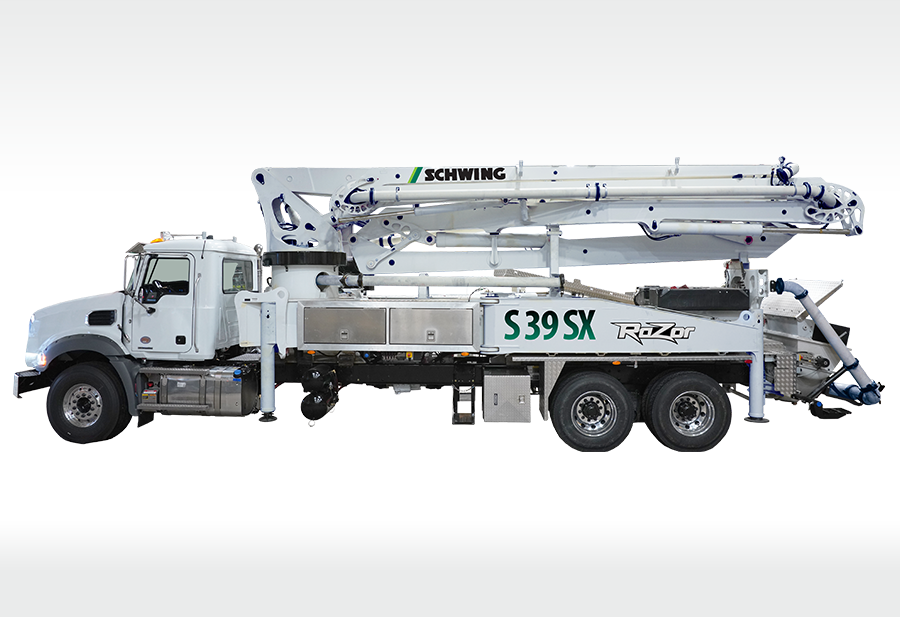
Bad-Credit (B/C) Equipment Financing for Concrete Pumps Program overview
Pricing basis: boom reach, hours, resale strength
Application-only: up to $500,000
Sellers: dealer, auction, or private party
Turnaround: same business day
Get a Quote Back to list
Credit scores tell part of the story. They do not tell a lender that you ran three pours last week, that you have two contractors lined up, or that the boom pump itself will cover the payment three times over if the machine stays booked. A concrete pump is not a signature loan. There is iron backing this debt. That changes what is possible when the credit score looks rough on paper.
B and C credit financing for concrete boom pumps and line pumps is part of what we do, not an asterisk at the bottom of the page. Operators in this credit tier fund equipment through us every month. The deal requires more structure than a prime credit transaction, but it is a real path.
What B and C Credit Actually Means Here B and C credit is not a precise definition. Generally, B credit refers to credit profiles with FICO scores in the 580 to 660 range with some derogatory history, late payments, collections, or a past bankruptcy that is at least 2 to 3 years discharged. C credit is 540 to 580 with more significant derogatory marks. Below 540 is difficult but not impossible if the other elements of the deal are strong enough.
What drives the deal for a subprime applicant is the combination of three things: the collateral value of the machine, the current cash flow of the business, and the down payment. A strong showing on all three can compensate for meaningful credit challenges. A weak showing on all three is a deal that does not close regardless of how good the operator's intentions are.
Collateral: machine value, brand recognition, secondary market liquidity Cash flow: current bank statements showing consistent deposits and manageable obligations Down payment: 10 to 30 percent down depending on credit tier reduces lender risk materially Lenders in the B and C space who specialize in equipment, not banks doing someone a favor, understand concrete pumping contractors and the revenue model behind a pump. They fund these deals because they know the machine produces income. That industry knowledge is worth something at the underwriting table.
Documentation Requirements for B and C Deals The documentation bar is higher for a subprime deal, not lower. Lenders need more to get comfortable, not less. A complete application for a B or C credit deal typically includes: completed credit application, six months of business bank statements (some want 12), last two years of business and personal tax returns, personal financial statement, and documentation on the equipment including inspection results if it is a used machine.
Explanatory letters matter more than most operators realize. A brief explanation of what caused the credit issue, a job loss, a business closure, a medical event, and what has changed since, genuinely influences underwriter decisions. It does not have to be long. It has to be honest and specific. An underwriter who understands the context is more likely to fight for an approval than one looking at derogatory marks with no story attached.
Bank statements are the real-time credit check. If your deposits are strong and consistent and your NSFs are low, that carries weight even when the history-based credit score looks rough. Three to six months of clean activity following a difficult period goes a long way.
Rate and Term Reality for B/C Credit The rate on a B or C credit deal is higher than a prime rate. That is the straightforward answer. How much higher depends on the credit score, the down payment, the collateral quality, and the specific lender. Posted rate ranges are missing on purpose: the spread is too wide to be useful without your specific numbers in front of us.
Term length is often shorter, 36 to 60 months rather than 72 or 84. A shorter term means higher monthly payments but less total interest and a faster path to full ownership. Many B and C credit borrowers prioritize paying off the machine quickly and then refinancing other equipment at better rates once the first machine shows a clean payment history.
Down payment requirements in the 15 to 25 percent range are common. Some operators in this tier look at application-only programs for smaller deals where the down requirement may be lower. Others explore a co-signer arrangement to bring a stronger credit profile into the transaction.
Parallel Paths Worth Considering If the credit score is the barrier and the business itself is financially solid, a personal guaranty with co-signer remains an option. The co-signer takes on the legal obligation alongside you; their credit combines with yours in the lender's view. Choose a co-signer who understands what they are agreeing to.
For operators looking at a specific used machine, a used concrete boom pump at a lower price point sometimes opens better financing options at a B/C credit tier than a new machine at three times the cost. The payment-to-income ratio matters; a $180,000 deal may close when a $500,000 deal does not, even with the same credit profile.
Owner-operators who have strong income as W-2 employees in the pumping industry and are transitioning to their own operation sometimes qualify more easily on personal credit and personal income than as a new business entity. We structure those deals too.
Start With an Honest Conversation Tell us your situation plainly: the machine you want, your credit picture, your down payment, and your business cash flow. We will tell you what is realistic without running a hard credit pull first. More operators in this credit tier fund than expect to.
Common questions I had a bankruptcy three years ago. Can I get a concrete pump loan? A bankruptcy that is 2 to 3 or more years discharged does not automatically disqualify you. Lenders in the B and C space distinguish between a bankruptcy that is recent (still less than 24 months discharged) versus one where the applicant has rebuilt credit and maintained clean payment history since. Yours is in the range where deals happen, especially with a meaningful down payment and solid current cash flow.
My business has a judgment against it. Can I still finance a pump? It depends on the nature of the judgment and whether it is satisfied or outstanding. A satisfied judgment from several years ago is different from an active, unsatisfied one. Unsatisfied judgments are real obstacles because a lender may not want to fund equipment that could be seized in a collection action. We look at the specific situation rather than applying a blanket rule.
How much of a down payment makes the most difference? Generally moving from 10 percent down to 20 or 25 percent down makes a material difference in deal approval odds and rate. It reduces the lender's risk exposure by putting more of the collateral cushion in their favor. If you are on the edge of qualifying, increasing the down payment is the single most effective lever you have.
Will a bad credit pump loan hurt my chances of getting other financing? The loan itself, reported positively with on-time payments, builds your credit over time. The hard inquiry at application has a small short-term impact on credit score. Paying the pump loan well is the fastest practical way to rebuild credit that makes future deals cheaper. The machine paying for itself while rebuilding your credit profile is the whole strategy.
Do pump lenders use a hard score cutoff? We do not use the score by itself as the answer. Pump collateral, current revenue, down payment, and recent payment behavior all matter. We have seen deals close with scores in the 520s when the rest of the file was strong, and we have seen higher-score files stall when those other pieces were weak. Submit the application and let us review the full picture.
Common Questions on Bad-Credit (B/C) Equipment Financing for Concrete Pumps Straight answers before you send the equipment file.
I had a bankruptcy three years ago. Can I get a concrete pump loan? A bankruptcy that is 2 to 3 or more years discharged does not automatically disqualify you. Lenders in the B and C space distinguish between a bankruptcy that is recent (still less than 24 months discharged) versus one where the applicant has rebuilt credit and maintained clean payment history since. Yours is in the range where deals happen, especially with a meaningful down payment and solid current cash flow.
My business has a judgment against it. Can I still finance a pump? It depends on the nature of the judgment and whether it is satisfied or outstanding. A satisfied judgment from several years ago is different from an active, unsatisfied one. Unsatisfied judgments are real obstacles because a lender may not want to fund equipment that could be seized in a collection action. We look at the specific situation rather than applying a blanket rule.
How much of a down payment makes the most difference? Generally moving from 10 percent down to 20 or 25 percent down makes a material difference in deal approval odds and rate. It reduces the lender's risk exposure by putting more of the collateral cushion in their favor. If you are on the edge of qualifying, increasing the down payment is the single most effective lever you have.
Will a bad credit pump loan hurt my chances of getting other financing? The loan itself, reported positively with on-time payments, builds your credit over time. The hard inquiry at application has a small short-term impact on credit score. Paying the pump loan well is the fastest practical way to rebuild credit that makes future deals cheaper. The machine paying for itself while rebuilding your credit profile is the whole strategy.
Do pump lenders use a hard score cutoff? We do not use the score by itself as the answer. Pump collateral, current revenue, down payment, and recent payment behavior all matter. We have seen deals close with scores in the 520s when the rest of the file was strong, and we have seen higher-score files stall when those other pieces were weak. Submit the application and let us review the full picture.
Get Terms on Bad-Credit (B/C) Equipment Financing for Concrete Pumps Tell us what you are buying, who is selling it, and when you need it earning. We will review the file and point you to the next step.