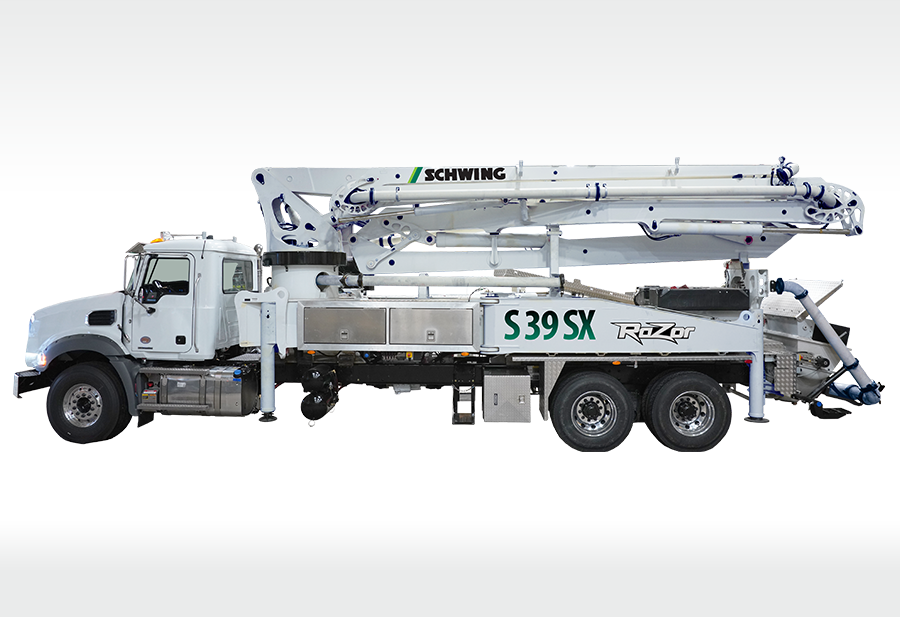
Hydraulic Placing Boom Financing Program overview
Pricing basis: boom reach, hours, resale strength
Application-only: up to $500,000
Sellers: dealer, auction, or private party
Turnaround: same business day
Get a Quote Back to list
Hydraulic placing booms power the slewing, luffing, and folding actions that direct mix precisely across a large pour area. Every movement from the operator's remote pendant feeds a hydraulic circuit, and that circuit is what separates a hydraulic placing boom from a manually-repositioned pipe end. On a 400-yard slab pour with a crew of 20 finishers counting on consistent placement, that responsiveness and reach control is not a luxury. It is what keeps the pour moving at the rate the pump can deliver.
We finance hydraulic placing booms across all configurations: structure-mounted fixed-column units, freestanding mast units, and the boom heads used on self-climbing systems. If the hydraulic package and boom arm are the equipment in the deal, we can fund it. The process is straightforward, and we move fast.
The Hydraulic System Behind the Boom What the Hydraulics Control A hydraulic placing boom has at least three axes of movement controlled by the hydraulic system: slewing (rotation around the mast), luffing (up-down angle of the main boom section), and folding of the knuckle joints between boom sections. Larger systems with multiple folds add more axes, each requiring its own hydraulic circuit. The power pack, typically diesel or electric-driven, supplies pressure to all circuits and must handle simultaneous actuation of multiple movements during active placement.
The remote pendant the operator carries extends from 30 to 100 feet depending on the manufacturer and system, long enough to let the operator walk alongside the discharge hose while directing placement from close range. The control interface differs by manufacturer but the underlying hydraulic architecture is similar across all major brands. Understanding which manufacturer's system is installed on a used unit matters for ongoing maintenance, which is a discussion worth having before you commit to a purchase.
Connection to the Pipeline The hydraulic boom is only the distribution head. It receives concrete from the pipeline that runs from the pump at grade, up a vertical riser or through a horizontal run, to the inlet flange on the boom. The boom itself distributes that concrete through its folded arms to the discharge hose at the tip. Problems in the pipeline upstream show up as pressure fluctuations, plugs, or inconsistent flow at the boom tip. Financing the boom without addressing pipeline condition is a setup for operational headaches. Our concrete placing hose and pipeline financing page covers that equipment.
Buyers Who Finance Hydraulic Placing Booms Several distinct groups buy this equipment and the financing profiles differ.
High-rise concrete subcontractors providing pump and placement services to GCs on tower projects. These operators own and operate the boom as a billable piece of their service offering. They finance the boom as a revenue-generating asset, and the daily or pour-day billing rate is what services the payment. Concrete pumping service companies are the core of this buyer group.General contractors self-performing concrete on large commercial, industrial, or institutional projects where controlling the placement phase reduces dependence on a sub. The boom is a strategic asset that pays back through margin capture, not daily rates.Precast and tilt-up contractors who pour large beds or panels in a plant or yard setting. A freestanding mast-mounted hydraulic boom covering a precast bed saves repositioning time on every pour cycle. See tilt-up and precast contractors for more on that use case.Equipment rental companies serving the tower market in high-activity metros like New York , Dallas , and Los Angeles . Rental rates on placing booms in active markets can recover purchase cost in two to three major project cycles.Loan and Lease Structures for Hydraulic Placing Booms The most common structure is a straight equipment loan at 60 to 84 month terms, with the boom as collateral. For operators who want to preserve depreciation while keeping the balance sheet lighter, a concrete pump equipment lease is a viable alternative. In a lease, the lessee makes payments over the term and either returns, purchases, or rolls into new equipment at the end. The right structure depends on how long the contractor expects to use this specific machine and how much they value the tax write-off in the year of acquisition.
Down payment requirements vary by credit. Strong-credit operators often close with zero to ten percent down. B and C credit borrowers should plan for fifteen to twenty-five percent depending on the deal size and financial profile. Bad-credit equipment financing is available, and the larger the down payment, the more room there is to work with a challenged credit history.
Operators who have equity in existing concrete equipment and need the placing boom for an upcoming project should ask about a Concrete Pump Sale-Leaseback on the existing iron to generate the down payment or working capital for the new boom purchase. This structure gets the new equipment in place without a large cash outlay at close.
From Application to Funded Most hydraulic placing boom transactions close within one to two weeks of a complete application. What completes an application: the equipment spec or quote, your last three months of business bank statements, a current equipment list with values, and basic business formation documents. For transactions above $400,000, expect a lender to request a filed business tax return as well.
Speed matters on placing boom deals because the equipment often needs to be on site by a specific pour date. If you have a project timeline driving a delivery deadline, tell us upfront. We can prioritize processing for time-sensitive deals, but only when we know the constraint exists.
Common Questions What hydraulic placing boom buyers ask us.
Ready to Fund Your Hydraulic Placing Boom The pour date is set. The boom should be ordered, paid for, and on its way. Start an application now or call us and we will walk through the deal. We are concrete equipment specialists and we move fast.
Common questions Can I finance the hydraulic power pack separately from the boom if I already own the structure-mounting hardware? If the hydraulic power unit is a separable and independently valuable asset, yes, it can be financed on its own, provided the amount clears the $50,000 minimum. More commonly the power pack and boom are financed together as a complete system. Tell us what you own and what you need and we will structure accordingly.
My placing boom is already installed on a building we are currently building. Can I pull equity out of it? A sale-leaseback on an installed and operating boom is possible if the title is clean and the equipment is currently free and clear of liens. The equipment simply needs to be clearly recoverable at project end and titled to your business. This structure is more involved than a standard transaction but we have done it.
What credit score do I need to finance a hydraulic placing boom? There is no hard floor. We have funded operators with scores in the 580s when the business financials were strong and the down payment was meaningful. Credit score is one data point in a file that includes revenue, equipment list, banking patterns, and the deal structure itself. If you have concerns about your credit, share the full picture upfront.
How long do hydraulic placing booms typically last, and does that affect the loan term? Well-maintained hydraulic placing booms from major manufacturers have useful lives of 15 to 20 years. Loan terms typically run 48 to 84 months, well inside the asset life. Lenders are comfortable with this equipment class as long-term collateral because the resale market is real and the assets hold value at reasonable maintenance levels.
Do I need to put the placing boom in a separate legal entity from my other equipment? Generally no, though some contractors with multiple projects running simultaneously use project-specific entities for asset organization. Financing can be titled to any active business entity with a clean EIN and operating history. Talk to your accountant about the entity strategy; we can work with whatever structure makes sense for your business.
Common Questions on Hydraulic Placing Boom Financing Straight answers before you send the equipment file.
Can I finance the hydraulic power pack separately from the boom if I already own the structure-mounting hardware? If the hydraulic power unit is a separable and independently valuable asset, yes, it can be financed on its own, provided the amount clears the $50,000 minimum. More commonly the power pack and boom are financed together as a complete system. Tell us what you own and what you need and we will structure accordingly.
My placing boom is already installed on a building we are currently building. Can I pull equity out of it? A sale-leaseback on an installed and operating boom is possible if the title is clean and the equipment is currently free and clear of liens. The equipment simply needs to be clearly recoverable at project end and titled to your business. This structure is more involved than a standard transaction but we have done it.
What credit score do I need to finance a hydraulic placing boom? There is no hard floor. We have funded operators with scores in the 580s when the business financials were strong and the down payment was meaningful. Credit score is one data point in a file that includes revenue, equipment list, banking patterns, and the deal structure itself. If you have concerns about your credit, share the full picture upfront.
How long do hydraulic placing booms typically last, and does that affect the loan term? Well-maintained hydraulic placing booms from major manufacturers have useful lives of 15 to 20 years. Loan terms typically run 48 to 84 months, well inside the asset life. Lenders are comfortable with this equipment class as long-term collateral because the resale market is real and the assets hold value at reasonable maintenance levels.
Do I need to put the placing boom in a separate legal entity from my other equipment? Generally no, though some contractors with multiple projects running simultaneously use project-specific entities for asset organization. Financing can be titled to any active business entity with a clean EIN and operating history. Talk to your accountant about the entity strategy; we can work with whatever structure makes sense for your business.
Get Terms on Hydraulic Placing Boom Financing Tell us what you are buying, who is selling it, and when you need it earning. We will review the file and point you to the next step.