Roll-and-Fold Boom Pump Financing Program overview
Pricing basis: boom reach, hours, resale strength
Application-only: up to $500,000
Sellers: dealer, auction, or private party
Turnaround: same business day
Get a Quote Back to list
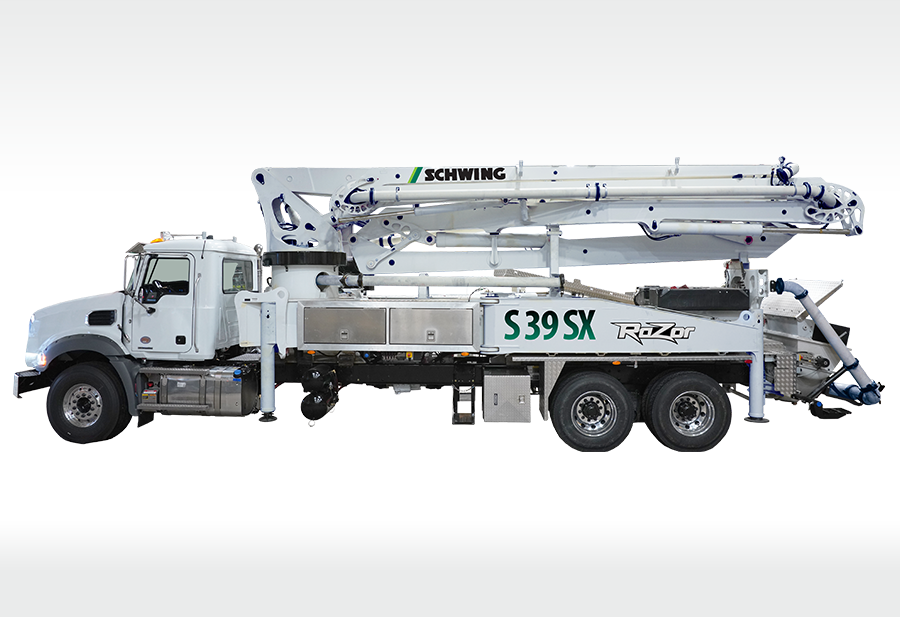
Roll-and-fold boom design keeps the transport package low and the unfolding sequence efficient. Sections nest toward the rear of the truck in a tight roll, then deploy forward in a progressive sequence that gets the boom out fast on pour day. Contractors who work in markets with low bridge clearances on haul routes, or who set up frequently on tight commercial sites where the machine's vertical profile during travel matters, have reasons to prefer roll-and-fold over Z-fold alternatives.
We finance roll-and-fold boom pumps across boom sizes from the compact end of the range through large commercial machines. The fold configuration is a mechanical detail that does not change the financing mechanics. Deal structure, approval timeline, and available programs are the same as for any concrete boom pump. What you are financing is the machine's productive capability, and that is what lenders look at. The Z-fold alternative is also within our program set for buyers comparing configurations.
Roll-and-Fold Design: Practical Operating Advantages In a roll-and-fold configuration, boom sections fold in the same rotational direction, stacking behind the cab in a profile that typically results in a lower overall transport height than Z-fold designs. The deployment sequence unfolds from rear to front, with each section rolling forward as it extends. Operators familiar with this design can deploy from transport to work-ready quickly, which matters on jobs where setup time counts against productivity.
Lower transport height is the functional advantage most operators cite. Contractors who regularly haul through markets with strict over-height restrictions, or who need to move between urban sites with low parking structures and overpasses on the route, favor roll-and-fold for this reason. The few extra feet of clearance can make the difference between a normal haul and a special permit requirement.
At larger boom sizes, roll-and-fold configurations are common. Major manufacturers produce roll-and-fold designs across the mid-range boom spectrum. Specific model selection should match the operating requirements and the buyer's primary haul corridors. Both Schwing and Putzmeister have produced prominent roll-and-fold designs, and both brands carry strong dealer and parts support networks.
How the Deal Works Application, documentation, approval, funding. One page to start the process. For transactions under about $400,000 on clean credit files, the application plus basic business documents is often the complete package. Larger deals or more complex credit profiles pull in three months of bank statements and the prior year business return. Approval in one to three business days. Funding within a week to two weeks after approval.
Structure options: equipment loan with ownership at payoff, capital or operating lease , or sale-leaseback for operators who already own equipment and want to free up capital. The right structure depends on how you use the machine, how you manage taxes, and how long you plan to operate before upgrading or selling.
Buyers who want the machine before they have all the documents ready can start with the credit application now and gather supporting paperwork in parallel. The credit decision is the longest-lead item; documentation can often be provided after approval is in hand.
Credit and What the File Should Look Like The strongest files have: established business entity with two-plus years of operating history, consistent revenue in bank statements, no open judgments or unresolved liens, and a clearly identified machine with complete purchase documentation. These files often move through underwriting in one day and fund within the week.
Files that need more work but still close: shorter operating history, one or two credit events that are explained and documented, seasonal revenue patterns that create uneven bank statements. These go to specialist lenders who understand construction industry cash flow patterns. They take a few extra days but the deal gets done.
Bad-credit equipment financing programs handle the toughest files. Credit scores below 580, prior bankruptcies, unresolved tax issues. These programs exist because contractors with real work and real equipment still need to finance their businesses. We are direct about what is achievable and what is not before any time is wasted.
Who Chooses Roll-and-Fold Machines Contractors whose primary haul routes include urban corridors with frequent low clearances choose roll-and-fold for practical operational reasons. In markets like Chicago , Boston , and other cities with aging infrastructure and low bridge clearances, transport height is a real daily consideration.
Concrete pumping service companies that offer next-day and same-day availability across a broad geographic service area benefit from machines that can move quickly without permit overhead on standard routes. A roll-and-fold machine that clears standard height restrictions without special routing is a logistical asset as well as a productive one.
Operators comparing configurations for a first machine often choose roll-and-fold because it creates fewer route and site constraints as a general rule. The Z-fold advantage is specific to site conditions that require its particular deployment geometry; roll-and-fold is the more operationally neutral choice for general-purpose boom pump work.
Fleet operators who run multiple machines across multiple job sites on any given day find that standardizing on roll-and-fold configurations reduces operator training overhead. A crew that rotates between machines needs to adapt quickly, and familiarity with a consistent fold sequence across the fleet reduces setup errors and speeds daily mobilization. That operational consistency has real value that does not always show up in the equipment comparison sheet but makes a difference over a full season of work.
Financing Questions on Roll-and-Fold Machines What buyers ask when evaluating roll-and-fold boom pump financing options.
Get Financed on a Roll-and-Fold Boom Pump Application takes minutes. Decisions come back in a day or two. Tell us what machine you have in mind and we will put a real number in front of you.
Common questions I found a roll-and-fold machine at an auction. Can I finance an auction purchase? Auction purchases are financeable but require fast action. Auctions sometimes have payment deadlines that do not allow normal lender timelines. Pre-qualifying for financing before the auction is the right approach. Know your limit going in, then execute quickly after winning.
Can I use a roll-and-fold boom pump as the anchor collateral for a larger equipment loan that includes accessories and a line pump? Multi-asset packages are structured case by case. Bundling the boom pump with accessories, pipeline, and a line pump is possible if the combined package makes sense for the lender's collateral analysis. A well-maintained boom pump is typically the strongest collateral in any such package.
My business is structured as an LLC with two members. How does that affect the application? LLC structure is standard for concrete businesses. Both members with significant ownership stakes typically need to sign as guarantors. The entity itself is the borrower. Entity age, not personal credit alone, influences the terms available.
Is there a difference between financing a 40-meter roll-and-fold versus a 47-meter roll-and-fold? The size difference affects the machine's purchase price, which changes the financed amount, amortization options, and required documentation level. A larger machine typically requires more documentation. Otherwise the process is the same. Compare both sizes at 42-Meter Boom Pump Financing and 47-Meter Boom Pump Financing pages for more detail on those specific size categories.
What happens if I need to move the machine across state lines for an out-of-state project? Operating the financed equipment in other states is generally permissible under the loan or lease agreement, though you should review your specific contract terms. Lenders typically require you to maintain insurance coverage regardless of operating state. Notify your insurer when working in a new state to confirm coverage applies.
Common Questions on Roll-and-Fold Boom Pump Financing Straight answers before you send the equipment file.
I found a roll-and-fold machine at an auction. Can I finance an auction purchase? Auction purchases are financeable but require fast action. Auctions sometimes have payment deadlines that do not allow normal lender timelines. Pre-qualifying for financing before the auction is the right approach. Know your limit going in, then execute quickly after winning.
Can I use a roll-and-fold boom pump as the anchor collateral for a larger equipment loan that includes accessories and a line pump? Multi-asset packages are structured case by case. Bundling the boom pump with accessories, pipeline, and a line pump is possible if the combined package makes sense for the lender's collateral analysis. A well-maintained boom pump is typically the strongest collateral in any such package.
My business is structured as an LLC with two members. How does that affect the application? LLC structure is standard for concrete businesses. Both members with significant ownership stakes typically need to sign as guarantors. The entity itself is the borrower. Entity age, not personal credit alone, influences the terms available.
Is there a difference between financing a 40-meter roll-and-fold versus a 47-meter roll-and-fold? The size difference affects the machine's purchase price, which changes the financed amount, amortization options, and required documentation level. A larger machine typically requires more documentation. Otherwise the process is the same. Compare both sizes at 42-Meter Boom Pump Financing and 47-Meter Boom Pump Financing pages for more detail on those specific size categories.
What happens if I need to move the machine across state lines for an out-of-state project? Operating the financed equipment in other states is generally permissible under the loan or lease agreement, though you should review your specific contract terms. Lenders typically require you to maintain insurance coverage regardless of operating state. Notify your insurer when working in a new state to confirm coverage applies.
Get Terms on Roll-and-Fold Boom Pump Financing Tell us what you are buying, who is selling it, and when you need it earning. We will review the file and point you to the next step.