No-Money-Down Equipment Financing for Concrete Pumps Program overview
Pricing basis: boom reach, hours, resale strength
Application-only: up to $500,000
Sellers: dealer, auction, or private party
Turnaround: same business day
Get a Quote Back to list
Cash sitting in a down payment does not pour concrete. For operators who have the credit profile and the revenue to support a pump payment, putting $0 down and preserving working capital for operations is a legitimate strategy. No-money-down equipment financing is not a marketing gimmick; it is a real structure that works for specific deals with the right credit and collateral profile.
The trade-off is straightforward: a lender advancing 100 percent of the purchase price takes on more risk than one requiring 20 percent down. That risk gets priced into the rate, the term, or both. Whether the math makes sense depends on your credit, the machine, and what you are doing with the capital you would have deployed as a down payment.
When Zero Down Actually Works No-money-down financing is available and not uncommon for operators who bring strong credit and clean financials to a new equipment deal. Here is what typically needs to be in place:
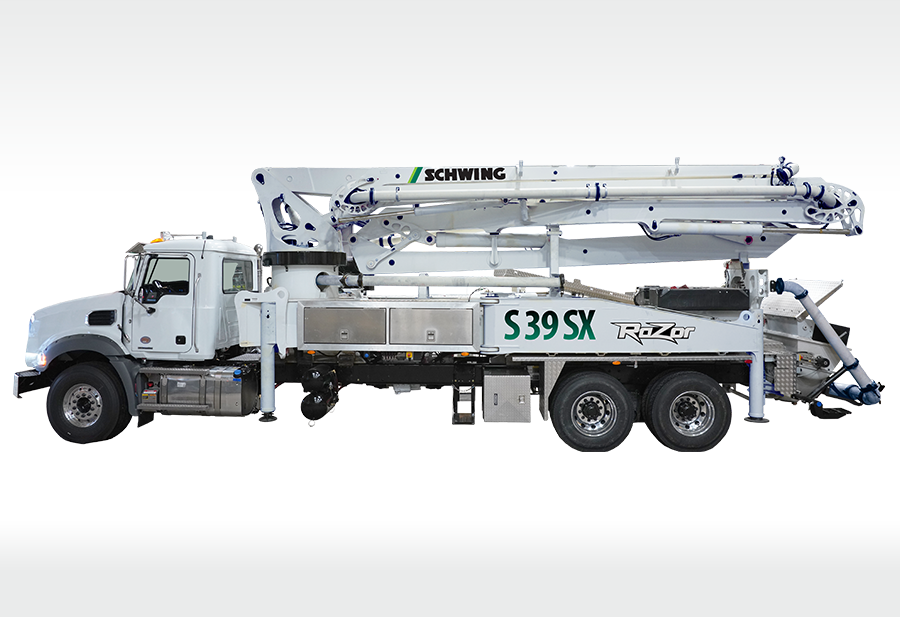
Personal or business credit score in the upper ranges, generally 680 and above performs better; 720 or higher often qualifies for zero-down structures on new equipment Two or more years of business operation with clean financial history New equipment or late-model used from a major manufacturer with strong collateral value Deal size where the lender's advance at 100% of invoice is within their comfort zone for the collateral type Strong business bank statement deposits relative to the proposed monthly payment Concrete boom pumps and truck-mounted units from established manufacturers support no-money-down better than unusual or heavily modified machines because the collateral floor is predictable. A new or recent-vintage machine from Schwing or Putzmeister at full invoice is a clean collateral story for a lender.
What Zero Down Costs You vs. Putting Money Down No down payment means the lender is financing the full purchase price. The monthly payment is higher than it would be if you put 10 or 20 percent down, because you are paying off a larger balance. The rate may also be slightly higher because the loan-to-value is at 100 percent rather than 80 or 85 percent.
The total interest cost over the life of the loan is higher on a zero-down deal versus a same-rate loan with a down payment. That is the arithmetic of borrowing more. Whether it is worth it depends on what you do with the cash you are preserving. If that $50,000 down payment goes to work in the business at a higher return than the incremental interest cost, the zero-down strategy wins financially. If it sits in a checking account, the math is less clear.
For operators buying 42-Meter Boom Pump Financing or 47-meter boom pumps in active markets like Orlando or Nashville where work is abundant, the preserved working capital can fund the next bid deposit, the next fuel run, or the next hire. For businesses that are already liquid, the down payment is sometimes the smarter move for total cost purposes.
Zero Down on New vs. Used Equipment New equipment is the most common home for zero-down financing. The machine arrives with full manufacturer warranty, no service history uncertainty, and a clear invoice value the lender can finance against. Lenders who advance 100 percent know the collateral floor is the machine's cost on the invoice, not a depreciated estimate.
Used equipment at zero down is possible but less common. A late-model used concrete boom pump in excellent condition, maybe two or three years old with verified service records, can sometimes qualify for zero down if the credit profile is strong. Older machines or those with deferred maintenance are harder to finance at 100 percent advance because the lender's collateral cushion shrinks with every derogatory detail on the machine's history.
The age cutoff for zero-down on used varies by lender. Some stop at five years, others at seven, a few do not have a hard rule but price the risk into the rate. Bring us the specific machine and we will tell you whether zero down is realistic on that collateral.
Getting a Zero-Down Deal Done Efficiently The application process for a zero-down deal is not significantly different from a standard deal. The extra scrutiny is in the underwriting, not in more documents required from you. Lenders approving 100 percent advance look more carefully at bank statements, payment history, and the machine's invoice value. That review happens on their end; your submission is the same: credit application, three months of bank statements, and the equipment invoice.
For deals up to approximately $400,000, the application-only path applies. Many operators who qualify for zero down also qualify for application-only, meaning no tax returns needed. That is a fast deal: application submitted Monday, credit decision by Wednesday, funds by the following week. A pump ready to pour in 7 to 10 business days from a standing start.
Apply for Zero-Down Pump Financing Tell us the machine you want and let us check your deal against our zero-down program criteria. It costs nothing to find out if you qualify. If you do, you keep your working capital and put a pump on the road. If you do not quite qualify, we will tell you what changes the outcome and whether a minimal down payment opens better terms.
Common questions Does zero-down financing affect the monthly payment significantly? Yes. Financing the full purchase price means a higher monthly payment than the same loan with a 10 or 20 percent down payment. The exact difference depends on the loan size and rate. On a $300,000 machine, the difference between 0 percent and 20 percent down is roughly $60,000 in financed balance, which translates to several hundred dollars per month in payment difference over a 60-month term.
If I plan to use Section 179 to deduct the machine, does zero down affect the deduction? No. Section 179 is based on the purchase price of the machine, not your down payment or equity position. Whether you put $0 or $100,000 down, the deduction is calculated on the full cost of the machine placed in service. The financing structure does not change the tax deduction amount.
I am a startup with strong personal credit but no business history. Can I get zero down? Startups with no business history have a harder time qualifying for zero-down. Most zero-down structures in the market require established business operating history. A startup with excellent personal credit might qualify for a low down payment (10 percent) rather than zero, which still preserves most of the working capital.
Is there a maximum deal size for zero-down financing? There is no absolute maximum, but zero down becomes harder to arrange as deal size grows. A $150,000 machine at zero down is a more common and simpler transaction than a $700,000 machine at zero down. Larger deals require proportionally stronger credit and cash flow to support the full advance.
What if I put a small amount down, say 5 or 10 percent, instead of zero? Even a modest down payment can open doors that full zero-down does not. 10 percent down drops the loan-to-value from 100 percent to 90 percent, which crosses a threshold for many lenders and can mean a notably lower rate on the remaining balance. If zero down is the goal for liquidity preservation, but you can swing 5 or 10 percent, that middle option is often the most efficient total-cost deal.
Common Questions on No-Money-Down Equipment Financing for Concrete Pumps Straight answers before you send the equipment file.
Does zero-down financing affect the monthly payment significantly? Yes. Financing the full purchase price means a higher monthly payment than the same loan with a 10 or 20 percent down payment. The exact difference depends on the loan size and rate. On a $300,000 machine, the difference between 0 percent and 20 percent down is roughly $60,000 in financed balance, which translates to several hundred dollars per month in payment difference over a 60-month term.
If I plan to use Section 179 to deduct the machine, does zero down affect the deduction? No. Section 179 is based on the purchase price of the machine, not your down payment or equity position. Whether you put $0 or $100,000 down, the deduction is calculated on the full cost of the machine placed in service. The financing structure does not change the tax deduction amount.
I am a startup with strong personal credit but no business history. Can I get zero down? Startups with no business history have a harder time qualifying for zero-down. Most zero-down structures in the market require established business operating history. A startup with excellent personal credit might qualify for a low down payment (10 percent) rather than zero, which still preserves most of the working capital.
Is there a maximum deal size for zero-down financing? There is no absolute maximum, but zero down becomes harder to arrange as deal size grows. A $150,000 machine at zero down is a more common and simpler transaction than a $700,000 machine at zero down. Larger deals require proportionally stronger credit and cash flow to support the full advance.
What if I put a small amount down, say 5 or 10 percent, instead of zero? Even a modest down payment can open doors that full zero-down does not. 10 percent down drops the loan-to-value from 100 percent to 90 percent, which crosses a threshold for many lenders and can mean a notably lower rate on the remaining balance. If zero down is the goal for liquidity preservation, but you can swing 5 or 10 percent, that middle option is often the most efficient total-cost deal.
Get Terms on No-Money-Down Equipment Financing for Concrete Pumps Tell us what you are buying, who is selling it, and when you need it earning. We will review the file and point you to the next step.