Program overview
Pricing basis: boom reach, hours, resale strength
Application-only: up to $500,000
Sellers: dealer, auction, or private party
Turnaround: same business day
Get a Quote Back to list
General contractors who self-perform concrete work know exactly how much it costs to call a pumping sub on pour day. The markup is real, the scheduling dependency is real, and the risk of a no-show or a late pump is even more real. GCs who own their own pump control all three of those variables. That is not a minor operational advantage, it changes how you bid and how you manage the schedule.
We finance pump equipment for general contractors who are either adding a pump to support self-perform concrete or adding capacity to handle larger or more complex pours than their current equipment allows. Our minimum is $50,000, our sweet spot is $100,000 to $150,000 and above, and most standard transactions can be approved on the application alone without a full financial disclosure package.
Why GCs Finance Their Own Pump Equipment The concrete placement subcontractor relationship works fine until it does not. Scheduling conflicts, rate increases, and limited availability during peak pours are friction points every GC who relies on a sub has experienced. Adding your own pump truck changes the math in several ways at once.
First, the cost per yard placed drops significantly when your labor crew is operating your own equipment. Second, you control the schedule and no longer depend on a sub's dispatcher to prioritize your job. Third, pump ownership opens up bids you would otherwise pass on or price conservatively because placement availability was uncertain.
GCs building in markets like New York or Washington, DC where concrete schedules are tight and pump availability can be a serious constraint find that owning the equipment shifts the competitive balance in their favor. In those markets during a busy season, the contractor who can guarantee placement availability on their own schedule is the contractor who wins time-sensitive bids and avoids costly project delays.
There is also a risk angle. A GC who depends entirely on a pump sub accepts the sub's mechanical reliability and the sub's prioritization decisions. If the sub's truck breaks down, your pour day is gone. If the sub double-books, you are the one eating a delay. Ownership eliminates that dependency entirely.
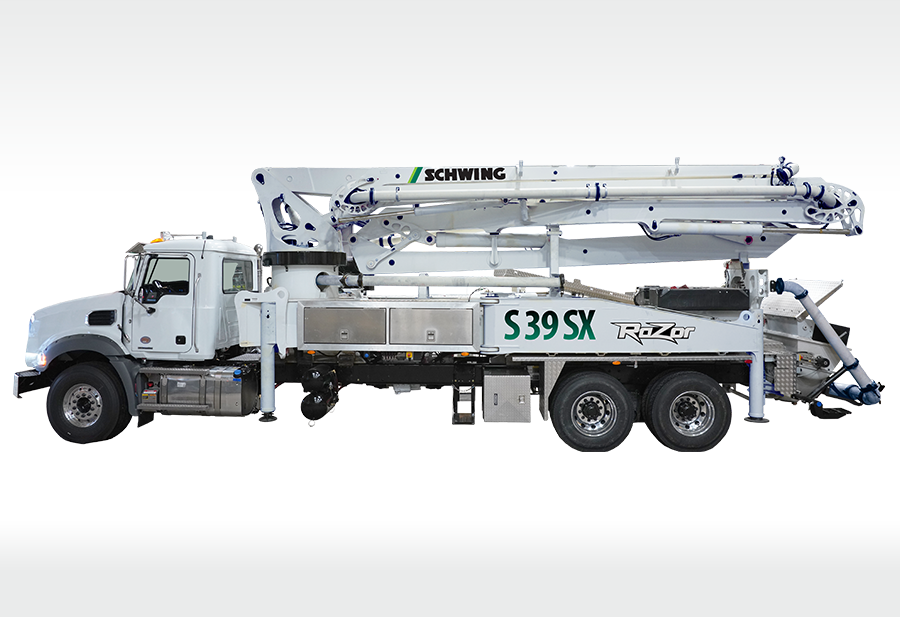
Choosing the Right Pump for a GC Operation General contractors do not always need the most versatile or highest-reach unit on the market. The pump has to match the project profile. A GC focused on commercial low-rise or tilt-up work is well served by a 42-meter boom pump , which handles most pours in that project class. A GC moving into mid-rise or high-density residential may need a 47-meter unit to reach upper floors and core pours from a single setup position.
GCs with a specific focus on flatwork or slab-on-grade projects may find a trailer concrete pump or a truck-mounted line pump meets their needs at a lower acquisition cost than a full boom truck. Placement volume and site access drive the decision more than any other factor. A GC doing 12 foundation pours per month across multiple sites is running different math than one who does two large commercial slabs per quarter.
GCs who operate across multiple states or regions and need the pump to move between sites regularly will often lean toward truck-mounted units for mobility. A truck-mounted boom pump can be on one job Monday and a different job site three states away by Friday. That flexibility is worth significant money to a GC who is not locked into one geographic market.
For GCs whose work includes civil and infrastructure projects alongside commercial building work, the pump equipment decision has to account for both project types. A longer boom with good horizontal reach may be necessary for bridge deck pours or roadway applications that do not come up on the commercial side but define a significant portion of the total revenue.
Financing a Pump as Part of a GC's Equipment Strategy General contractors typically have more established credit profiles and longer business histories than specialty subcontractors, which tends to open up favorable terms on pump financing. An established GC with strong revenue and a clean credit profile can often access the most competitive rates with our financing desk.
The structure options are familiar: a straightforward equipment loan builds equity in the unit, a lease preserves capital and has favorable tax treatment in some cases, and a Section 179 deduction on a purchase can significantly offset the cost in year one. We discuss all three before any document is produced.
GCs who already own pump equipment and want to extract working capital without liquidating the asset can explore a Concrete Pump Sale-Leaseback. The pump stays working, the cash comes to you at closing, and the monthly lease payment is a predictable operating line item. For a GC managing working capital across multiple active projects simultaneously, that liquidity can be more valuable than the equity sitting idle in paid-off equipment.
What the Process Looks Like For a general contractor with a clean credit file and established revenue, the application process is straightforward. We collect basic business and equipment information, identify the right lender program, and turn around a pre-approval quickly. Most GC transactions in our range can be approved on the application without the full financial disclosure package that banks require.
If your business is newer or the credit profile is less straightforward, three months of bank statements and a narrative about the business are usually sufficient to move the transaction forward. We have placed general contractors with B and C credit situations, and we do not stop at a score that does not tell the whole story. A GC who took a hit during a tough economic stretch but has rebuilt the operation and is running strong projects now deserves a real look, not an automatic decline. The bad-credit equipment financing program handles exactly that situation.
For GCs who want to close fast, assembly of the complete application package at the start is the move. Equipment quote, three months of bank statements, basic entity documents. That is the foundation. From a complete file, we can often have approval and documents out within 48 hours. Money in the seller's account follows within the week.
Questions From General Contractors
Take Control of Your Pour Schedule Self-perform concrete means your schedule is yours to control. The pump should be too. Get a pre-approval on your pump purchase today. Loans, leases, refinances, and sale-leasebacks all on the table. Apply online or call us directly to get started.
Common questions We GC multiple project types. Can we finance a pump under a parent company that has several subsidiaries? Yes. Multi-entity structures are common in construction. We identify the operating entity that will own and use the equipment and run the credit under that entity, with the parent as a guarantor if appropriate. We discuss the structure upfront.
Our bonding company requires certain financial ratios. Will adding equipment debt affect our bonding capacity? Equipment financing is a balance-sheet item that your bonding company evaluates. An equipment loan adds a liability but also adds an asset. We recommend reviewing the transaction with your bonding agent before signing. Some structures, like an operating lease, are treated differently on the balance sheet.
Can we finance multiple pump units at once for a large project? Yes. Multi-unit transactions are handled either as a single structured deal or as parallel transactions depending on the total amount and lender requirements. We have experience with fleet-scale purchases for GC operations.
Is there a minimum revenue requirement? We do not publish a fixed revenue minimum, but the transaction needs to make sense against the business's ability to service the payment. For most GC operations, the revenue picture from bank statements or tax returns tells us quickly whether the deal works.
Can we include delivery and setup costs in the financed amount? Soft costs can sometimes be included depending on the total transaction and the lender program. Delivery, initial service, and related setup costs are the most commonly included items. This is addressed case by case.
We have an opportunity to buy a used pump from a retiring contractor this week. Can you move that fast? Yes. For a qualified borrower with a clean application, private-party purchases can move quickly. Get us the equipment details and your business information today. Pre-approval can come back same-day or next-day, and we can fund to the seller as soon as documents are signed.
Common Questions on General Contractors Straight answers before you send the equipment file.
We GC multiple project types. Can we finance a pump under a parent company that has several subsidiaries? Yes. Multi-entity structures are common in construction. We identify the operating entity that will own and use the equipment and run the credit under that entity, with the parent as a guarantor if appropriate. We discuss the structure upfront.
Our bonding company requires certain financial ratios. Will adding equipment debt affect our bonding capacity? Equipment financing is a balance-sheet item that your bonding company evaluates. An equipment loan adds a liability but also adds an asset. We recommend reviewing the transaction with your bonding agent before signing. Some structures, like an operating lease, are treated differently on the balance sheet.
Can we finance multiple pump units at once for a large project? Yes. Multi-unit transactions are handled either as a single structured deal or as parallel transactions depending on the total amount and lender requirements. We have experience with fleet-scale purchases for GC operations.
Is there a minimum revenue requirement? We do not publish a fixed revenue minimum, but the transaction needs to make sense against the business's ability to service the payment. For most GC operations, the revenue picture from bank statements or tax returns tells us quickly whether the deal works.
Can we include delivery and setup costs in the financed amount? Soft costs can sometimes be included depending on the total transaction and the lender program. Delivery, initial service, and related setup costs are the most commonly included items. This is addressed case by case.
We have an opportunity to buy a used pump from a retiring contractor this week. Can you move that fast? Yes. For a qualified borrower with a clean application, private-party purchases can move quickly. Get us the equipment details and your business information today. Pre-approval can come back same-day or next-day, and we can fund to the seller as soon as documents are signed.
Get Terms on General Contractors Tell us what you are buying, who is selling it, and when you need it earning. We will review the file and point you to the next step.