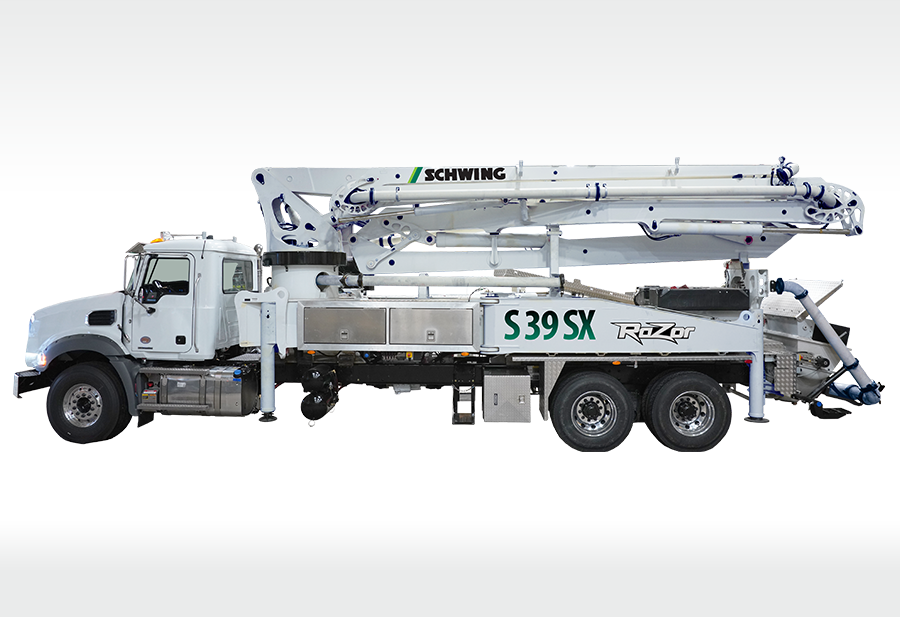
Concrete Conveyor Financing Program overview
Pricing basis: boom reach, hours, resale strength
Application-only: up to $500,000
Sellers: dealer, auction, or private party
Turnaround: same business day
Get a Quote Back to list
Concrete conveyors earn their place on pours where a pump does not. The stiff mix, the large aggregate, the pervious concrete, the roller-compacted concrete, the self-consolidating placement that a pump would plug or separate into its components. Belt conveyors handle materials that piston pumps refuse, they maintain mix consistency over the belt length, and they place large volumes of concrete efficiently in applications that the pump world simply cannot serve. Financing a concrete conveyor is often the move that opens a class of work that competitors without one cannot take.
We finance concrete conveyors for contractors in flatwork, precast production, dam and infrastructure pours, and mass concrete placement. The equipment is durable, it holds its value, and the financing process is clean on well-documented assets.
Concrete Conveyor Types and Configurations Truck-Mounted vs. Self-Propelled vs. Trailer-Mounted Concrete conveyors come in three primary carrier configurations. Truck-mounted units drive to the job under their own power on the carrier chassis, position with the truck, and deploy the conveyor boom to place concrete. These are the most mobile option and the most common in commercial and infrastructure applications. Self-propelled tracked units offer more mobility on soft or uneven terrain where a truck-mounted unit would become mired. Trailer-mounted units are the most economical to purchase but require a separate tow vehicle and have less deployment flexibility.
The conveyor boom itself folds for transport and deploys to a working length that ranges from about 18 meters on compact units to 40-plus meters on large commercial conveyors. Slewing, elevation, and belt speed are all hydraulically controlled. The operator manages mix flow from the truck discharge into the belt's receiving hopper and adjusts belt angle and speed to maintain consistent placement at the discharge end.
Belt and Drive System The belt material and return idlers are the primary wear components on a concrete conveyor. Abrasion from aggregate contact wears the belt surface over time. Standard belts on concrete conveyors are designed for replacement, with good-quality belts lasting several thousand yards under normal conditions. The hydraulic drive package for the belt and for the boom deployment shares the same power unit as on most machines, and hydraulic system maintenance is the same discipline as on any concrete pump.
Comparison to Concrete Pumps for Placement Conveyors and pumps serve overlapping but not identical application spaces. A pump places concrete faster and at longer horizontal and vertical distances than most conveyors. A conveyor handles mixes and aggregate sizes that pumps cannot, is less sensitive to mix design variations, and does not create the pressure surges that pump strokes introduce into the mix. On a large residential slab, a pump wins. On a roller-compacted concrete dam face or a pervious pavement pour, a conveyor wins. Foundation and slab contractors and operators doing specialized flatwork use both tools on different jobs and sometimes on the same project.
Where Concrete Conveyors Are Working The markets for concrete conveyors are driven by application volume more than geography. Infrastructure work, including dam rehabilitation, highway base layer pours, and airport pavement, generates consistent conveyor demand nationwide. Precast concrete plants use conveyors to move mix from the batch plant to the casting beds in a controlled, consistent flow. Commercial flatwork on large warehouses and distribution centers where the mix design or specification does not permit pumping sometimes calls for a conveyor as the placement method.
The western US markets, where water resource construction and dam work have historically driven large infrastructure concrete placements, have a disproportionate share of large concrete conveyor activity. Markets like Denver and Salt Lake City see conveyor work on civil infrastructure projects that eastern markets do not generate at the same scale.
Industrial construction is another steady market. Power generation plants, water treatment facilities, and large industrial process buildings often specify mass concrete or specialty mix designs for structural and foundation work that requires conveyor placement. Industrial and plant construction contractors who work on these projects own conveyors as primary production equipment.
Concrete Conveyor Prices and Financing Concrete conveyors span a wide price range. Small trailer-mounted units for light-duty work start around $30,000 to $60,000 for older equipment in working condition. Mid-size truck-mounted conveyors with 25 to 32 meter reach from established manufacturers run $150,000 to $300,000 new. Large commercial conveyors with 36 to 45 meter reach from premium North American manufacturers like Terex Bid-Well or equivalent reach $400,000 to $600,000 for current production models. Used conveyors are available at significant discounts and finance the same way as used concrete pumps.
Our financing starts at $50,000. For transactions under $400,000, application-only underwriting applies. Terms run 48 to 72 months. Down payment requirements depend on credit profile: strong-credit operators often close at ten percent or less, while B and C credit borrowers should plan for fifteen to twenty-five percent.
Operators who want to preserve cash at acquisition should look at no-money-down equipment financing options, which are achievable on strong-credit applications. Those who have existing concrete equipment equity can access it via a Concrete Pump Sale-Leaseback to fund the down payment on a new conveyor without depleting working capital. Buyers who want to compare conveyor financing with a related line pump or boom pump purchase should also review concrete boom pump financing and concrete line pump financing to understand the full tool set.
Concrete Conveyor Financing Questions Questions from contractors considering a concrete conveyor.
Finance Your Concrete Conveyor The pours that pay the most often require the tool that your competition does not have. Get the concrete conveyor financed and go after that work. Apply now and we will move fast to get you funded.
Common questions Can I finance a concrete conveyor if my main business is concrete pumping? Absolutely. Many concrete pumping contractors add a conveyor to their fleet to serve applications where pumping is not the right approach. The financing is the same regardless of what other equipment your business owns. The conveyor stands on its own as a revenue-generating asset and the loan is written against it.
My conveyor will mostly do precast plant production runs. Does a use-case like that affect financing? Plant production use is a favorable use case from a lender's perspective because it represents regular, predictable utilization rather than intermittent project-based deployment. Stable utilization patterns support the debt service coverage calculation in underwriting. Mention the production context when you apply.
The machine I want is 12 years old but in excellent condition. Will a lender finance it? A 12-year-old conveyor in excellent condition with documented maintenance is a financeable asset. The loan-to-value ratio will be lower than on a newer machine and the term may be shorter, but the deal is workable. Bring the service records, current photos, and ideally an independent appraisal to support the value. The documentation makes all the difference on older equipment.
Can I use a concrete conveyor purchase to qualify for Section 179 depreciation? Yes. A concrete conveyor financed through a loan or capital lease qualifies for Section 179 treatment in the year of purchase, same as any other tangible business equipment. The first-year deduction can substantially reduce the net cost of the machine. Talk to your tax advisor about the exact numbers for your situation and review our Section 179 page for a general explanation of the treatment.
Is a concrete conveyor belt covered under an equipment financing loan, or is the belt treated as a consumable? The belt is part of the machine and covered under the equipment loan as part of the complete asset. When the belt wears out and needs replacement during the loan term, that replacement cost is an operating expense paid from the business. The loan covers the machine as delivered; consumable replacement is not part of the financing.
Common Questions on Concrete Conveyor Financing Straight answers before you send the equipment file.
Can I finance a concrete conveyor if my main business is concrete pumping? Absolutely. Many concrete pumping contractors add a conveyor to their fleet to serve applications where pumping is not the right approach. The financing is the same regardless of what other equipment your business owns. The conveyor stands on its own as a revenue-generating asset and the loan is written against it.
My conveyor will mostly do precast plant production runs. Does a use-case like that affect financing? Plant production use is a favorable use case from a lender's perspective because it represents regular, predictable utilization rather than intermittent project-based deployment. Stable utilization patterns support the debt service coverage calculation in underwriting. Mention the production context when you apply.
The machine I want is 12 years old but in excellent condition. Will a lender finance it? A 12-year-old conveyor in excellent condition with documented maintenance is a financeable asset. The loan-to-value ratio will be lower than on a newer machine and the term may be shorter, but the deal is workable. Bring the service records, current photos, and ideally an independent appraisal to support the value. The documentation makes all the difference on older equipment.
Can I use a concrete conveyor purchase to qualify for Section 179 depreciation? Yes. A concrete conveyor financed through a loan or capital lease qualifies for Section 179 treatment in the year of purchase, same as any other tangible business equipment. The first-year deduction can substantially reduce the net cost of the machine. Talk to your tax advisor about the exact numbers for your situation and review our Section 179 page for a general explanation of the treatment.
Is a concrete conveyor belt covered under an equipment financing loan, or is the belt treated as a consumable? The belt is part of the machine and covered under the equipment loan as part of the complete asset. When the belt wears out and needs replacement during the loan term, that replacement cost is an operating expense paid from the business. The loan covers the machine as delivered; consumable replacement is not part of the financing.
Get Terms on Concrete Conveyor Financing Tell us what you are buying, who is selling it, and when you need it earning. We will review the file and point you to the next step.