Low-Line Boom Pump Financing Program overview
Pricing basis: boom reach, hours, resale strength
Application-only: up to $500,000
Sellers: dealer, auction, or private party
Turnaround: same business day
Get a Quote Back to list
Some jobs do not have room for a standard boom profile. Low-line boom pumps deliver concrete placement capability in a package designed specifically for low-clearance environments: parking structures with tight floor-to-floor heights, industrial facilities with low roof sections, confined urban sites where overhead structure or utilities limit the boom's deployment geometry. When the job has those constraints, a low-line configuration is not a compromise. It is the right tool.
We finance low-line boom pumps for contractors who work in the confined and urban concrete market. This is a specialty category within boom pump financing, and the buyer profile is distinct from standard boom pump operators. Related equipment like the city pump , which also emphasizes compact footprint and constrained-site performance, falls within the same program set. Whether the machine's design constraint is height, footprint, or both, we finance concrete placement equipment built for real-world site conditions.
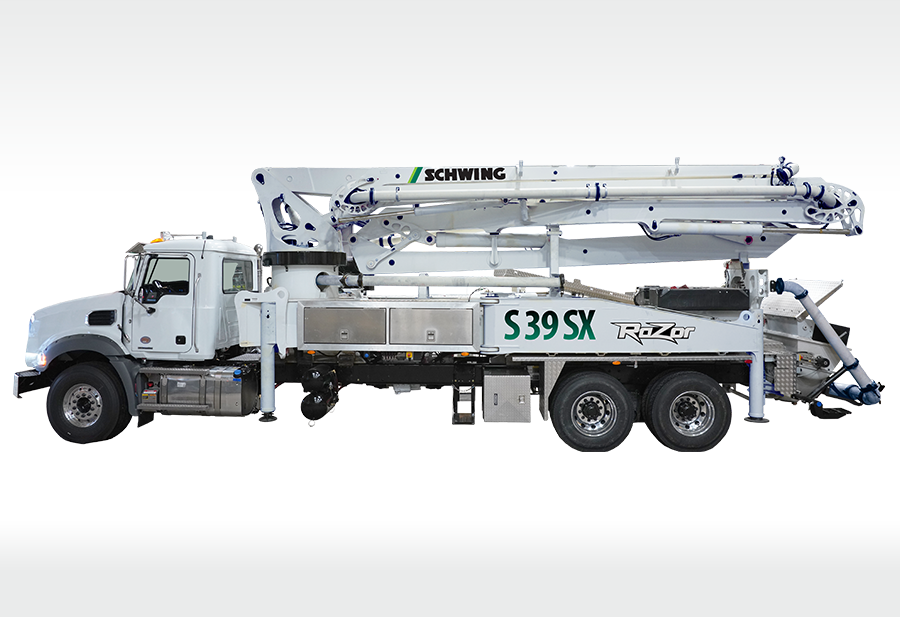
Low-Line Boom Pump Design and Performance Low-line boom pumps are engineered to reduce the maximum height the boom reaches during transport and early deployment. Standard boom pumps unfold upward before extending outward, which requires clearance above the machine for that initial vertical movement. Low-line designs minimize this requirement through modified fold sequences or specialized boom geometry that allows the machine to begin operating in environments where a standard boom would contact an overhead structure before reaching working position.
The specific clearance advantage varies by model and configuration. Some low-line designs can operate effectively in environments with floor-to-floor heights starting around 10 to 12 feet, depending on the exact machine. This opens pours inside parking structures, industrial buildings, and below-grade work areas that standard booms cannot service.
Output capacity on low-line machines is generally comparable to conventional boom pumps of the same boom length. The design modification is in the boom structure and fold geometry, not in the pump unit. Buyers should verify pump output specifications when evaluating a specific model to confirm it meets the throughput requirements for their typical pour.
Manufacturers offering low-line configurations include several in the compact and urban concrete equipment space. REED and other manufacturers focused on the specialty concrete market have produced equipment in this category. Availability varies by market and model year.
Who Buys Low-Line Boom Pumps Urban concrete specialists who regularly pour inside buildings, below grade, or in parking structures are the primary buyers. A contractor with a significant book of in-building slab pours, basement placements, or commercial renovation projects involving concrete in occupied structures needs the low-line option to win those jobs without renting a specialty machine every time.
Foundation and slab contractors working on below-grade structures find low-line booms particularly useful on sites where excavation has created a confined pour environment. The machine can often set up at grade and reach down and into the excavation, something standard booms struggle with in tight configurations.
Concrete and masonry contractors who work in occupied commercial buildings during renovation cycles also use low-line machines. The ability to pump concrete into spaces within an existing structure, where full boom deployment is not possible, creates work opportunities unavailable to operators without this equipment.
Contractors who work for national retailers or commercial build-out specialists often encounter standard specifications requiring pumped concrete in confined spaces. The low-line boom pump solves that specification without requiring the general contractor to rearrange the entire site for a standard boom setup. That problem-solving capability makes the low-line operator a preferred vendor on job types where the standard pump cannot work, which is exactly the competitive position contractors want to occupy.
Financing the Low-Line Machine The application process is the same as any boom pump financing: one-page application, supporting documents scaled to deal size and credit profile, approval in one to three business days on clean files, funding within a week to two weeks. The specialty nature of the machine's configuration does not change the underwriting framework, though lenders may consider the narrower secondary market for this configuration when assessing residual value.
Structure choices include an equipment loan , which gives ownership at payoff, and an equipment lease , which offers payment flexibility and a defined end-of-term option. For operators who use low-line machines alongside a larger standard boom pump fleet, the low-line unit sometimes fits better into a lease structure that allows cycling it out as the technology evolves.
Buyers financing used low-line equipment should be prepared for additional lender scrutiny on collateral value given the specialty nature of the configuration. Solid documentation of the machine's condition and maintenance history matters more when the secondary market is thinner.
Deal Terms and Expectations Low-line boom pump prices vary considerably depending on size, manufacturer, age, and configuration. New specialty machines can run from under $200,000 for smaller units to well over $400,000 for larger configurations. Used market pricing depends on availability, which is thinner in this category than in standard boom pump sizes.
Amortization runs 48 to 60 months on most low-line deals. Lenders comfortable with the specialty market will consider 72-month terms on newer machines with documented strong condition. Monthly payments scale with the financed amount and term structure chosen.
For operators comparing the all-in cost of ownership versus renting a low-line machine for specific jobs, the calculation depends on how frequently they encounter the job type that requires the machine. Contractors who see three or more low-clearance pours per month are typically past the ownership break-even point within the financing term.
Boom Pump Financing, Asked and Answered Common questions from contractors evaluating low-line boom pump financing.
Finance Your Low-Line Boom Pump Specialty equipment needs a financing partner who knows the machine. Submit your application and we route it to lenders familiar with compact and urban concrete equipment.
Common questions How do I know if a low-line boom pump will actually fit my most common job conditions? This is an operational question that requires knowing the specific machine's clearance requirements and your actual site conditions. We recommend confirming with the manufacturer or dealer before purchase. From a financing standpoint, we fund the machine once you have determined it fits the work.
Are low-line boom pumps harder to sell if I need to exit the equipment? The secondary market for specialty configurations is thinner than for standard boom sizes. This does not mean they cannot be sold; it means finding the right buyer may take longer. Contractors in urban markets who use the machine regularly have the strongest case for ownership versus operators who would use it infrequently.
Can I combine a low-line boom pump financing with a standard boom pump in the same deal? Multi-unit transactions are possible. Lenders with appetite for concrete equipment often welcome larger overall deal sizes. We structure multi-unit packages and present them to lenders who benefit from the combined deal volume.
Does financing a specialty configuration require a higher down payment than a standard boom pump? It can. Lenders who are less familiar with the specialty resale market sometimes require a larger down payment as a risk offset. Connecting with a lender who specifically knows the compact and urban concrete equipment market is important for getting fair terms.
Can I use a low-line boom pump as collateral to finance additional equipment? Once paid down, any equipment with equity can potentially support additional financing. A Concrete Pump Sale-Leaseback on existing equipment, including specialty machines, can generate capital. The equity available depends on the current market value, which varies with specialty demand.
Common Questions on Low-Line Boom Pump Financing Straight answers before you send the equipment file.
How do I know if a low-line boom pump will actually fit my most common job conditions? This is an operational question that requires knowing the specific machine's clearance requirements and your actual site conditions. We recommend confirming with the manufacturer or dealer before purchase. From a financing standpoint, we fund the machine once you have determined it fits the work.
Are low-line boom pumps harder to sell if I need to exit the equipment? The secondary market for specialty configurations is thinner than for standard boom sizes. This does not mean they cannot be sold; it means finding the right buyer may take longer. Contractors in urban markets who use the machine regularly have the strongest case for ownership versus operators who would use it infrequently.
Can I combine a low-line boom pump financing with a standard boom pump in the same deal? Multi-unit transactions are possible. Lenders with appetite for concrete equipment often welcome larger overall deal sizes. We structure multi-unit packages and present them to lenders who benefit from the combined deal volume.
Does financing a specialty configuration require a higher down payment than a standard boom pump? It can. Lenders who are less familiar with the specialty resale market sometimes require a larger down payment as a risk offset. Connecting with a lender who specifically knows the compact and urban concrete equipment market is important for getting fair terms.
Can I use a low-line boom pump as collateral to finance additional equipment? Once paid down, any equipment with equity can potentially support additional financing. A Concrete Pump Sale-Leaseback on existing equipment, including specialty machines, can generate capital. The equity available depends on the current market value, which varies with specialty demand.
Get Terms on Low-Line Boom Pump Financing Tell us what you are buying, who is selling it, and when you need it earning. We will review the file and point you to the next step.