Highway & Bridge Contractors Program overview
Pricing basis: boom reach, hours, resale strength
Application-only: up to $500,000
Sellers: dealer, auction, or private party
Turnaround: same business day
Get a Quote Back to list
Bridge decks, retaining walls, pier caps, tunnel linings, the concrete that holds transportation infrastructure together goes somewhere a ready-mix truck cannot always reach. Highway and bridge contractors know that placement logistics often define the project as much as the structural design does. A pump with real reach and reliable output is not a convenience on a bridge job, it is the method. We finance the equipment that makes that method possible.
Transactions for highway and bridge work tend to run larger than typical residential or light commercial pump purchases. High-pressure pumps, long-reach booms, and shotcrete systems appropriate for this market sit in the $100,000 to $400,000+ range. We are comfortable at that scale. Application-only approval is available up to about $400,000, and funding typically happens in one to two weeks.
The Concrete Placement Demands of Highway and Bridge Work Highway and bridge contractors face placement challenges that are categorically different from building construction. Bridge columns must be pumped vertically in a single continuous pour to avoid cold joints. Deck concrete must be placed to precise specification in a narrow window before the mix stiffens. Shotcrete for retaining walls and slope stabilization needs to be applied at a rate that keeps pace with the excavation and netting work. Every pour type in this market has a specific pump requirement that does not translate directly from building construction work.
Contractors working on Department of Transportation projects in states like Texas , New York , and California , where transportation investment is substantial, regularly need pump equipment that can handle both the technical demands of the work and the schedule pressure of DOT project timelines.
Equipment Built for Infrastructure Concrete Highway and bridge contractors use a specific subset of pump equipment. A high-pressure concrete pump is often the right tool for long horizontal runs and elevated placements where head pressure is a limiting factor. Standard boom trucks with lower output pressure can struggle on jobs where the mix must travel significant vertical or horizontal distance before reaching the forms.
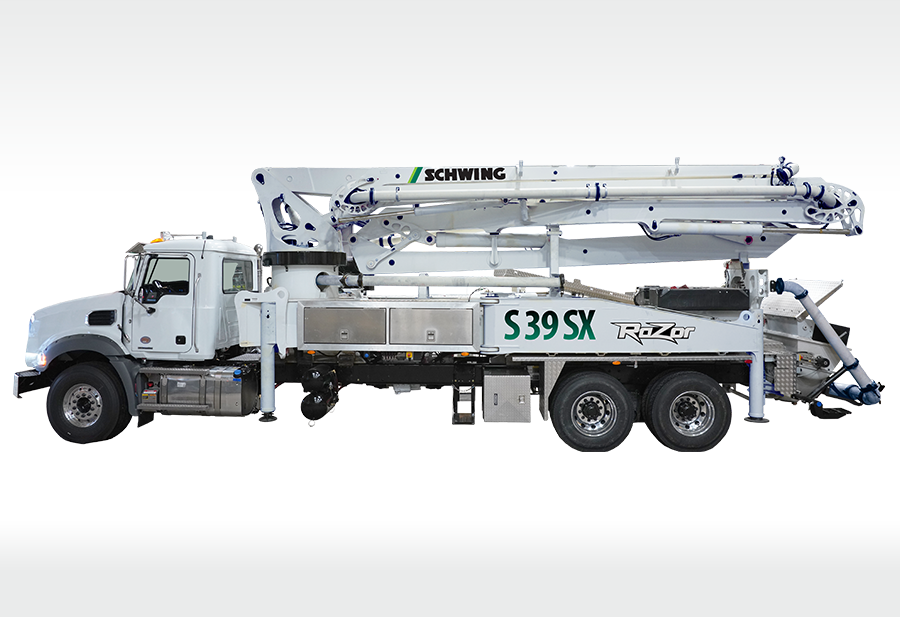
Bridge deck work frequently uses truck-mounted booms in the 36- to 47-meter range set up on the roadway below the deck level. A 38-meter boom pump or 42-meter unit placed at road level can often reach deck placements on typical overpass structures from a single position.
Shotcrete applications for retaining walls, tunnel portals, and erosion control use a dedicated shotcrete pump or wet shotcrete pump , which is a distinct piece of equipment with specific output and nozzle characteristics. These are financeable as standalone transactions with the same terms as boom pump purchases.
Contractors working on major bridge rehabilitation and replacement programs, the type of long-duration project where a pump lives on one site for weeks at a time, often choose a unit optimized for sustained output rather than maximum mobility. A unit that can pour six to eight hours a day without hydraulic heat issues is worth more on a bridge job than one that is fast to set up and move. Those operational priorities should feed into the equipment spec, which feeds into which lender programs fit the asset.
Financing Structures for Public and Private Infrastructure Work Highway and bridge contractors working on public agency contracts often have contract-backed revenue that is highly predictable, even if it arrives slowly through the pay app cycle. That contract certainty is a strength in the financing process. A term equipment loan secured by the pump itself is the standard path, and the contract pipeline supports the approval story for most creditworthy infrastructure contractors.
Contractors who have existing pump equipment with significant equity can pursue a cash-out equipment refinance to pull capital for a project deposit, equipment mobilization cost, or working capital to bridge the gap between project start and the first pay application. Infrastructure contractors deal with long cash cycles, and having liquidity at project start is a real need.
For contractors working under a new business entity or starting a highway-focused division, startup financing programs exist. The owner's background and existing project wins factor heavily into those approvals.
Related Equipment and Financing Needs Highway and bridge contractors often need more than one pump type in the fleet. A high-pressure unit for bridge column work, a boom truck for deck and wall placement, and a shotcrete system for slope stabilization can all be on the same project. We have financed multi-unit packages for infrastructure contractors and can handle both simultaneous and sequential purchases.
Contractors who also serve civil and infrastructure projects broadly, including dam construction, water treatment plant work, and airport pavement, may need a different pump specification than their highway work requires. We discuss those differences upfront to make sure the asset financed matches the intended use. For contractors working across both highway and broader civil sectors, the civil and infrastructure contractor page covers the overlap in equipment and financing needs that apply to both types of work.
Some highway contractors also do periodic tunnel portal and retaining wall work that puts them squarely in shotcrete territory. Shotcrete contractor financing covers the wet-mix and dry-mix equipment that serves those applications, and the two programs can run in parallel when a contractor needs both types of equipment at the same time.
Highway and Bridge Contractor FAQs
Finance Your Infrastructure Equipment Infrastructure pours run to tight specifications and tighter schedules. The pump has to be there and ready. Get a pre-approval today on a high-pressure pump, boom truck, or shotcrete system purchase. Apply online or call to discuss your equipment needs directly.
Common questions We do DOT work and our contracts are public. Can you use them as part of the credit review? Yes. Public contracts are a positive in the credit review. If you have executed contracts with a government agency, we can factor that into the approval. The contract value and payment terms help demonstrate revenue predictability.
Can we finance a high-pressure pump for a specific bridge project and then use it on other jobs afterward? Yes. The equipment is yours to use on any project. The financing is not project-specific. You own the pump and deploy it wherever the work is.
Our company recently won a large highway project and needs equipment fast. How quickly can this close? Our standard timeline is one to two weeks from first contact to funded. If the application is clean and the documents are signed promptly, it can close at the faster end of that window. We move as quickly as the process allows.
We sometimes subcontract the pump to other contractors on our DOT jobs. Does that affect the financing? If your primary use is your own construction operations, that is the standard scenario. Sub-renting equipment to third parties can affect the financing terms and is something we discuss upfront. There are programs that accommodate rental use, and there are programs that do not.
Can we get financing on a rebuilt or refurbished shotcrete pump? Yes. Refurbished pump equipment is financeable. The condition inspection and the refurbishment documentation matter. A fully rebuilt shotcrete pump with a warranty from the rebuilder is in a different category than a worn-out machine, and that distinction shows up in the terms.
Our bonding company has limits on how much equipment debt we can carry. Does a lease show up differently? Lease accounting treatment and loan accounting treatment differ in how they appear on a balance sheet, which matters for bonding companies that look at working capital ratios. An operating lease versus a capital lease also differs. We can provide the financial terms in whatever format your bonding agent needs to evaluate the impact on your bonding capacity.
Common Questions on Highway & Bridge Contractors Straight answers before you send the equipment file.
We do DOT work and our contracts are public. Can you use them as part of the credit review? Yes. Public contracts are a positive in the credit review. If you have executed contracts with a government agency, we can factor that into the approval. The contract value and payment terms help demonstrate revenue predictability.
Can we finance a high-pressure pump for a specific bridge project and then use it on other jobs afterward? Yes. The equipment is yours to use on any project. The financing is not project-specific. You own the pump and deploy it wherever the work is.
Our company recently won a large highway project and needs equipment fast. How quickly can this close? Our standard timeline is one to two weeks from first contact to funded. If the application is clean and the documents are signed promptly, it can close at the faster end of that window. We move as quickly as the process allows.
We sometimes subcontract the pump to other contractors on our DOT jobs. Does that affect the financing? If your primary use is your own construction operations, that is the standard scenario. Sub-renting equipment to third parties can affect the financing terms and is something we discuss upfront. There are programs that accommodate rental use, and there are programs that do not.
Can we get financing on a rebuilt or refurbished shotcrete pump? Yes. Refurbished pump equipment is financeable. The condition inspection and the refurbishment documentation matter. A fully rebuilt shotcrete pump with a warranty from the rebuilder is in a different category than a worn-out machine, and that distinction shows up in the terms.
Our bonding company has limits on how much equipment debt we can carry. Does a lease show up differently? Lease accounting treatment and loan accounting treatment differ in how they appear on a balance sheet, which matters for bonding companies that look at working capital ratios. An operating lease versus a capital lease also differs. We can provide the financial terms in whatever format your bonding agent needs to evaluate the impact on your bonding capacity.
Get Terms on Highway & Bridge Contractors Tell us what you are buying, who is selling it, and when you need it earning. We will review the file and point you to the next step.