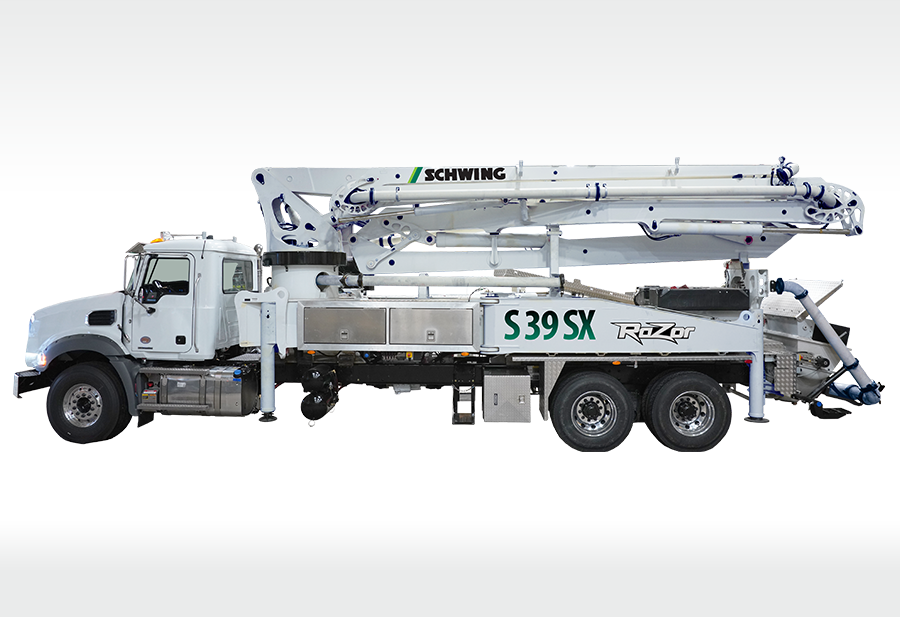
High-Pressure Concrete Pump Financing Program overview
Pricing basis: boom reach, hours, resale strength
Application-only: up to $500,000
Sellers: dealer, auction, or private party
Turnaround: same business day
Get a Quote Back to list
Some pours demand more than a standard pump can deliver. Tunnel linings, high-rise cores, long horizontal pipeline runs to the back of a sprawling slab, these jobs put pressure requirements north of 100 bar on the table, and a standard boom pump that tops out at 85 bar simply cannot finish the work. High-pressure concrete pumps are purpose-built for exactly those situations, running piston systems and robust hydraulics that push mix through hundreds of feet of pipeline without losing placement quality at the discharge end.
We finance high-pressure units from the entry-level stationary models favored by tunneling crews up through the heavy trailer-mounted rigs that skyscraper contractors position at grade and feed vertically for the full pour. If you have a contract in hand that calls for this class of machine, the faster you get the financing sorted, the sooner the equipment is on site earning.
What Makes High-Pressure Units Different Pressure Ratings and Circuit Design A conventional boom pump operates comfortably in the 50 to 85 bar output pressure range, which covers the vast majority of residential and commercial pours. High-pressure machines are designed for sustained output at 120 bar and above, with specialty tunnel and high-rise units reaching 200 bar or more. Achieving that pressure means heavier cylinders, larger accumulators, and a hydraulic circuit that can absorb the heat generated by continuous high-load operation. The pump end cost reflects all of it.
S-valve units dominate this category for their ability to handle stiffer mixes without plugging, though ball-valve configurations appear on units designed for more flowable shotcrete and grout applications. For buyers looking at S-valve concrete pump financing , we cover those machines as a standalone class.
Output Volume vs. Pressure Trade-offs High-pressure pumps typically sacrifice some volume per hour in exchange for the pressure they generate. A machine rated at 180 bar might push 60 to 80 cubic meters per hour, where a standard boom pump at 70 bar moves 100 to 130. Matching the right machine to the job means knowing the pipeline length, vertical rise, mix design, and pour rate before you order. Financing the wrong spec is worse than financing nothing at all.
Many buyers entering this segment for the first time pair a high-pressure stationary unit with a separate placing boom at the top of the run rather than fighting a boom pump's reach limit. That combination often wins on tall commercial and industrial pours.
Who Buys High-Pressure Pumps The buyers who call us for this class of machine break down into a few clear groups.
Tunneling and underground contractors doing shotcrete lining, contact grouting, and invert pours in bored or blasted tunnels where a conventional pump stalls against the pipeline back-pressure. These operators work alongside mining and tunneling contractors who treat high-pressure capability as a core fleet requirement.High-rise concrete contractors where building over 20 stories forces mix up pipeline runs long enough that pressure loss eliminates lower-rated machines. We see a lot of these transactions in markets like New York, Chicago, and Miami where the tower count keeps climbing.Long horizontal runs on industrial slabs, where a precast or tilt-up plant where the pump has to feed the far end of a 600-foot pipeline needs sustained pressure to keep the slump consistent end-to-end. Tilt-up and precast contractors regularly specify high-pressure units for exactly this scenario.Specialty grouting and anchoring crews doing post-tension tendon grouting, soil nail wall construction, and micropile installation all call for pumps that can maintain pressure through small-diameter lines. These often overlap with grout pump buyers.What High-Pressure Pump Financing Looks Like New high-pressure stationary and trailer-mounted units from major manufacturers list priced roughly $250k–$650k depending on output capacity, pressure rating, and drive system. Truck-mounted high-pressure configurations push higher still. Used units with proven performance histories trade for $80,000 to $250,000 depending on hours, recent rebuild history, and certification status.
Our financing structures for this equipment include standard equipment loans, fair-market-value leases, and concrete pump sale-leaseback arrangements for contractors who already own qualifying machines and want to free up capital. The sweet spot we see is the $100,000 to $400,000 range where application-only underwriting often applies, meaning no years of tax returns and no elaborate financial packages for straightforward credits.
Terms typically run 48 to 84 months. Buyers with B or C credit are considered; the machine serves as primary collateral and a clean title or lien payoff on existing iron speeds the process considerably. Funding runs about one to two weeks from completed application to wire.
New vs. Used: High-Pressure Units Have a Strong Used Market The tunneling and infrastructure market turns over high-pressure units at a reasonable rate as contracts complete and fleets are restructured. That means a genuine secondary market exists, and a well-maintained used high-pressure pump from a major manufacturer is a legitimate financing candidate. We treat used machines the same way we treat new. The underwriting question is whether the asset supports the loan amount, and a machine with credible service records and hours under 3,000 on the pump end typically does.
If the machine you are considering was rebuilt by the manufacturer or a certified dealer, the rebuild documentation matters to the lender. Bring it. Buyers considering refurbished equipment should also look at refurbished concrete pump financing options, which covers the full scope of factory and dealer-certified rebuilt units.
For buyers going used, used equipment financing terms apply, and we can also help with private-party purchase financing when the transaction is between two contractors rather than through a dealer.
Common Questions Buyers ask us these every week.
Get Your High-Pressure Pump Financed The job calls for the pressure rating, and the pressure rating calls for a lender who understands the asset. Fill out a quick application or call us direct. We fund high-pressure units for contractors at every credit tier and every stage of business.
Common questions Do lenders treat high-pressure pumps differently from standard boom pumps? The underwriting principles are the same, but lenders with concrete pump expertise value these assets appropriately. A high-pressure unit with low hours and documented service history holds its value well and is a strong collateral piece. General equipment lenders who do not understand the category sometimes discount the value unnecessarily, which is why working with a specialist matters.
Can I finance a high-pressure pump I am buying from another contractor? Yes. Private-party transactions are fundable. We need a bill of sale, the unit's serial documentation, and a title or lien payoff figure if the seller still owes on it. The process takes a bit more paperwork than a dealer deal but the same credit standards apply.
What if the machine needs a pump-end rebuild before it goes to work? A planned rebuild does not automatically disqualify financing, but it needs to be part of the deal structure. Some buyers finance the purchase and roll the rebuild cost into the loan. Others do a dealer-facilitated transaction where the rebuilt unit is what transfers. Talk to us about the specifics of the deal and we can find the right structure.
My business is less than two years old. Can I still get approved? Newer businesses can qualify, especially when the operator has prior industry experience and a contract in hand. Startup and early-stage financing is available, though expect a stronger focus on personal credit and possibly a down payment. See our new-business financing section for more detail.
How do seasonal cash flows affect the payment structure? We can structure deferred first payment or seasonal skip arrangements when the project schedule creates uneven cash flow. Tunneling and infrastructure work often has mobilization-heavy early phases where cash is tight. Ask about deferred payment structures when you apply.
Common Questions on High-Pressure Concrete Pump Financing Straight answers before you send the equipment file.
Do lenders treat high-pressure pumps differently from standard boom pumps? The underwriting principles are the same, but lenders with concrete pump expertise value these assets appropriately. A high-pressure unit with low hours and documented service history holds its value well and is a strong collateral piece. General equipment lenders who do not understand the category sometimes discount the value unnecessarily, which is why working with a specialist matters.
Can I finance a high-pressure pump I am buying from another contractor? Yes. Private-party transactions are fundable. We need a bill of sale, the unit's serial documentation, and a title or lien payoff figure if the seller still owes on it. The process takes a bit more paperwork than a dealer deal but the same credit standards apply.
What if the machine needs a pump-end rebuild before it goes to work? A planned rebuild does not automatically disqualify financing, but it needs to be part of the deal structure. Some buyers finance the purchase and roll the rebuild cost into the loan. Others do a dealer-facilitated transaction where the rebuilt unit is what transfers. Talk to us about the specifics of the deal and we can find the right structure.
My business is less than two years old. Can I still get approved? Newer businesses can qualify, especially when the operator has prior industry experience and a contract in hand. Startup and early-stage financing is available, though expect a stronger focus on personal credit and possibly a down payment. See our new-business financing section for more detail.
How do seasonal cash flows affect the payment structure? We can structure deferred first payment or seasonal skip arrangements when the project schedule creates uneven cash flow. Tunneling and infrastructure work often has mobilization-heavy early phases where cash is tight. Ask about deferred payment structures when you apply.
Get Terms on High-Pressure Concrete Pump Financing Tell us what you are buying, who is selling it, and when you need it earning. We will review the file and point you to the next step.