Wind & Energy Construction Program overview
Pricing basis: boom reach, hours, resale strength
Application-only: up to $500,000
Sellers: dealer, auction, or private party
Turnaround: same business day
Get a Quote Back to list
Wind turbine foundations are among the largest single concrete pours in the construction market. A monopile or gravity base for a land-based turbine can require hundreds of cubic yards of high-strength concrete placed in a continuous pour without any cold joint allowed. The pump behind that pour is running for hours straight, pushing mix at volume, and it needs to be the right equipment for the job. We finance boom pumps and high-output concrete placement equipment for contractors in the wind and energy construction sector.
Energy construction projects, whether wind, solar, gas turbine, or battery storage facilities, all require significant concrete infrastructure, and the pump transactions behind them tend to run priced roughly $150k–$400k appropriate for high-capacity or extended-reach equipment. Our program handles that scale. Application-only approval up to approximately $400,000, with larger transactions handled through a streamlined three-month bank statement review. Funding in one to two weeks.
Energy Construction and the Concrete Demand Behind It The energy construction market encompasses a range of project types that all require significant concrete work. Wind energy projects require turbine foundation pours as described above, as well as O&M facility slabs, access road structures, and in some cases elevated transformer pads. Solar farm construction requires concrete piers, transformer pad pours, and equipment base placements across large land areas.
Gas turbine and combined-cycle power plants require massive equipment pads, containment structures, and cooling tower foundations with thick, continuous pours. Battery energy storage systems, which are being built at scale across the country, need precisely engineered concrete pads and enclosures that require controlled placement.
Active energy construction corridors include the wind-heavy plains states, major solar development in the Southwest, and power infrastructure projects in growing markets like Houston , Phoenix , and the Boise region. Contractors in those markets see sustained energy project demand that makes pump ownership a straightforward investment.
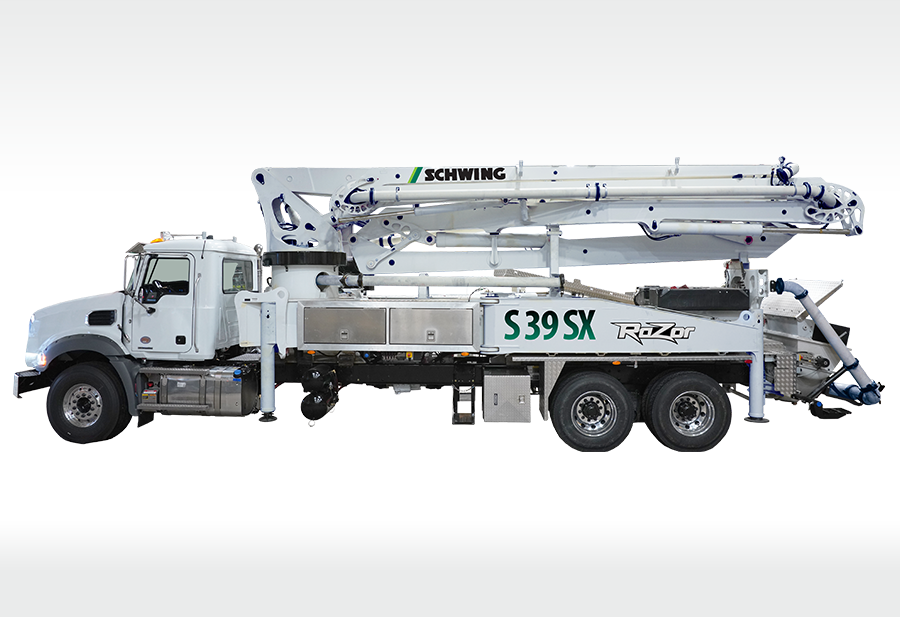
Equipment for Wind and Energy Pours Wind turbine foundation pours typically call for a high-capacity truck-mounted boom in the 47-meter range or larger. A 47-meter boom pump can cover most turbine foundation footprints from a single setup position, which minimizes the risk of interruption during a continuous pour. Some contractors prefer a 52-meter unit for added reach and flexibility when site conditions limit truck positioning options.
The mix designs used for wind turbine foundations often include high early strength admixtures, extended slump requirements, and structural specifications that push standard pump performance limits. A high-pressure concrete pump with output capacity matched to the pour rate required by the structural design is the right tool for this application, not a standard commercial boom running at the limit of its output.
Solar and battery storage projects often use smaller equipment for their more distributed concrete placements. A line pump or small boom handles the repetitive pier and pad pours that make up the bulk of a solar construction project's concrete work efficiently and economically.
Financing Structures for Energy Contractors Energy construction contractors working on utility-scale projects typically have strong contract backing. A signed construction contract with a developer or utility is the kind of revenue certainty that lenders in our network respond well to. A term equipment loan for a contractor with a confirmed multi-year project pipeline is a favorable application in most scenarios.
For contractors who are new to energy construction but have a solid track record in general commercial or civil concrete work, the transition into energy projects is recognizable and positive. Lenders understand that contractors move into higher-value project types as they grow, and the equipment purchase that enables that move is a standard transaction.
Contractors who want to explore equity extraction from existing equipment to fund mobilization costs or project startup should ask about a cash-out refinance or Concrete Pump Sale-Leaseback on paid-off units. Energy projects often require significant upfront investment before the first payment application is processed.
Related Applications and Cross-Industry Links Energy construction contractors who also do civil and infrastructure work will find the pump equipment needs overlap significantly. The same high-pressure pump or large boom used on a wind farm foundation pour may also serve on civil and infrastructure projects throughout the calendar year. Keeping utilization high by deploying across multiple project types is how pump ownership returns value.
Contractors working on industrial plant construction concurrent with energy projects, including power plant and substation work, have an additional equipment utilization story that supports pump ownership across both project categories.
Wind and Energy Construction Financing FAQs
Finance Energy-Grade Pump Equipment Turbine foundations and power plant pours run on schedule and volume. Own the equipment that handles both. Get a pre-approval today on a high-capacity boom pump or high-pressure unit for your energy construction work. Apply online or call us directly.
Common questions We have a wind farm project with 30 turbine foundations to pour over a 12-month schedule. Can we finance a pump specifically for that project scope? Yes. A project-scope purchase is a standard transaction. The equipment is yours to use throughout the project and redeployable afterward. The project contract is a positive in the credit review when it is a confirmed construction agreement with a real counterparty.
Wind turbine foundation pours require continuous placement without a cold joint. What if our pump needs service mid-pour? Having a backup pump on a turbine foundation pour is a standard risk management practice for contractors who take this work seriously. Financing a second unit or having a serviceable backup in the fleet is something we can discuss as part of the overall equipment strategy.
We are a concrete subcontractor new to wind projects but have 10 years of civil and industrial concrete experience. How does that background factor in? It is directly relevant. Your established concrete experience tells the lender that you have the operational competence to perform on an energy project. The specific project type being new is a much smaller factor than whether the business is creditworthy and capable.
Our energy projects are remote from any major metro. Does that affect our ability to get financing? No. The geography of your project sites does not affect the financing. Your business address and entity are what matter for the application. Equipment deployed in remote locations is common in energy construction and is not treated differently by lenders.
Can we refinance after the turbine project ends and the equipment goes to a different use? Yes. Refinancing after loan origination is possible. The terms available depend on the remaining balance, the asset value at that point, and the business profile. It is a straightforward conversation once you are in that position.
Common Questions on Wind & Energy Construction Straight answers before you send the equipment file.
We have a wind farm project with 30 turbine foundations to pour over a 12-month schedule. Can we finance a pump specifically for that project scope? Yes. A project-scope purchase is a standard transaction. The equipment is yours to use throughout the project and redeployable afterward. The project contract is a positive in the credit review when it is a confirmed construction agreement with a real counterparty.
Wind turbine foundation pours require continuous placement without a cold joint. What if our pump needs service mid-pour? Having a backup pump on a turbine foundation pour is a standard risk management practice for contractors who take this work seriously. Financing a second unit or having a serviceable backup in the fleet is something we can discuss as part of the overall equipment strategy.
We are a concrete subcontractor new to wind projects but have 10 years of civil and industrial concrete experience. How does that background factor in? It is directly relevant. Your established concrete experience tells the lender that you have the operational competence to perform on an energy project. The specific project type being new is a much smaller factor than whether the business is creditworthy and capable.
Our energy projects are remote from any major metro. Does that affect our ability to get financing? No. The geography of your project sites does not affect the financing. Your business address and entity are what matter for the application. Equipment deployed in remote locations is common in energy construction and is not treated differently by lenders.
Can we refinance after the turbine project ends and the equipment goes to a different use? Yes. Refinancing after loan origination is possible. The terms available depend on the remaining balance, the asset value at that point, and the business profile. It is a straightforward conversation once you are in that position.
Get Terms on Wind & Energy Construction Tell us what you are buying, who is selling it, and when you need it earning. We will review the file and point you to the next step.