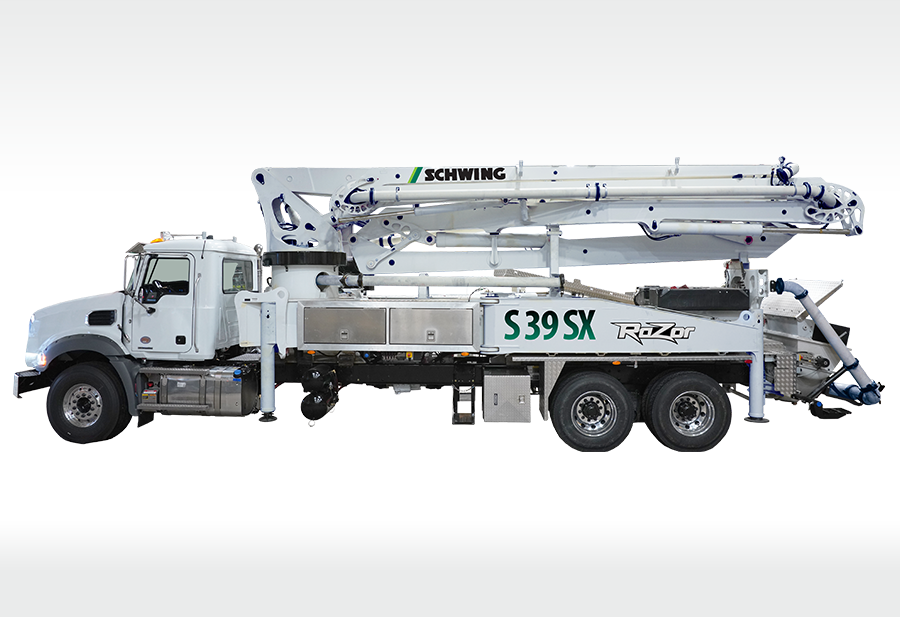
Putzmeister BSF 63 Boom Pump Financing Program overview
Pricing basis: boom reach, hours, resale strength
Application-only: up to $500,000
Sellers: dealer, auction, or private party
Turnaround: same business day
Get a Quote Back to list
Sixty-three meters of reach means you are parking the truck at street level and placing concrete on floors that most pumps on the market cannot service. Tower cores above the twentieth floor, elevated bridge piers and caps, wind turbine foundation mats with complex reach requirements. The Putzmeister BSF 63 is not a machine you buy for occasional residential work. It is a strategic asset for operators who have won the high-reach segment and need a machine that keeps them competitive on the jobs where reach is the deciding factor. Financing one correctly is the other half of that competitive advantage, and a payment structure that does not match the machine's revenue pattern creates cash flow stress that undermines the whole position.
We finance the BSF 63 as a large-ticket transaction: typically $350,000 to $600,000 depending on year, configuration, and whether you are buying new or acquiring a quality used unit. The approval process is thorough because the asset is large, but it is not slow. Our goal is funding within one to two weeks of a completed application.
What the BSF 63 Does That Other Machines Cannot The BSF 63 runs a six-section boom that delivers approximately 63 meters of vertical reach and over 59 meters of horizontal reach at the tip. That range puts it in a class where single-setup floor-to-floor placements on towers in the twenty- to twenty-five-story range become realistic. On a skyscraper core pour, the BSF 63 placed from street level can reach placements that would otherwise require a climbing pump or a separate placing boom system mounted to the structure, either of which adds significant cost and schedule complexity.
Output rates on the BSF 63 in production configuration run in the range of 150 to 200 cubic meters per hour. That output, combined with its reach, makes it a strong candidate for large infrastructure placements where tonnage and placement speed both matter. Civil and infrastructure contractors doing large bridge structures, dam elements, and industrial facility foundations use this size class when the geometry exceeds what a 52 or 56 can cover from a single position.
The machine is heavy and requires careful site prep and outrigger planning, especially on urban sites with underground utilities and tight street access. Operators who run BSF 63 units professionally invest in detailed pre-pour planning and command premium rates from GCs who understand that level of preparation is part of what they are paying for.
Who Finances a BSF 63 Established concrete pumping service companies with an existing fleet are the primary buyers. Adding a BSF 63 to a fleet of 36- to 52-meter machines lets you bid the high-rise and mega-infrastructure work that your current fleet cannot touch, while keeping the existing machines on the mid-tier commercial schedule that generates steady volume.
Regional pumping companies expanding into major urban markets sometimes acquire a BSF 63 as their entry point into the high-rise segment of that market. In cities like Miami , Seattle , and Boston where vertical construction is active, having a machine in this class is the price of admission to the tower core market.
Specialty contractors focused exclusively on high-reach placement work also finance this machine as their primary revenue asset. Some operators build an entire company around two or three units in this size class, serving general contractors on tower projects where the pump is a line-item cost measured against project value in the millions. At that level, financing cost is a fraction of the revenue the machine generates per pour.
Documentation for a Large Boom Pump Transaction At the $350,000 to $600,000 transaction range, full financial documentation is standard. Three months of business bank statements, two years of tax returns, and a current debt schedule give underwriters the picture they need. Companies with strong gross revenue but lower net income after depreciation and equipment expenses should be prepared to explain add-backs clearly. Construction and pumping companies routinely show compressed net income after asset depreciation, and experienced equipment lenders account for that.
If the file shows credit challenges, B/C credit financing is still possible at this ticket size with a larger down payment, a personal guarantee, and a clear narrative about what caused the issues and how the business has recovered. A lender who understands pumping company financials is a better partner than a generic bank that sees equipment debt on a construction company's books and runs.
We also offer application-only review for operators with strong credit who want a fast initial decision before committing to a full documentation package. That starting point tells you if the deal is structurable before you spend time gathering documents.
Unlocking Equity in an Existing BSF 63 If you own a BSF 63 with a clear title or significant equity, that machine is a capital resource beyond its ability to pour concrete. A Concrete Pump Sale-Leaseback converts the equity to immediate cash while you continue operating the machine under a lease agreement. Contractors use this structure to fund a second machine purchase, cover a large mobilization cost, or bridge a cash flow gap on a long-duration project where payment terms are slow.
A cash-out refinance is the alternative when you want to retain title from day one rather than selling and leasing back. We pay off any existing lien and structure a new note at the machine's appraised value, with the difference paid to you as cash. Both structures close on the same general timeline as a new purchase.
Start the BSF 63 Application A machine this capable needs a lender who moves as fast as you do. Drop us the deal details and we build the structure around your pour calendar. View Putzmeister financing for context on other Putzmeister units we support.
Common questions Does the lender need to inspect the machine before funding? On used machines at this price point, a physical inspection or detailed third-party appraisal is typically required to confirm condition and value. New machines bought from a Putzmeister dealer do not require a separate inspection. Plan for this step when you are timing the transaction.
How do I handle insurance requirements for a machine this large? The lender will require the machine to be insured for its full replacement value with the lender named as loss payee. Concrete pumping equipment at this tier requires commercial equipment coverage from a carrier who writes heavy construction equipment. Your insurance broker handles the certificate; you provide it to us before funding.
Can I include a spare parts or extended service agreement in the financed amount? Extended service or preventive maintenance contracts can sometimes be financed alongside the machine as a soft cost, subject to lender policy and overall loan-to-value. Ask us when you apply if you want to include a service package.
I want to trade in a smaller machine as part of the BSF 63 purchase. How does that work? Trade-in equity can reduce the cash outlay and lower the financed amount. The trade-in value is typically determined by the dealer or a third-party appraiser, and that credit is applied to the purchase price before we calculate the loan. Bring the trade-in details when you start the application.
What is the difference between a TRAC lease and a standard capital lease for a machine this large? A TRAC lease (terminal rental adjustment clause) is a vehicle-side structure that adjusts the final payment based on actual residual value at lease end. It is common in trucking and sometimes used for truck-mounted pumping equipment. A standard capital lease has a fixed buyout. Ask your lender which is available for this specific asset class.
Common Questions on Putzmeister BSF 63 Boom Pump Financing Straight answers before you send the equipment file.
Does the lender need to inspect the machine before funding? On used machines at this price point, a physical inspection or detailed third-party appraisal is typically required to confirm condition and value. New machines bought from a Putzmeister dealer do not require a separate inspection. Plan for this step when you are timing the transaction.
How do I handle insurance requirements for a machine this large? The lender will require the machine to be insured for its full replacement value with the lender named as loss payee. Concrete pumping equipment at this tier requires commercial equipment coverage from a carrier who writes heavy construction equipment. Your insurance broker handles the certificate; you provide it to us before funding.
Can I include a spare parts or extended service agreement in the financed amount? Extended service or preventive maintenance contracts can sometimes be financed alongside the machine as a soft cost, subject to lender policy and overall loan-to-value. Ask us when you apply if you want to include a service package.
I want to trade in a smaller machine as part of the BSF 63 purchase. How does that work? Trade-in equity can reduce the cash outlay and lower the financed amount. The trade-in value is typically determined by the dealer or a third-party appraiser, and that credit is applied to the purchase price before we calculate the loan. Bring the trade-in details when you start the application.
What is the difference between a TRAC lease and a standard capital lease for a machine this large? A TRAC lease (terminal rental adjustment clause) is a vehicle-side structure that adjusts the final payment based on actual residual value at lease end. It is common in trucking and sometimes used for truck-mounted pumping equipment. A standard capital lease has a fixed buyout. Ask your lender which is available for this specific asset class.
Get Terms on Putzmeister BSF 63 Boom Pump Financing Tell us what you are buying, who is selling it, and when you need it earning. We will review the file and point you to the next step.