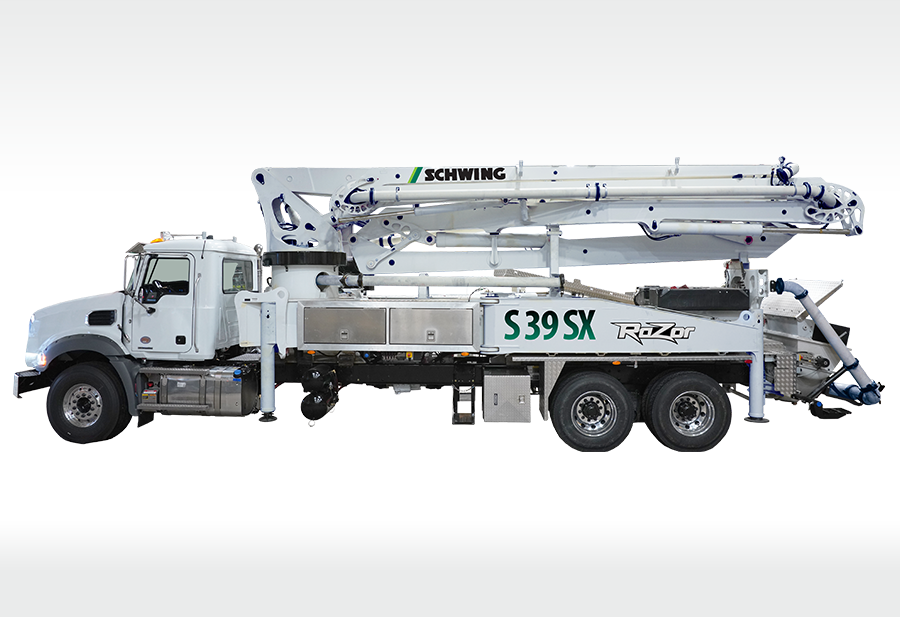
S-Valve Concrete Pump Financing Program overview
Pricing basis: boom reach, hours, resale strength
Application-only: up to $500,000
Sellers: dealer, auction, or private party
Turnaround: same business day
Get a Quote Back to list
S-valve concrete pumps run the mixes that ball-valve machines struggle with. Larger aggregate, fiber-reinforced concrete, high-slump commercial mixes, and extended pumping distances all benefit from the S-tube (rock valve) geometry, which allows larger particle passage and handles pressure cycling without the sensitivity to aggregate size that limits ball-valve designs. Contractors who pour high-specification commercial concrete or who need to pump through long pipeline runs know why this mechanism matters, and they buy accordingly.
We finance S-valve concrete pumps in all configurations: truck-mounted booms, truck-mounted line pumps, and stationary pump units. The mechanism type is one factor in assessing the machine; the overall package, including boom length if applicable, chassis condition, hours, and price, determines the deal terms. Buyers comparing S-valve configurations to ball-valve alternatives can find both within our financing programs. Choose the valve type that matches your mix and application.
S-Valve Mechanism: What Makes It Different The S-tube valve (also called rock valve or spectacle plate valve) uses a curved S-shaped tube that swings on a hydraulic actuator. At one end of the swing the tube aligns with the intake cylinder to receive mix; at the other end it aligns with the outlet to discharge. The S-tube passage is generously sized and smooth, allowing aggregate up to 50mm or larger (depending on the machine) to pass without the tight clearances that cause aggregate fracture or pump jams in ball-valve designs.
The mechanism tolerates mix variability better. Stiff mixes, mixes with aggregate variations, and fiber-reinforced concrete all pass through S-valve geometry more reliably than through the tighter seating tolerances of ball valves. Commercial-grade boom pumps almost universally run S-tube valve systems because the mixes they handle on commercial pours demand that tolerance.
Wear components on S-tube systems include the spectacle plate and cutting ring at the valve interface. These are known service items with predictable replacement intervals. Documented valve service history is valuable in a used machine's documentation package because it tells the buyer and the lender exactly what maintenance discipline the previous owner maintained. Machines with regular valve service documentation hold value better in the secondary market.
New and Used S-Valve Machine Market S-valve mechanisms are standard on commercial boom pumps, so the entire used boom pump market is largely an S-valve market. At the line pump end, commercial-grade truck and trailer pumps with S-tube valves trade regularly in the used market. Used equipment financing for S-valve machines follows standard processes with emphasis on valve documentation and condition assessment.
New S-valve machines from major manufacturers carry full warranty coverage and known starting condition on the valve components. For buyers who will use the machine heavily and want a fresh wear baseline on all consumable components, new is the clean starting point. Most commercial boom pumps purchased new from dealers will be S-valve machines as the default specification.
Buyers evaluating a used machine should request documentation of the last spectacle plate and cutting ring replacement. A machine that recently had its valve components replaced is in a materially better position than one where that service history is unknown. This documentation translates directly to financing: better condition documentation supports better financing terms.
Who Uses S-Valve Concrete Pumps Commercial construction concrete crews are the core market for S-valve equipment because commercial mixes routinely include larger aggregate, admixtures, and specifications that require the mechanism's tolerances. Any contractor pouring structural concrete on commercial buildings, bridges, industrial structures, or institutional projects needs the S-valve mechanism if they are pumping rather than chuting.
Highway and bridge contractors who pump bridge deck mixes with anti-slip aggregate or high-strength structural mixes depend on S-valve pumps to handle those specifications reliably. The long pipeline runs sometimes required on bridge jobs also favor S-valve designs for their consistent pressure management.
High-rise contractors and specialty concrete operators who regularly work with self-consolidating concrete, pump mixes with large coarse aggregate, or move material through significant elevation changes use S-valve equipment as the minimum specification for their pump units.
Precast and tilt-up producers who pump mix into forms on a tight production schedule need pump reliability above all else. An S-valve pump that handles whatever mix arrives from the ready-mix supplier without adjustments is worth the higher maintenance cost over a ball-valve machine that needs to be babied on coarser mixes. Tilt-up and precast contractors with in-house pump equipment almost universally run S-valve machines for exactly this reason.
Financing the S-Valve Machine Application, documentation, approval, funding. The process is the same for S-valve machines as for any concrete pump. The mechanism type does not change the underwriting framework. Deal size, credit profile, and machine condition drive the structure and rate.
For boom pumps with S-valve mechanisms, the full boom pump financing programs apply. See our pages on specific boom sizes, from 42-Meter Boom Pump Financing through 56-meter and beyond , for size-specific financing details. For S-valve line pumps, the line pump programs apply.
Structure options include equipment loans , equipment leases , and for operators with existing S-valve equipment that has equity, sale-leaseback programs. We match the structure to what makes sense for your business and your tax situation.
S-Valve Pump Financing Questions Common questions from commercial concrete contractors financing S-valve pump equipment.
Finance Your S-Valve Concrete Pump Commercial-grade concrete equipment needs financing partners who know the asset. One application and we put your deal in front of the right lenders immediately.
Common questions Does having an S-valve machine versus a ball-valve machine change what lenders will offer? The mechanism type itself is not a primary factor in lender decision-making. Overall machine condition, brand, age, and market value drive the credit analysis. S-valve machines are standard on commercial boom pumps, so lenders familiar with concrete equipment are comfortable with the mechanism.
I need to pump a mix with 1.5-inch maximum aggregate on a commercial project. Will an S-valve handle that? Aggregate size rating varies by specific machine model and pump specification. Confirm the machine's rated maximum aggregate size with the manufacturer or dealer documentation before purchase. Most commercial S-valve pumps rate to at least 50mm aggregate, but specifics matter.
My S-valve pump needs a cutting ring and spectacle plate replacement. Can I finance the machine and include the repair cost? Financing a machine that needs immediate repair is possible in some structures. Some lenders set aside a funded reserve for documented repair needs, or fund after the repair is completed. An unrepaired machine used as collateral before repair is assessed at its as-is value, which may be lower than post-repair value. Disclose repair needs upfront.
Can I use an existing S-valve boom pump as additional collateral when financing a new machine? Cross-collateralization uses existing equipment as additional collateral to support a new transaction. Some lenders offer this structure. It requires valuation of the existing machine and creates a lien on it. We structure these deals when the math works for all parties.
What is the typical depreciation trajectory for a commercial S-valve boom pump? Concrete boom pumps depreciate significantly in early years and then stabilize for well-maintained machines. A machine that has been maintained, had valve components replaced at regular intervals, and been stored properly retains value much better than one that has been deferred on maintenance. This is why service documentation drives both market value and financing terms.
Common Questions on S-Valve Concrete Pump Financing Straight answers before you send the equipment file.
Does having an S-valve machine versus a ball-valve machine change what lenders will offer? The mechanism type itself is not a primary factor in lender decision-making. Overall machine condition, brand, age, and market value drive the credit analysis. S-valve machines are standard on commercial boom pumps, so lenders familiar with concrete equipment are comfortable with the mechanism.
I need to pump a mix with 1.5-inch maximum aggregate on a commercial project. Will an S-valve handle that? Aggregate size rating varies by specific machine model and pump specification. Confirm the machine's rated maximum aggregate size with the manufacturer or dealer documentation before purchase. Most commercial S-valve pumps rate to at least 50mm aggregate, but specifics matter.
My S-valve pump needs a cutting ring and spectacle plate replacement. Can I finance the machine and include the repair cost? Financing a machine that needs immediate repair is possible in some structures. Some lenders set aside a funded reserve for documented repair needs, or fund after the repair is completed. An unrepaired machine used as collateral before repair is assessed at its as-is value, which may be lower than post-repair value. Disclose repair needs upfront.
Can I use an existing S-valve boom pump as additional collateral when financing a new machine? Cross-collateralization uses existing equipment as additional collateral to support a new transaction. Some lenders offer this structure. It requires valuation of the existing machine and creates a lien on it. We structure these deals when the math works for all parties.
What is the typical depreciation trajectory for a commercial S-valve boom pump? Concrete boom pumps depreciate significantly in early years and then stabilize for well-maintained machines. A machine that has been maintained, had valve components replaced at regular intervals, and been stored properly retains value much better than one that has been deferred on maintenance. This is why service documentation drives both market value and financing terms.
Get Terms on S-Valve Concrete Pump Financing Tell us what you are buying, who is selling it, and when you need it earning. We will review the file and point you to the next step.