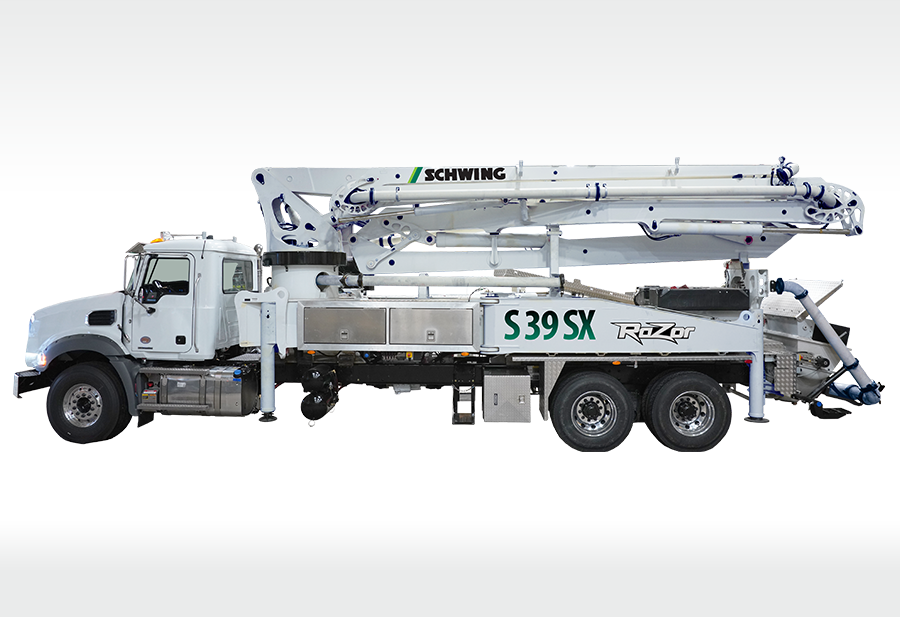
Truck-Mounted Concrete Pump Financing Program overview
Pricing basis: boom reach, hours, resale strength
Application-only: up to $500,000
Sellers: dealer, auction, or private party
Turnaround: same business day
Get a Quote Back to list
Truck-mounted concrete pumps are the workhorses of modern concrete placement. The machine drives to the job, outriggers down, boom up, pumping inside of an hour after arrival. Every pour day that runs on schedule rather than waiting on a rental unit is a day your business is earning instead of burning margin. Getting the financing right the first time makes ownership viable from month one.
We handle truck-mounted concrete pump financing for contractors across the country. The range we work spans compact units suited for residential foundations all the way to large-frame machines handling commercial highrise pours. Related equipment like truck-mounted line pumps and trailer-mounted units also fall within our programs. Minimum deal size is $50,000; the typical truck pump transaction runs $100,000 to $500,000 or more.
Truck-Mounted Concrete Pump: Equipment Specifics The truck-mounted format places a hydraulic concrete pump and articulating boom permanently on a carrier chassis. The boom folds for transport, deploys via the machine's own hydraulics on arrival, and is operated by remote control. Slewing radius, outrigger footprint, and maximum reach are the three specs buyers negotiate hardest on, because they determine which jobs the machine can physically service.
Pump mechanism matters too. The dominant design is a twin-cylinder hydraulic rock valve or S-tube valve pump. S-valve concrete pumps handle difficult mixes more tolerantly; ball-valve designs trade mix tolerance for serviceability. Contractors working in markets with premium fine mixes or fiber-reinforced concrete have opinions about which valve type holds up over time. Both are financeable assets.
Carrier chassis condition is part of the collateral assessment. A pump unit sitting on a worn-out or high-mileage truck introduces risk that lenders price accordingly. Buyers financing older used units should budget for an independent inspection and be prepared to present documented maintenance history. That documentation often makes the difference between approval and a counteroffer with heavier conditions.
How the Financing Process Moves The application is a single page. Fill it out, submit it with a few supporting documents, and we go to work. For deals under $400,000 on clean credit files, we often need nothing beyond the application and basic business registration documents. Larger transactions and weaker credit profiles need three months of business bank statements and sometimes a year of tax returns.
Approvals on straightforward files come back in one to two business days. Funding follows within a week or two after approval and documentation signing. If you are racing a seller's deadline, say so at the start. We know how to prioritize when a deal has a clock on it.
Loan structure options include a standard equipment loan with ownership at payoff, an operating or capital lease, and for contractors who already own equipment, a refinance or cash-out option to free up equity. We walk through each path so you can decide which one matches how you use the machine and manage your taxes.
The Buyer Profile for Truck-Mounted Pump Financing The buyers we fund most often are concrete pumping contractors running one to five units and looking to add capacity, replace aging iron, or step up to a larger boom size. Owner-operators buying their first truck and single-truck pumping businesses represent a consistent slice of our deal flow. Established contractors with multiple machines use us for fleet expansion and sometimes for refinancing older iron at better rates.
B and C credit borrowers qualify for programs designed for the construction industry specifically. We do not require perfect credit history to get a truck pump financed. What matters most is that the business generates real revenue, the borrower has industry experience, and the deal structure reflects what the machine can actually earn.
Refinancing and Sale-Leaseback for Existing Equipment Operators who already own a truck-mounted concrete pump outright or with a small remaining balance have options beyond just buying another machine. A Concrete Pump Sale-Leaseback converts the equity sitting in that machine into cash, which you can use for a down payment on a newer unit, working capital during a slow period, or a fleet expansion. You sell the pump to the lender, lease it back, and keep it working on your jobs.
A cash-out refinance works similarly when there is still a loan on the machine. If the equipment has appreciated or you paid down the original note significantly, refinancing can produce a cash surplus while often lowering your monthly payment. These are legitimate tools for managing a fleet across its working life, not last resorts.
Contractors who have built equity across multiple machines sometimes use this strategy to self-fund upgrades without going back to a lender for a traditional new-money acquisition. The fleet generates its own capital, and the operator reinvests it in better or larger equipment. We see this most often with contractors who started with one unit, executed well, and now have a fleet of three to five machines ready to support a larger purchase.
The timing of a sale-leaseback or cash-out refinance matters. Doing this when the equipment market is favorable for your machine type and your credit is strong produces better terms than executing under financial pressure. Operators who think about fleet financing strategically rather than reactively get better deals across every transaction they make over the life of their business.
Boom Pump Financing, Asked and Answered Common questions we receive from contractors evaluating truck-mounted concrete pump financing.
Let's Get Your Pump Financed Tell us about the machine you are pursuing and we will put together real financing options with actual numbers. One application, fast turnaround, lenders who understand concrete equipment.
Common questions Can I finance a truck-mounted pump and a trailer pump at the same time? Yes. Multi-asset transactions are common. We can bundle a truck-mounted unit and a trailer concrete pump into a single deal or structure them as two separate transactions depending on which approach works better for your financials.
Do I need to be incorporated, or can sole proprietors apply? Both incorporated businesses and sole proprietors can apply. Lenders prefer established entities for larger deals, but sole proprietors with strong personal credit and verifiable business income qualify for equipment loans regularly. The guaranty structure changes, not the availability of financing.
I have a tax lien from a few years ago. Does that disqualify me automatically? A tax lien is a red flag but not an automatic disqualification. If the lien is being paid, is subordinated, or has a payment agreement in place, some lenders will work through it. We need to know about it upfront so we route your file correctly rather than having it surface mid-underwriting.
What happens if the pump needs major repairs after I finance it? The financing obligation continues regardless of the equipment's condition. Buyers should carry adequate equipment insurance and maintain funds for repairs. Some lenders require proof of insurance at funding. Extended service agreements on new equipment purchases can reduce repair exposure during the loan term.
Can the truck component be financed separately from the pump unit? Generally the financing treats the mounted pump as a single unit. Separating the chassis from the pump for financing purposes is unusual and complicates title. We advise financing the complete machine as a package.
Common Questions on Truck-Mounted Concrete Pump Financing Straight answers before you send the equipment file.
Can I finance a truck-mounted pump and a trailer pump at the same time? Yes. Multi-asset transactions are common. We can bundle a truck-mounted unit and a trailer concrete pump into a single deal or structure them as two separate transactions depending on which approach works better for your financials.
Do I need to be incorporated, or can sole proprietors apply? Both incorporated businesses and sole proprietors can apply. Lenders prefer established entities for larger deals, but sole proprietors with strong personal credit and verifiable business income qualify for equipment loans regularly. The guaranty structure changes, not the availability of financing.
I have a tax lien from a few years ago. Does that disqualify me automatically? A tax lien is a red flag but not an automatic disqualification. If the lien is being paid, is subordinated, or has a payment agreement in place, some lenders will work through it. We need to know about it upfront so we route your file correctly rather than having it surface mid-underwriting.
What happens if the pump needs major repairs after I finance it? The financing obligation continues regardless of the equipment's condition. Buyers should carry adequate equipment insurance and maintain funds for repairs. Some lenders require proof of insurance at funding. Extended service agreements on new equipment purchases can reduce repair exposure during the loan term.
Can the truck component be financed separately from the pump unit? Generally the financing treats the mounted pump as a single unit. Separating the chassis from the pump for financing purposes is unusual and complicates title. We advise financing the complete machine as a package.
Get Terms on Truck-Mounted Concrete Pump Financing Tell us what you are buying, who is selling it, and when you need it earning. We will review the file and point you to the next step.