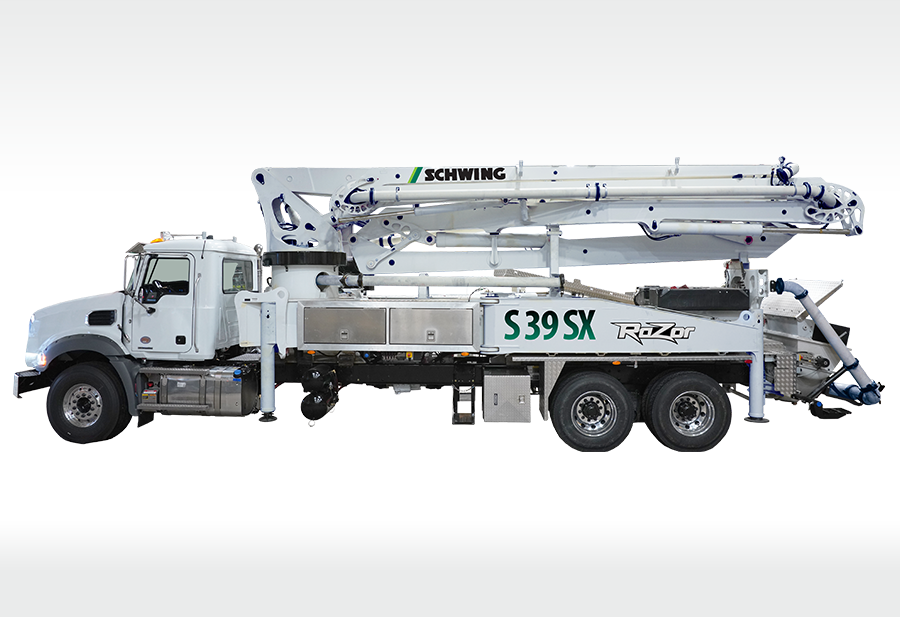
Separate Placing Boom Financing Program overview
Pricing basis: boom reach, hours, resale strength
Application-only: up to $500,000
Sellers: dealer, auction, or private party
Turnaround: same business day
Get a Quote Back to list
The pump at grade does the pushing. The separate placing boom at the top of the run does the distributing. You cannot finish a high-rise deck pour by dragging a rigid pipeline to every pour point on a 50,000 square foot floor plate. The placing boom swings across the slab, the operator controls placement from a remote pendant, and the crew finishes behind it. That is why the boom and the pump are two separate line items on a serious contractor's equipment budget, and why separate placing boom financing is a distinct transaction from the pump loan.
We fund separate placing booms for contractors building towers, parking structures, industrial slabs, and large-footprint commercial floors. If the pour is too big or too high for a truck-mounted boom to cover without repositioning, a separate placing boom is the answer, and getting it financed fast is what keeps the project on schedule.
Types of Separate Placing Booms Fixed Column vs. Climbing Configurations A fixed-column separate placing boom is bolted to a structural element, the core wall, a column, or a purpose-built mast, and serves a defined radius from that anchor point. It is the simplest system and works well on pours where the boom can reach the full pour area from one position. When the floor plan is larger than the boom's radius or when the placement point needs to move as the work progresses, contractors either set multiple fixed units or switch to a climbing configuration.
The self-climbing placing boom is the premium version: it attaches to the jump form or climbing system and follows the formwork up the building, eliminating the need to rig and re-rig a fixed unit at every new level. The cost differential is meaningful and so is the financing amount, but the labor savings on a 40-plus story project typically justify the investment.
Mast-Mounted and Independent Units For large slabs at grade, precast yards, and industrial floors where there is no structure to bolt to, a mast-mounted unit with its own freestanding base provides full coverage. These systems require ballasting and a larger footprint but deliver the same placement flexibility as a structure-mounted boom. A mast-climbing placing boom is a variant of this category designed for projects where the mast grows as the building rises, an alternative to the full self-climbing integrated system.
Reach matters in this equipment class. Placing booms are available in configurations from 20 meters to well over 50 meters of horizontal reach, and financing is sized to the unit spec and use case. A 32-meter fixed unit for a parking structure is a different transaction from a 52-meter self-climber for a supertall tower.
Who Needs a Separate Placing Boom Not every contractor needs one, but the ones who do know it immediately when the truck boom runs out of reach.
High-rise tower contractors who pour concrete above 10 to 12 stories where a truck boom cannot operate. Most residential and commercial towers of 15 stories and above use some form of separate placing boom system. High-rise and multifamily builders are the core buyer group here.Large industrial slab contractors pouring 200,000 square foot floors for distribution centers, manufacturing plants, or precast yards where the footprint exceeds a truck boom's radius from any parking position.Data center structural contractors pouring dense multi-story formed structures in constrained urban lots where truck access is limited. Data center construction has been a growing segment for placing boom use.Equipment rental companies who serve high-rise markets and want the revenue from placing boom rentals without directing capital away from other priorities. Equipment rental companies often finance placing booms as dedicated rental fleet assets.How the Financing Process Works A separate placing boom transaction follows the same basic steps as any major concrete equipment loan. You identify the unit, we review the spec, and underwriting is based on your business financials and credit profile. The machine is the collateral.
For projects where the boom is attached to a structure you are building for a GC, not owning, lenders want to understand how the equipment returns to you at project end. A clear equipment return plan in the contract or a project completion guarantee helps. Lenders financing placing booms that physically integrate into a building's jump form system need to know the unit is recovering on schedule.
Operators who prefer to keep the balance sheet light can structure the financing as a lease. A fair-market-value or dollar-buyout lease works well for placing booms because the equipment has a real resale market at lease end. Many contractors choose the FMV structure and simply acquire a new or next-generation boom at the end of each major project cycle. Buyers with project-specific financing needs should also review seasonal and deferred payment financing options that can match the payment schedule to the project's billing milestones.
Own a Placing Boom Already? Use That Asset Contractors who own a paid-off separate placing boom have a capital asset sitting on the yard between projects. A concrete pump sale-leaseback structure lets you sell that equipment to a financing company, receive a lump sum payment, and continue using the boom under a lease agreement. The cash goes to the next project, new fleet addition, or working capital. The boom stays on the job.
This structure works best when the equipment is in good condition, has low hours relative to its age, and has a clear maintenance record. Call us if you want to run the numbers on what your current equipment might generate in a leaseback transaction.
What Contractors Ask About Placing Boom Financing Common questions from the field.
Finance Your Separate Placing Boom The pour does not cover itself. Get the placing boom lined up now, before the structure reaches the height where you need it. Submit an application or call us directly. We fund in about one to two weeks from a complete file.
Common questions Can I finance a placing boom that will be installed on a building I do not own? Yes. The lender's interest is in the equipment, not the building. The placing boom needs to be clearly recoverable at project end and titled to your business. Most contracts with general contractors have equipment access and retrieval provisions; share those if the lender asks. The key is that the machine is yours, not part of the permanent structure.
What down payment is typical on a $300,000 placing boom? For strong-credit operators, many transactions close with zero to ten percent down. For newer businesses or B/C credit borrowers, ten to twenty percent is a reasonable expectation. The down payment offsets risk and improves the loan-to-value ratio for the lender. If cash is tight, ask about soft costs or first-payment deferrals.
How does a placing boom lease end? Do I have to buy it? In a fair-market-value lease, your options at end of term are to purchase at the current fair market value, return the equipment, or roll into a new lease on upgraded equipment. You are not obligated to buy. In a dollar-buyout lease, you do own it at the end for a nominal amount. Choose the structure based on whether you expect to want the specific machine long-term.
Is there financing available for the rigging, transport, and installation of a placing boom? Equipment loans typically cover the unit itself. Soft costs like rigging and installation are sometimes bundled in, especially on a dealer transaction where the seller includes a turnkey price. Ask the lender if soft costs can be included when you apply; it varies by lender and deal structure.
We already own two pumps. Does fleet equity help on a placing boom loan? Equity in existing iron is not direct collateral for a new loan (cross-collateralization is possible but not standard), but it signals a healthier business balance sheet. A strong fleet and a history of managing equipment debt responsibly makes underwriting easier and may improve the rate and terms on the new transaction.
Common Questions on Separate Placing Boom Financing Straight answers before you send the equipment file.
Can I finance a placing boom that will be installed on a building I do not own? Yes. The lender's interest is in the equipment, not the building. The placing boom needs to be clearly recoverable at project end and titled to your business. Most contracts with general contractors have equipment access and retrieval provisions; share those if the lender asks. The key is that the machine is yours, not part of the permanent structure.
What down payment is typical on a $300,000 placing boom? For strong-credit operators, many transactions close with zero to ten percent down. For newer businesses or B/C credit borrowers, ten to twenty percent is a reasonable expectation. The down payment offsets risk and improves the loan-to-value ratio for the lender. If cash is tight, ask about soft costs or first-payment deferrals.
How does a placing boom lease end? Do I have to buy it? In a fair-market-value lease, your options at end of term are to purchase at the current fair market value, return the equipment, or roll into a new lease on upgraded equipment. You are not obligated to buy. In a dollar-buyout lease, you do own it at the end for a nominal amount. Choose the structure based on whether you expect to want the specific machine long-term.
Is there financing available for the rigging, transport, and installation of a placing boom? Equipment loans typically cover the unit itself. Soft costs like rigging and installation are sometimes bundled in, especially on a dealer transaction where the seller includes a turnkey price. Ask the lender if soft costs can be included when you apply; it varies by lender and deal structure.
We already own two pumps. Does fleet equity help on a placing boom loan? Equity in existing iron is not direct collateral for a new loan (cross-collateralization is possible but not standard), but it signals a healthier business balance sheet. A strong fleet and a history of managing equipment debt responsibly makes underwriting easier and may improve the rate and terms on the new transaction.
Get Terms on Separate Placing Boom Financing Tell us what you are buying, who is selling it, and when you need it earning. We will review the file and point you to the next step.