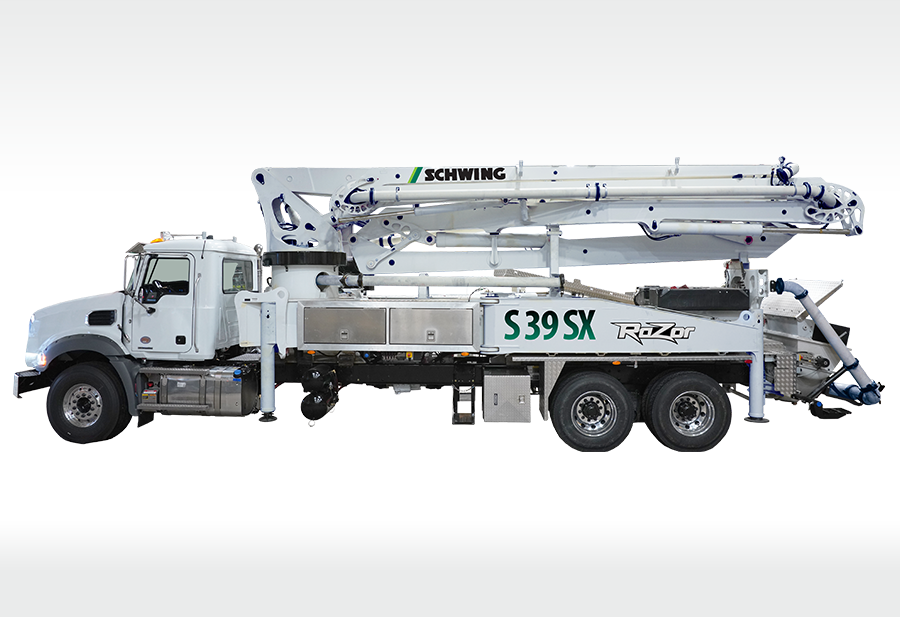
High-Rise Concrete Pump Financing Program overview
Pricing basis: boom reach, hours, resale strength
Application-only: up to $500,000
Sellers: dealer, auction, or private party
Turnaround: same business day
Get a Quote Back to list
Floor 30 does not wait for floor 29's financing to clear. High-rise concrete work runs on a schedule measured in days per floor, and the pump sitting at grade feeding mix 300 feet up a pipeline has to be ready, serviced, and owned clean before the first bucket test. That is the reality of vertical construction, and it is the reason contractors working tall buildings treat equipment financing as a schedule item, not an afterthought.
High-rise concrete pumps are a specific class of machine: stationary trailer-mounted units or tower-base skid mounts with the pressure capability to push concrete vertically through hundreds of feet of pipe while maintaining slump consistency at the placement point. We finance them for contractors across every major metro, from the residential towers going up in Miami to the commercial cores underway in Chicago and the data center construction wave hitting markets like Ashburn .
The Physics Behind High-Rise Pumping Pressure Requirements Climb with the Building For every 10 meters of vertical rise, a pump loses roughly 1 bar of effective output pressure to the hydrostatic weight of the concrete column in the pipe. A 300-meter pour (roughly a 100-story building) can consume 30 bar just holding the column up before a drop of mix has moved. That is why high-rise pumping requires machines with sustained output pressure in the 130 to 200 bar range, heavy-duty cylinders, and a cooling system robust enough to run continuously for hours.
The pipeline itself matters as much as the pump. High-pressure concrete pipe rated for the actual working pressure, proper clamp connections, and a relief system at the top of the run are standard practice. Pipeline failures on high-rise pours are expensive and dangerous, which is why this class of work almost always goes to operators with a track record. If your crew is looking at financing pipeline accessories alongside the pump, our concrete placing hose and pipeline financing page covers that equipment separately.
Placing Systems at Height The pump at grade is only half the system. At each working level, mix has to be directed to the pour location. Contractors use three main approaches: a fixed stationary placing boom attached to the structure that swings the line across the deck, a self-climbing placing boom that jumps with the formwork as the building rises, or a simple distribution hose handled by ironworkers and finishers. The first two require separate equipment financing, and we handle both.
Where High-Rise Pump Work Is Moving Tower construction has concentrated in a handful of metro markets that generate the bulk of high-rise concrete pump transactions. The Southeast tower market centered on Miami and Atlanta has been running at a high pace through the mid-2020s, driven by condominium, hotel, and mixed-use projects. The Southwest, particularly Phoenix and Las Vegas, has added significant residential tower inventory as population growth continues. In the Northeast, New York City remains the largest single high-rise market in the country by number of active concrete pours at any given moment.
Beyond residential and commercial towers, data center construction has become a major driver of high-rise pump work, particularly for multistory server facilities that require dense, formed structural concrete. These projects are concentrated in specific submarkets, and contractors who are positioned with the right equipment in those markets are busy. Data center construction represents a distinct buyer profile in our loan book.
For contractors working on multifamily towers and mixed-use residential projects, high-rise and multifamily builders is the industry page that speaks directly to that work.
Financing a High-Rise Pump: What We Need High-rise pumps are major capital assets. New units from leading manufacturers like Putzmeister or Schwing configured for sustained vertical work run $400,000 to $700,000. That put most high-rise pump transactions well above the application-only threshold, so expect a real underwriting file: three months of business bank statements, most recent filed tax return, and a current equipment list. Existing debt on other iron affects the debt service coverage calculation, so have your lender list ready.
That said, the underwriting is not designed to screen out contractors. It is designed to understand the business. A company with a multi-tower contract, a fleet of existing equipment, and a clean banking relationship will move through quickly. A newer operator coming off a successful first high-rise project with personal credit in the 650s and a growing backlog is a workable file too, though it may require a stronger down payment. Bad-credit equipment financing is available for operators whose credit scores have taken hits during business cycles.
If you own high-rise equipment free and clear or with significant equity, a cash-out equipment refinance lets you pull working capital without selling iron you depend on.
Timeline from Application to Machine Concrete contractors are not patient borrowers by nature. The pour schedule does not move for lender processing time, and we push every high-rise pump transaction through as fast as the documentation allows. A complete application with all required items typically reaches a credit decision in 24 to 48 hours. Funding follows in about one to two weeks.
The biggest delay we see is an incomplete application. Common holdups: missing serial number on the target machine, a lien payoff that has not been requested from the seller's lender, and financial statements that are months old when the lender needs something current. Have these items staged before you call. The crew setting up the high-rise pump form does not wait, and neither should your funding.
Questions from High-Rise Pump Buyers These come up regularly.
Your Tower Pour Needs the Right Pump. Start the Financing. We finance high-rise concrete pumps for contractors at every stage of business. Whether you are buying your first vertical pump or adding a third to the fleet, submit an application or call us now. Decisions come fast, and we fund in about one to two weeks.
Common questions Can I finance the pump and the placing boom in a single transaction? Yes. Bundling a high-rise pump with a self-climbing or stationary placing boom into one loan is common and simplifies the deal. The combined asset value is what the loan is sized to. Bring specs and pricing for both pieces when you apply.
I have an existing pump I want to trade in toward a new high-rise unit. Can that equity apply? A trade-in credit reduces the net loan amount and can lower your payment. The lender will need to verify the trade-in value, either through a dealer appraisal or recent comp sales. If you have a specific number in mind, share it and we will tell you how it pencils.
The project starts in 60 days. Is that enough time to complete financing? Comfortably, yes. A complete file typically reaches funding in one to two weeks. Even with a few back-and-forth rounds on documentation, 60 days is ample. Start the process now and have the machine on order before the timeline gets tight.
Can I refinance a high-rise pump I already own to get working capital for another project? If you own the machine outright or have equity in it, a cash-out refinance or sale-leaseback can convert that equity into cash. The pump stays in service while you access the capital. Many contractors use this to fund mobilization on a new tower contract.
Are there lenders that specialize in high-rise concrete equipment specifically? Most equipment lenders will touch this category, but not all understand the value of a well-maintained high-pressure unit or the difference between a machine suited for 15-story pours and one capable of 60-plus floors. Working with a specialist who knows the equipment means better asset valuation and fewer unnecessary conditions.
Does B/C credit automatically mean a denial on a transaction this size? Not automatically. Larger transactions with B or C credit typically require a down payment, strong cash flow documentation, and a clean equipment title. The asset has to carry more of the risk that the credit score does not. It is a harder path but not a closed door.
Common Questions on High-Rise Concrete Pump Financing Straight answers before you send the equipment file.
Can I finance the pump and the placing boom in a single transaction? Yes. Bundling a high-rise pump with a self-climbing or stationary placing boom into one loan is common and simplifies the deal. The combined asset value is what the loan is sized to. Bring specs and pricing for both pieces when you apply.
I have an existing pump I want to trade in toward a new high-rise unit. Can that equity apply? A trade-in credit reduces the net loan amount and can lower your payment. The lender will need to verify the trade-in value, either through a dealer appraisal or recent comp sales. If you have a specific number in mind, share it and we will tell you how it pencils.
The project starts in 60 days. Is that enough time to complete financing? Comfortably, yes. A complete file typically reaches funding in one to two weeks. Even with a few back-and-forth rounds on documentation, 60 days is ample. Start the process now and have the machine on order before the timeline gets tight.
Can I refinance a high-rise pump I already own to get working capital for another project? If you own the machine outright or have equity in it, a cash-out refinance or sale-leaseback can convert that equity into cash. The pump stays in service while you access the capital. Many contractors use this to fund mobilization on a new tower contract.
Are there lenders that specialize in high-rise concrete equipment specifically? Most equipment lenders will touch this category, but not all understand the value of a well-maintained high-pressure unit or the difference between a machine suited for 15-story pours and one capable of 60-plus floors. Working with a specialist who knows the equipment means better asset valuation and fewer unnecessary conditions.
Does B/C credit automatically mean a denial on a transaction this size? Not automatically. Larger transactions with B or C credit typically require a down payment, strong cash flow documentation, and a clean equipment title. The asset has to carry more of the risk that the credit score does not. It is a harder path but not a closed door.
Get Terms on High-Rise Concrete Pump Financing Tell us what you are buying, who is selling it, and when you need it earning. We will review the file and point you to the next step.