High-Rise & Multifamily Builders Program overview
Pricing basis: boom reach, hours, resale strength
Application-only: up to $500,000
Sellers: dealer, auction, or private party
Turnaround: same business day
Get a Quote Back to list
Floors stack up fast on a high-rise or multifamily project, and every floor needs a concrete placement solution that actually reaches. The boom truck that works on a commercial slab may not have the reach to hit the upper levels of a 20-story residential tower, and a truck-mounted unit may give way entirely to a climbing placing boom once the structure gets tall enough. We finance the full spectrum of high-reach and high-volume concrete placement equipment that builders in this market rely on.
Transactions in the high-rise and multifamily space routinely run from $150,000 to $400,000 and above. We are comfortable at that scale, and we have access to lenders who specialize in large-ticket construction equipment. Application-only review is available up to roughly $400,000. Above that threshold, we work with three months of bank statements and project financials to close the transaction. Funding in one to two weeks is the standard expectation.
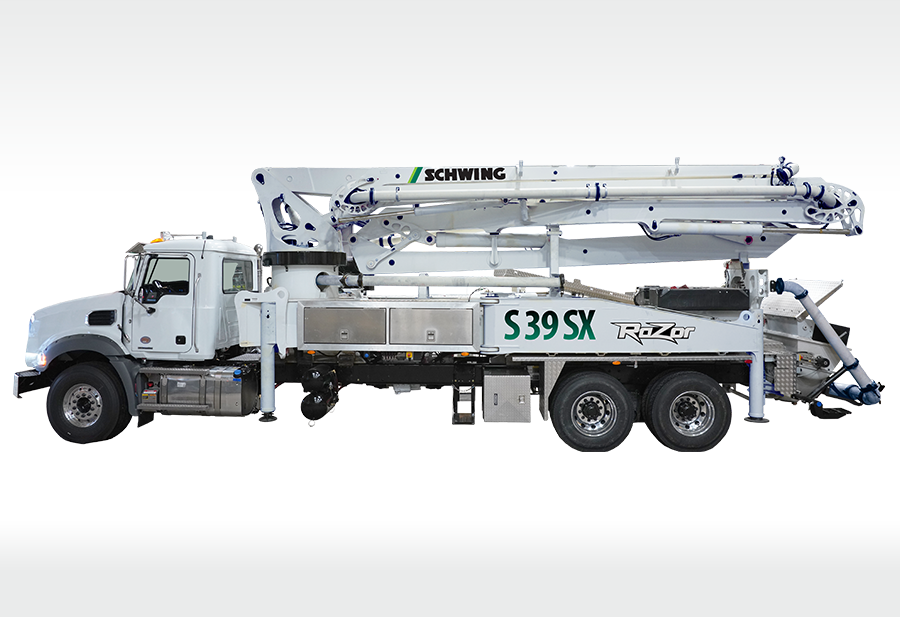
Equipment for Tall Buildings and Dense Sites The equipment selection for high-rise and multifamily work is driven by two variables: reach and throughput. A 52-meter boom pump handles a significant portion of mid-rise multifamily work and can reach upper-floor placements on buildings up to roughly 12 to 14 stories from a favorable setup position. A 56-meter unit extends that range and is a preferred truck for contractors regularly working on 15- to 18-story projects.
Taller structures, particularly high-rise towers above 20 stories, typically move the placement solution from a truck-mounted boom to a self-climbing placing boom or a mast-climbing placing boom that travels with the form work as floors are added. These are sophisticated and capital-intensive assets, and the financing behind them needs to reflect that. A self-climbing system is not a single piece of equipment; it is a system of mast sections, the boom head, the climbing frame, and the ground pump that feeds it, and the total package easily reaches six figures before the first floor is poured.
Dense urban sites, particularly in cities like New York and San Francisco , sometimes require a city pump with a compact folding geometry that fits within tight access corridors. These units are specialized and the financing market for them reflects that niche. City pumps are not interchangeable with standard truck-mounted booms, and a builder who does consistent work in dense urban environments values having the right folding geometry available without calling a sub every time the access window is tight.
For towers where the concrete floors are being pumped from the ground to upper levels, a high-rise concrete pump with the pressure rating to overcome the static head at 30 or 40 floors is the right equipment class. These are high-pressure units specifically engineered for vertical pumping applications, and their financing value reflects the specialized engineering that goes into them.
Who Builds High-Rise and Multifamily The range of companies working in this segment is wider than many lenders assume:
Large regional and national builders who own or lease their own pump equipment rather than subcontracting every pour Specialty concrete subcontractors who have built their business around serving multifamily developers Owner-builders developing their own multifamily portfolio and self-performing concrete work to control cost and schedule Contractors transitioning from low-rise commercial work into mid-rise and high-rise as their project scale grows Contractors working on data center construction or industrial and plant projects in parallel with their multifamily work often have broader pump needs that a single transaction can address. A contractor who pours data center slabs in the morning and core walls on a multifamily tower in the afternoon is running two distinct equipment demands that may justify separate units in the fleet.
Structuring the Transaction at High-Rise Scale High-rise and multifamily builders often deal in larger transactions than most equipment financing lenders are comfortable handling directly. A single self-climbing placing boom system can run well above $500,000 when you include the mast, the boom, and the support equipment. We have lender relationships that handle transactions at that scale without the institutional slowness of bank underwriting.
For owned boom trucks, a term loan at a fixed monthly payment is the most common structure. Builders who want to manage equipment cycling and avoid holding aging assets through full depreciation sometimes prefer a lease structure that allows equipment exchange at a predictable interval. Both structures have been used in this segment with good results.
Builders who have placed prior boom purchases and accumulated equity in older units can pursue a concrete pump refinancing to lower monthly payments or a cash-out refinance to pull capital for a new project deposit or project startup cost. The equity in a well-maintained 56-meter boom that has been running for six years is real capital, and converting it without selling the asset is a move that experienced contractors make regularly.
New-to-high-rise contractors who have a strong commercial concrete track record but are making their first purchase in the taller equipment category can qualify for a startup program or present their existing business history as the foundation for approval. The equipment category is new to their operation, but the business experience is not.
Timing That Respects a Builder's Schedule High-rise and multifamily construction schedules are detailed, and equipment acquisition timing is not arbitrary. When a placing boom needs to be on site for a pour that is three weeks out, the financing has to close well before that. Our one-to-two-week funding target exists precisely because construction schedules do not move to accommodate slow capital markets.
We front-load the process by collecting all the relevant information at the start, matching the transaction to the right lender quickly, and moving documents as soon as the approval lands. Builders who have a clear equipment spec and a confirmed delivery date tend to move through our process fastest. Builders in active markets like Miami or Houston, where high-rise residential demand has driven extended equipment lead times from manufacturers, benefit from financing that closes before the equipment ships rather than after it arrives.
High-Rise Builder Financing Questions
Finance High-Reach Equipment Today High-rise placements need the right equipment and the right financing, both on time. Submit your transaction details and get a pre-approval response quickly. Boom trucks, climbing placing booms, city pumps, and more, all within our program. Apply online or call us directly.
Common questions Can we finance a climbing placing boom system, including the mast and support components, as a single transaction? Yes. A complete self-climbing or mast-climbing placing boom system is a single financeable asset. We structure the transaction around the total system value including the boom, mast sections, and primary support components.
Our company builds in multiple markets under separate LLCs. Which entity should apply? The entity that will own and operate the equipment is the applicant. If your operating entities are subsidiaries of a parent holding company, the parent may serve as a guarantor. We discuss the entity structure before submitting to any lender.
We have a project with concrete pours starting in six weeks. Is that enough time to get funding? Yes. Six weeks is more than enough lead time for most transactions. Our standard funding timeline is one to two weeks, so starting the process now gives you a significant buffer.
Can we finance equipment that will be on a job site for the duration of a two-year project and then redeployed? Yes. Equipment financed through us is owned by your business and can be deployed wherever the work is. Project-specific placement does not affect the financing structure.
Is used high-rise equipment available for financing? Yes. Used placing booms and high-reach boom trucks are financeable. The condition and service history matter, and the asset needs to have identifiable market value. We have placed transactions on well-maintained used high-reach equipment.
We are adding a 63-meter boom to a fleet that already has three smaller units. Does fleet size affect our approval? Fleet depth is generally a positive signal. It shows an established track record with equipment and demonstrates that the business has the operational capacity to deploy and maintain a large-reach boom. A lender who sees a well-maintained existing fleet takes more comfort in a new large-ticket addition than one seeing a first-time acquisition.
Common Questions on High-Rise & Multifamily Builders Straight answers before you send the equipment file.
Can we finance a climbing placing boom system, including the mast and support components, as a single transaction? Yes. A complete self-climbing or mast-climbing placing boom system is a single financeable asset. We structure the transaction around the total system value including the boom, mast sections, and primary support components.
Our company builds in multiple markets under separate LLCs. Which entity should apply? The entity that will own and operate the equipment is the applicant. If your operating entities are subsidiaries of a parent holding company, the parent may serve as a guarantor. We discuss the entity structure before submitting to any lender.
We have a project with concrete pours starting in six weeks. Is that enough time to get funding? Yes. Six weeks is more than enough lead time for most transactions. Our standard funding timeline is one to two weeks, so starting the process now gives you a significant buffer.
Can we finance equipment that will be on a job site for the duration of a two-year project and then redeployed? Yes. Equipment financed through us is owned by your business and can be deployed wherever the work is. Project-specific placement does not affect the financing structure.
Is used high-rise equipment available for financing? Yes. Used placing booms and high-reach boom trucks are financeable. The condition and service history matter, and the asset needs to have identifiable market value. We have placed transactions on well-maintained used high-reach equipment.
We are adding a 63-meter boom to a fleet that already has three smaller units. Does fleet size affect our approval? Fleet depth is generally a positive signal. It shows an established track record with equipment and demonstrates that the business has the operational capacity to deploy and maintain a large-reach boom. A lender who sees a well-maintained existing fleet takes more comfort in a new large-ticket addition than one seeing a first-time acquisition.
Get Terms on High-Rise & Multifamily Builders Tell us what you are buying, who is selling it, and when you need it earning. We will review the file and point you to the next step.