Telescopic Boom Pump Financing Program overview
Pricing basis: boom reach, hours, resale strength
Application-only: up to $500,000
Sellers: dealer, auction, or private party
Turnaround: same business day
Get a Quote Back to list
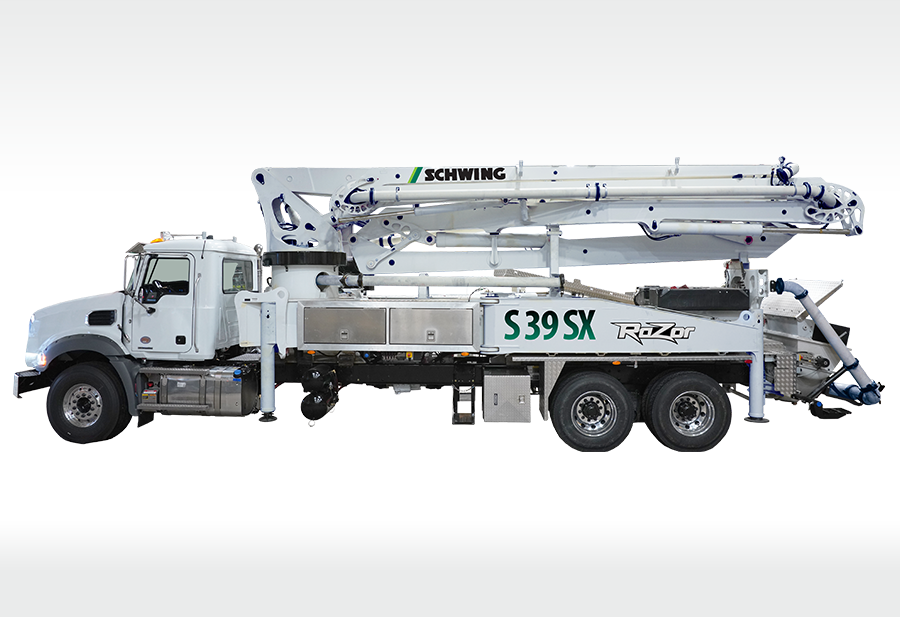
Reach past the obstacle and put the concrete exactly where the prints say it goes. A telescopic boom pump adds sliding extensions to the boom sections, letting the operator stretch the arm further than the folded configuration alone would allow. The result is more working radius from the same truck footprint, the ability to pour over fences, walls, adjacent structures, and setback constraints that would stop a standard multi-fold boom cold.
These machines earn their premium price on jobs with tight access, unusual geometry, or pour locations that are physically cut off from direct truck positioning. If you have been turning down work or subbing out pours because your current boom cannot make the reach, a telescopic unit solves the problem and pays for itself in recaptured margin.
Telescopic vs. Standard Fold Configurations The Sliding Extension Mechanism A standard concrete boom pump uses articulated fold sections to achieve its reach. Each section folds out from the previous one, and the total horizontal reach depends on the number of sections and their individual lengths. A telescopic configuration adds a sliding hydraulic cylinder inside one or more boom sections, extending that section's physical length beyond its collapsed state. The combination of folding and telescoping gives the operator more working envelope than the truck's footprint would suggest is possible.
European manufacturers like Putzmeister and Schwing have offered telescopic configurations on select models for years. The hydraulic cylinder and guide rail inside the extending section add mechanical complexity and maintenance requirements, but the operators who depend on that extra reach would not trade it for a simpler machine.
Typical Applications Telescopic booms show up on pours where the truck simply cannot get close enough to the pour location. Common scenarios: residential foundations where the lot is tight and the neighbor's fence is four feet from the forms, parking structure ramps where the truck sits on a finished deck and needs to reach around structural columns, highway and bridge work where the pour location is beyond a barrier or over a gap, and urban infill construction where the alley or setback limits how close the truck can get. Highway and bridge contractors and residential foundation contractors are among the most frequent buyers of telescopic-capable units.
What Qualifies for Telescopic Boom Pump Financing New and used telescopic boom pumps from all major manufacturers qualify. The critical information for underwriting is the purchase price or value of the machine, the serial number, and the current lien status. For used units, the lender will want documentation of the equipment's maintenance history and current condition. Telescopic mechanisms require specific service records to verify the extending cylinder and hydraulic seals are in proper condition; bring those records to the table when you are buying used.
The financing amount needs to clear $50,000. Most telescopic-capable units from major manufacturers start well above that. New trucks with telescopic boom configurations from Putzmeister, Schwing, or equivalent manufacturers typically list from $400,000 upward depending on boom length and pumping capacity. Used units in workable condition range from $150,000 to $300,000 depending on age, hours, and configuration.
Credit quality affects terms, not eligibility. Strong-credit operators get the best rates and potentially zero-down terms. B and C credit operators qualify under our bad-credit equipment financing program, typically with a larger down payment and a shorter initial term. The machine's value provides the underlying collateral confidence.
Getting Funded: What to Expect Concrete contractors do not have weeks to wait for a funding decision. A complete application for a telescopic boom pump typically reaches a credit decision in 24 to 48 business hours. Funding follows in about one to two weeks from there. The variables that affect speed: completeness of the initial application, speed of the equipment appraisal if a used unit requires one, and lien payoff timing on any existing debt on the target machine.
For transactions under $400,000, we generally work on an application-only basis, meaning you submit the basic information and we underwrite without requiring a full financial package. See application-only financing for what that process looks like in practice.
Operators with a strong relationship with their current lender may want to consider concrete pump refinancing for a machine they already own and want to restructure, or a new loan for a new acquisition. The latter is the more common transaction, but we handle both.
Other Boom Configurations to Consider Telescopic booms solve the reach problem. Other configurations solve other problems, and knowing which tool fits which job keeps your fleet efficient.
For pours in tight urban areas with overhead restrictions, a Z-fold boom pump folds in a geometry that clears low obstacles better than a standard configuration and may serve the same tight-access work without the telescoping premium. For pours under bridges, in low-clearance industrial buildings, or in other height-constrained environments, a low-line boom pump is purpose-built for the job and may be a better fit than a telescopic unit used outside its optimal application. For operators building out a fleet that can handle high-rise work alongside the access jobs, a truck-mounted boom pump in a standard configuration complementing the telescopic unit gives the business range across the full market. Questions About Telescopic Boom Pump Financing From operators who have called us about this class of machine.
Finance Your Telescopic Boom Pump The work is there and your current boom cannot reach it. That math solves itself once the right machine is funded. Submit an application now and we will move fast to get you an answer.
Common questions Is a telescopic boom pump harder to maintain than a standard unit, and does that affect financing? The telescopic mechanism adds a maintenance item: the extending cylinder seals and guide rails need regular inspection. Financing is not affected by the added maintenance complexity. Lenders finance the machine based on its value and your creditworthiness, not on the service schedule. The maintenance cost differential is an ownership consideration, not a lending one.
I am looking at a used telescopic unit from a local contractor. Can that transaction be financed? Private-party purchases are fundable. We need documentation of the unit, a bill of sale, the serial number, and a lien search to confirm the title is clear. The seller may have an existing loan on it; if so, the payoff becomes part of the transaction. Private-party deals take a little more coordination but are completely standard.
Can I get a lease on a telescopic boom pump for a specific two-year commercial project? A 24-month lease is achievable, though lenders generally prefer terms of 36 months or longer on large assets. A 24-month term compresses the amortization significantly, which means higher monthly payments. If the project revenue justifies it, we can price the shorter lease. Compare it to a longer loan with an option to sell the machine at project end.
What happens if I need the telescopic section serviced under warranty during the loan period? Warranty service is between you and the dealer or manufacturer. The loan obligation runs regardless of warranty status. Most new machine purchases from a dealer include a manufacturer warranty covering the telescopic mechanism for the first one to two years; confirm the specifics before you buy. Downtime during warranty repair does not affect your payment schedule.
Does the telescopic configuration affect the truck's CDL requirements or permitting? The telescoping mechanism is part of the mounted equipment, not the truck's driving configuration. CDL and permitting requirements depend on the truck's GVW and state rules for the operating routes. A telescopic unit on a multi-axle chassis still follows the same permit rules as any other concrete pump truck of that size and configuration.
Common Questions on Telescopic Boom Pump Financing Straight answers before you send the equipment file.
Is a telescopic boom pump harder to maintain than a standard unit, and does that affect financing? The telescopic mechanism adds a maintenance item: the extending cylinder seals and guide rails need regular inspection. Financing is not affected by the added maintenance complexity. Lenders finance the machine based on its value and your creditworthiness, not on the service schedule. The maintenance cost differential is an ownership consideration, not a lending one.
I am looking at a used telescopic unit from a local contractor. Can that transaction be financed? Private-party purchases are fundable. We need documentation of the unit, a bill of sale, the serial number, and a lien search to confirm the title is clear. The seller may have an existing loan on it; if so, the payoff becomes part of the transaction. Private-party deals take a little more coordination but are completely standard.
Can I get a lease on a telescopic boom pump for a specific two-year commercial project? A 24-month lease is achievable, though lenders generally prefer terms of 36 months or longer on large assets. A 24-month term compresses the amortization significantly, which means higher monthly payments. If the project revenue justifies it, we can price the shorter lease. Compare it to a longer loan with an option to sell the machine at project end.
What happens if I need the telescopic section serviced under warranty during the loan period? Warranty service is between you and the dealer or manufacturer. The loan obligation runs regardless of warranty status. Most new machine purchases from a dealer include a manufacturer warranty covering the telescopic mechanism for the first one to two years; confirm the specifics before you buy. Downtime during warranty repair does not affect your payment schedule.
Does the telescopic configuration affect the truck's CDL requirements or permitting? The telescoping mechanism is part of the mounted equipment, not the truck's driving configuration. CDL and permitting requirements depend on the truck's GVW and state rules for the operating routes. A telescopic unit on a multi-axle chassis still follows the same permit rules as any other concrete pump truck of that size and configuration.
Get Terms on Telescopic Boom Pump Financing Tell us what you are buying, who is selling it, and when you need it earning. We will review the file and point you to the next step.